
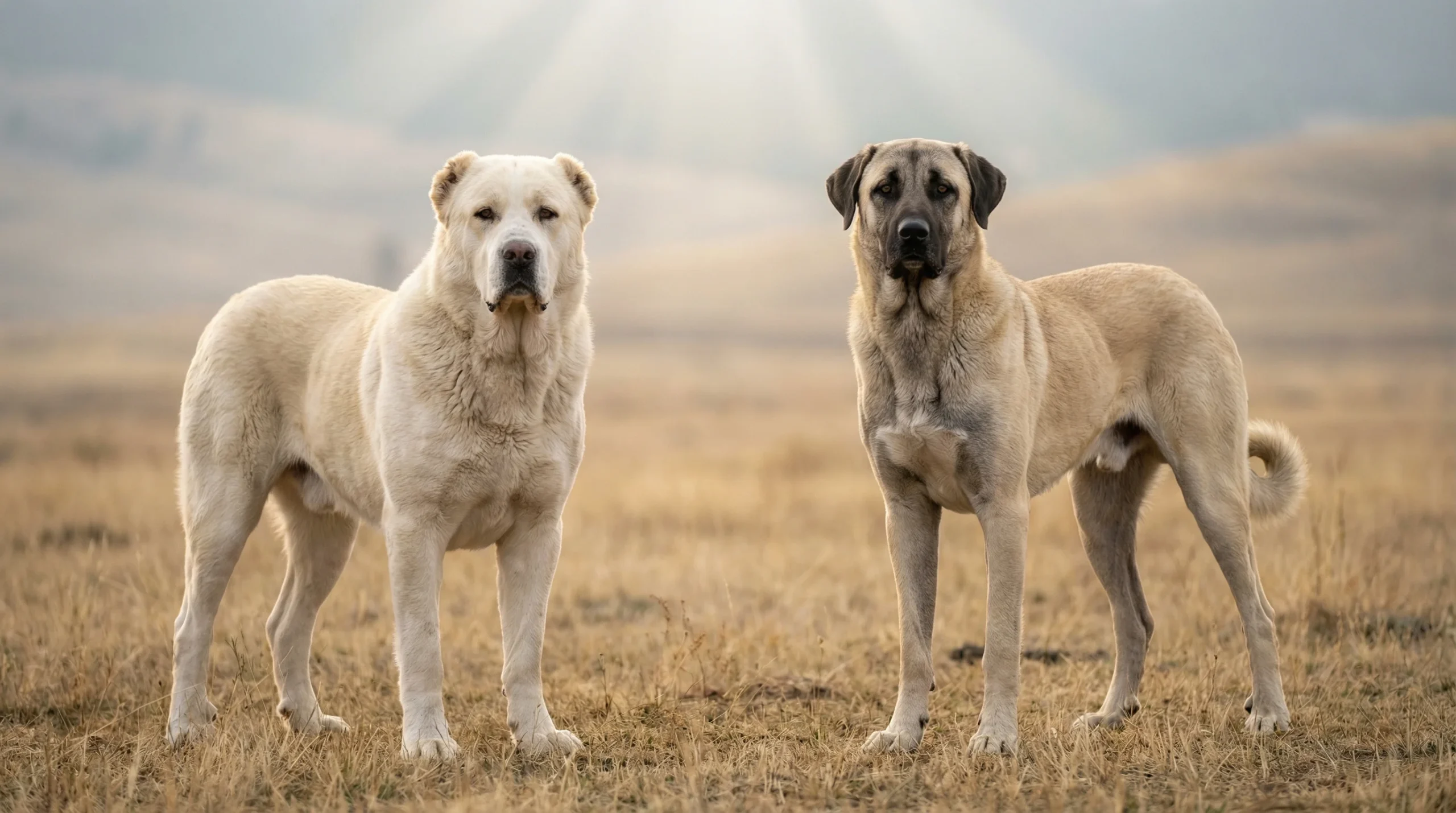
The Alabai Dog vs Kangal comparison is searched by people looking at two of the most powerful livestock guardian breeds on earth. While both dogs are bred to protect against predators and intruders, they are not interchangeable — and choosing the wrong one can lead to serious behavioural and management issues.
This guide cuts through myths and online hype to explain the real differences between the Alabai and the Kangal, who each breed suits best, and for those asking, Alabai who wins in practical, real-world terms.
TABLE OF CONTENTS
Alabai Dog vs Kangal: Quick Comparison Overview
Both breeds are elite guardians, but their design philosophy differs:
- The Alabai is a dominant, autonomous protector shaped by harsh environments and minimal human intervention.
- The Kangal is a controlled, calculated guardian developed to work alongside people.
| Key Difference | Alabai | Kangal |
|---|---|---|
| Core Role | Autonomous territorial guardian | Controlled livestock guardian |
| Human Interaction | Minimal | Designed to work with people |
| Decision Style | Independent, self-directed | Calculated, handler-aware |
| Temperament | Dominant, highly assertive | Calm, measured, alert |
| Training Difficulty | Very high | High but manageable |
| UK Suitability | Very limited | Limited but more realistic |
If you’re also weighing closely related livestock guardian breeds, our Anatolian Shepherd vs Kangal Dog comparison explains how these working dogs differ in temperament, control, and real-world suitability.
The rest of this guide explains why that distinction matters more than size, bite force, or reputation.
Origins and Purpose of Each Breed
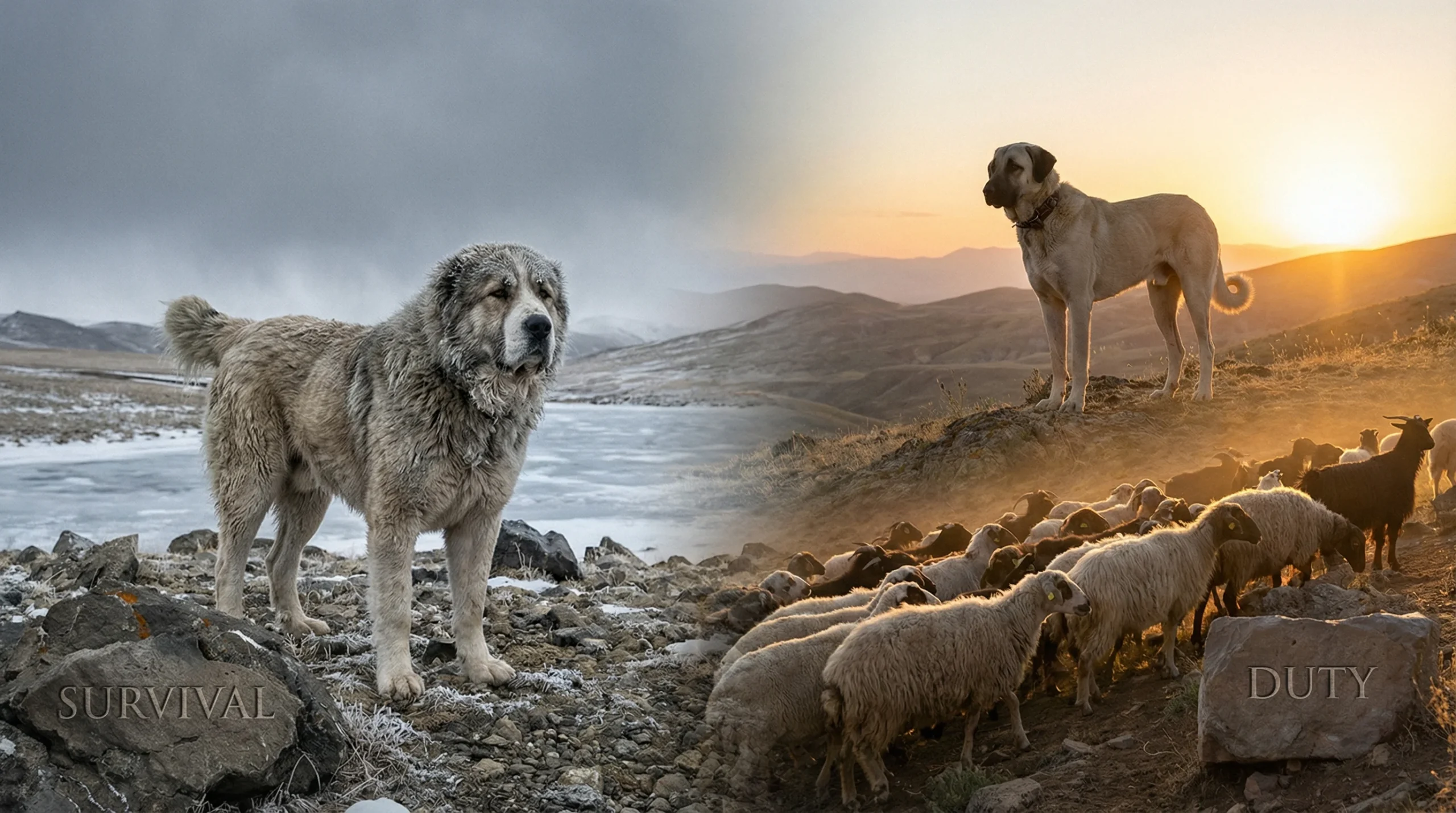
The Alabai, also known as the Central Asian Shepherd, originates from Central Asia where it guarded livestock against wolves, bears, and human threats. This breed evolved through natural selection, producing a dog that thinks independently and acts decisively without waiting for commands.
The Kangal originates from Turkey and was bred specifically to protect sheep from wolves. Unlike the Alabai, the Kangal was developed to operate under human supervision, making it more responsive and measured in its behaviour.
Size, Strength, and Physical Power
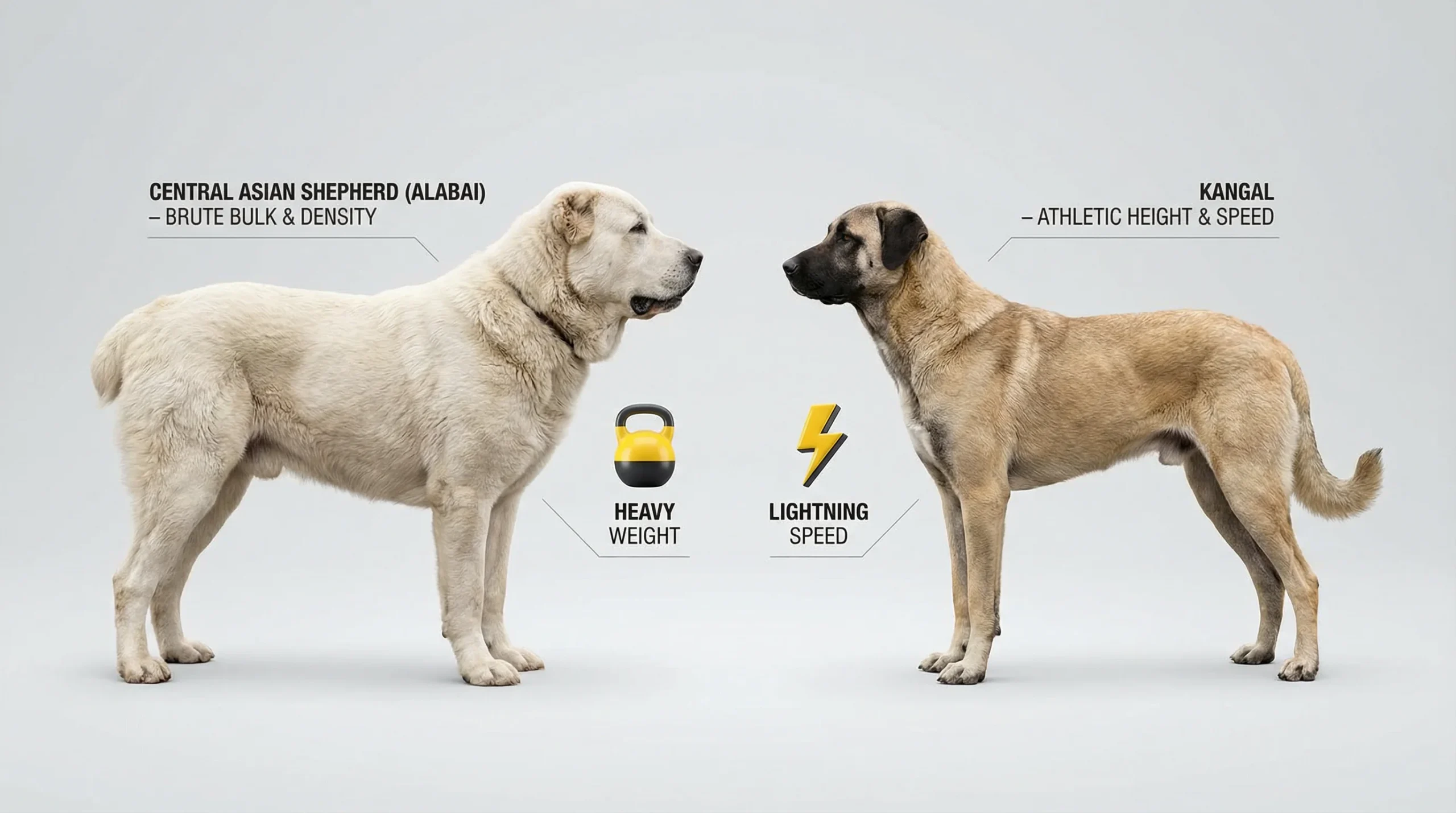
Both dogs are enormous, but their builds reflect different roles.
The Alabai is heavier, broader, and physically imposing at close range. Its sheer mass and presence alone can deter threats.
The Kangal is taller, leaner, and more athletic. It is built for speed, endurance, and controlled engagement rather than brute force alone.
Although bite force figures are often quoted online, power without control is meaningless in real ownership scenarios. For a deeper breakdown of physical proportions, growth, and scale, see our Central Asian Shepherd Dog size guide.
Temperament and Behaviour Differences
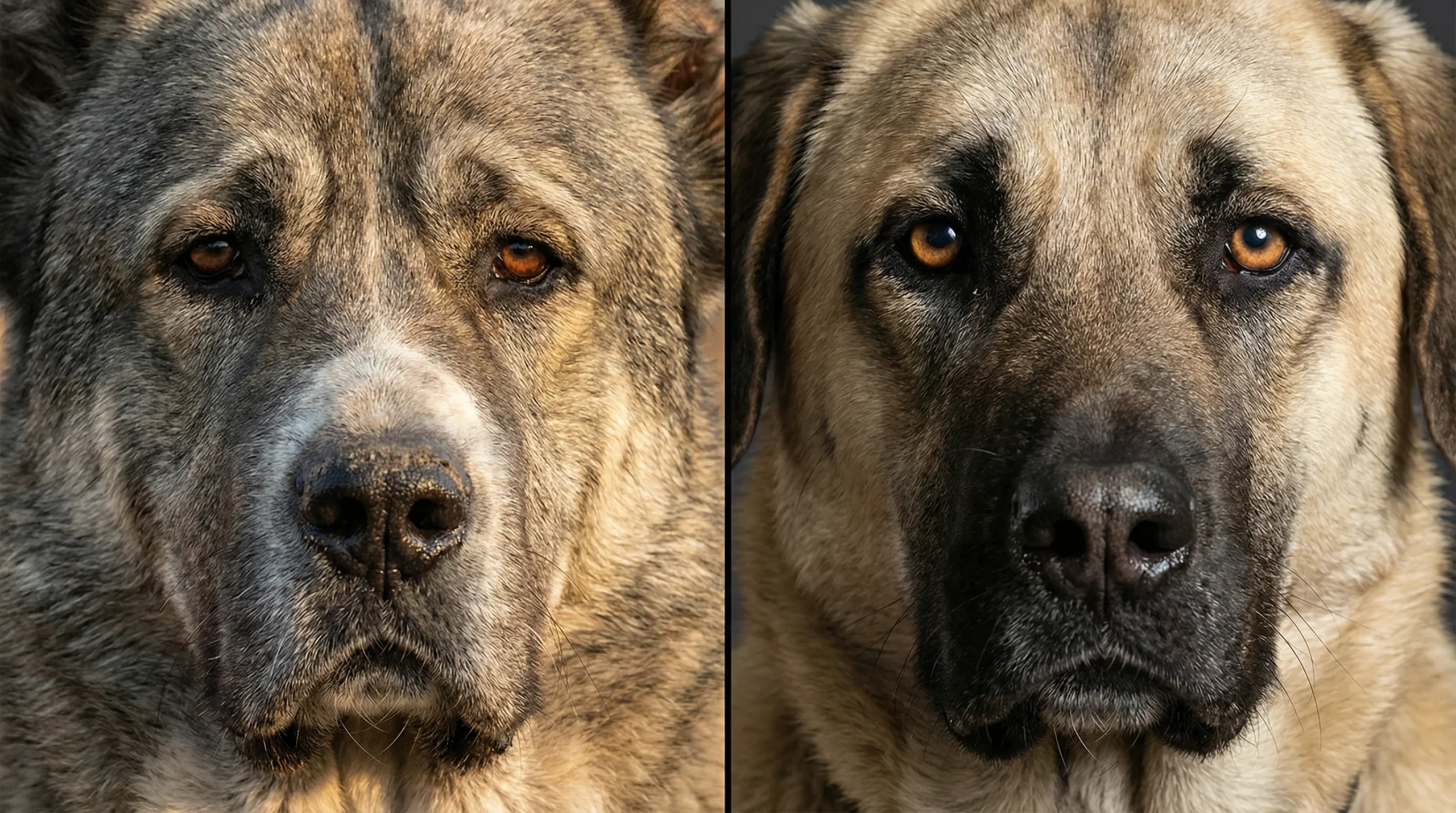
Temperament is where most owners underestimate these breeds.
The Alabai is naturally dominant, territorial, and suspicious of unfamiliar people and animals. It does not seek approval and will make independent decisions if it believes a threat exists.
The Kangal is calm, observant, and deliberate. Rather than reacting instantly, it assesses situations before acting, which makes it more predictable when properly managed.
This misconception is common, which is why we’ve also analysed whether Kangal dogs are aggressive when raised and handled correctly.
Training Difficulty and Handling Experience Required
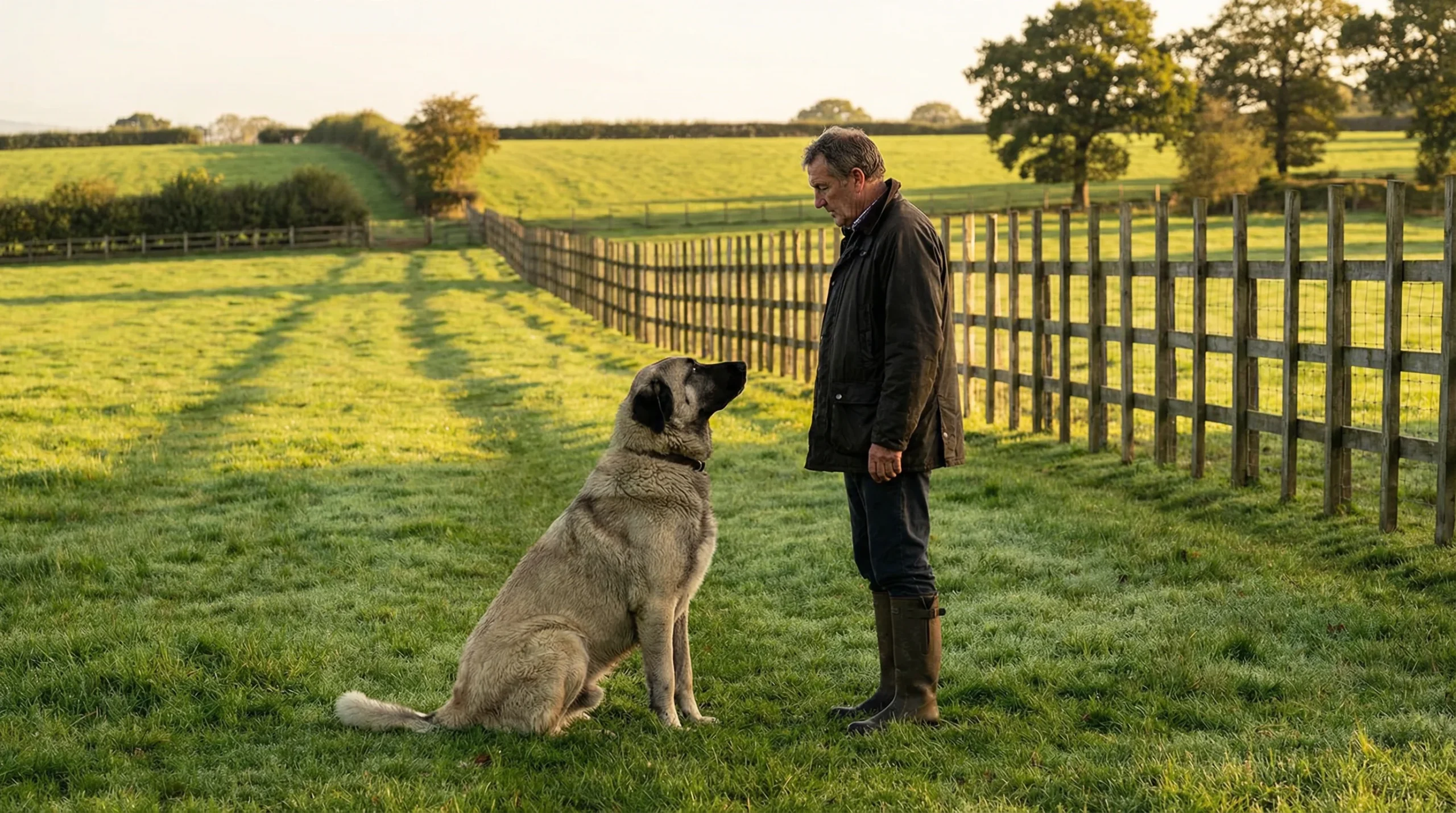
Above: While still demanding, the Kangal is more receptive to structured training and leadership than the independent Alabai.
Training separates suitable owners from disasters.
The Alabai is intelligent but extremely stubborn. Traditional obedience training often fails because the breed does not see repetition as valuable. Without early socialisation and experienced leadership, behavioural issues are likely.
The Kangal is not an easy dog, but it is more receptive to structured training and consistent routines. It still requires confidence and experience, but it is less resistant than the Alabai.
Guarding Style and Protective Instincts
The Alabai guards territory aggressively and decisively. Once it identifies a boundary as its own, it will defend it without hesitation.
The Kangal guards livestock and people using deterrence first. Its intimidating posture, deep bark, and calculated positioning are often enough to stop threats without escalation.
This difference matters enormously in modern environments.
Alabai Who Wins in a Direct Comparison?
This is where people ask bluntly: Alabai who wins?
For readers asking Alabai see who wins in a direct comparison, the answer depends entirely on environment, handling, and purpose — not raw strength alone.
In a raw territorial defence scenario with no human oversight, the Alabai’s dominance and autonomy give it the edge.
In controlled environments where predictability, restraint, and human coordination matter, the Kangal is the superior guardian.
There is no universal winner — only better suitability.
Contender Kangal: Why Many Owners Prefer Its Control
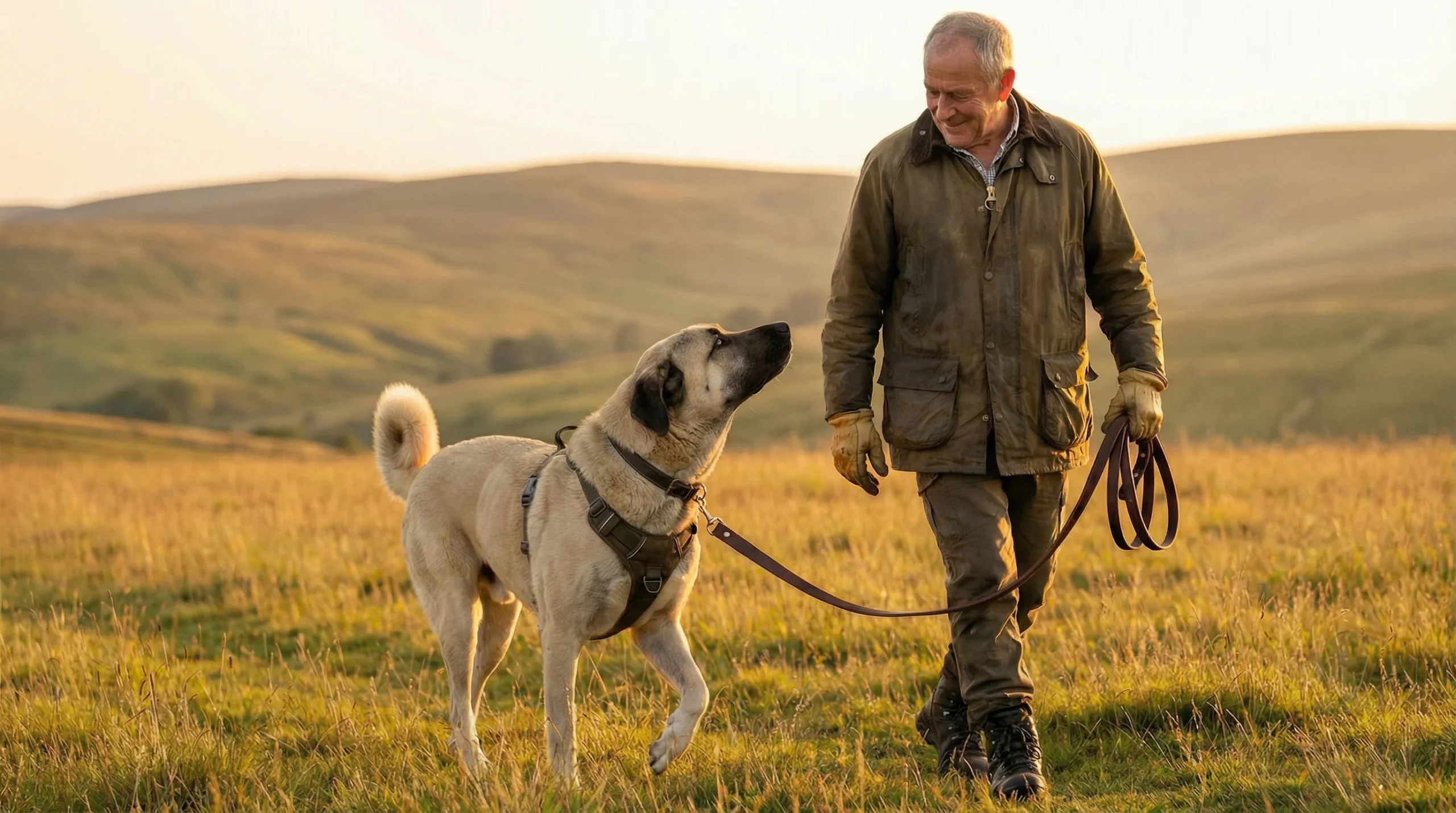
Above: The Kangal is bred to work alongside its handler, offering a level of focus and reliability that the independent Alabai lacks.
The contender Kangal stands out not because it is weaker, but because it is more balanced.
Its ability to assess threats, work alongside humans, and avoid unnecessary escalation makes it the preferred choice for experienced handlers who need reliability rather than constant management.
This balance is why the kangal vs alabai debate often favours the Kangal for real-world working roles.
UK Ownership: Legal, Space, and Experience Reality Check
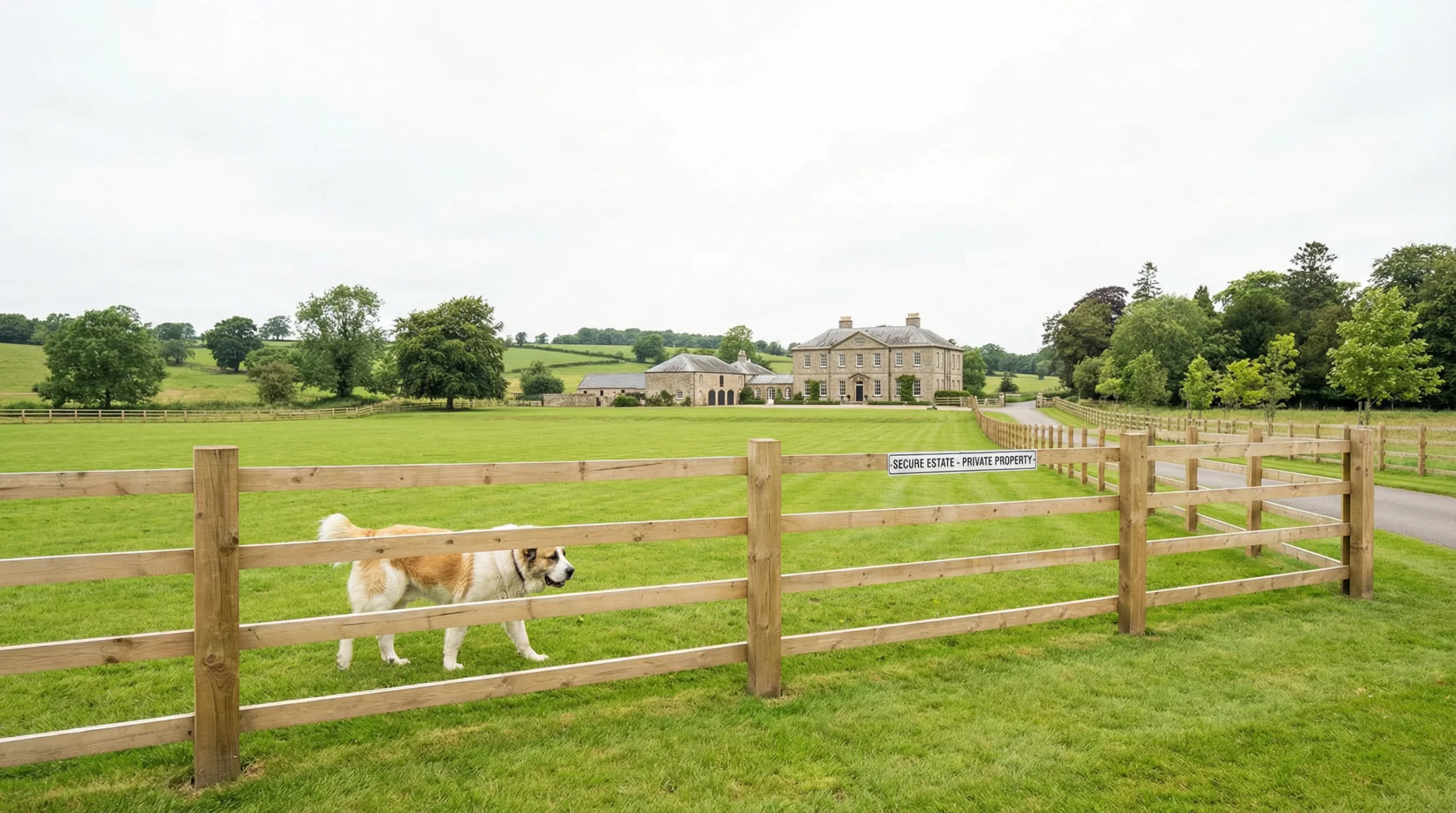
Above: Owning an Alabai in the UK requires extensive private land and secure perimeter fencing. They are not suitable for standard suburban gardens.
In the UK, both breeds present serious challenges. In the UK, the Kangal is recognised by the Royal Kennel Club as a livestock guardian breed developed to work alongside humans rather than independently.
Neither breed is banned, but both require:
- Extensive space
- Secure fencing
- Confident, experienced handling
The Alabai is particularly unsuitable for typical UK households due to its territorial instincts and intolerance of confined environments. UK owners should also be aware of lead control expectations in public spaces. Our guide on when dogs must be kept on leads explains where handler responsibility becomes legally critical.
The Kangal, while still demanding, adapts slightly better when given structure, space, and purpose. Even so, these breeds are not suitable for first-time owners or suburban living.
Anyone considering these breeds should also understand UK dog breeding regulations, particularly around licensing, welfare standards, and responsible ownership.
Verdict: Which Breed Should You Choose?
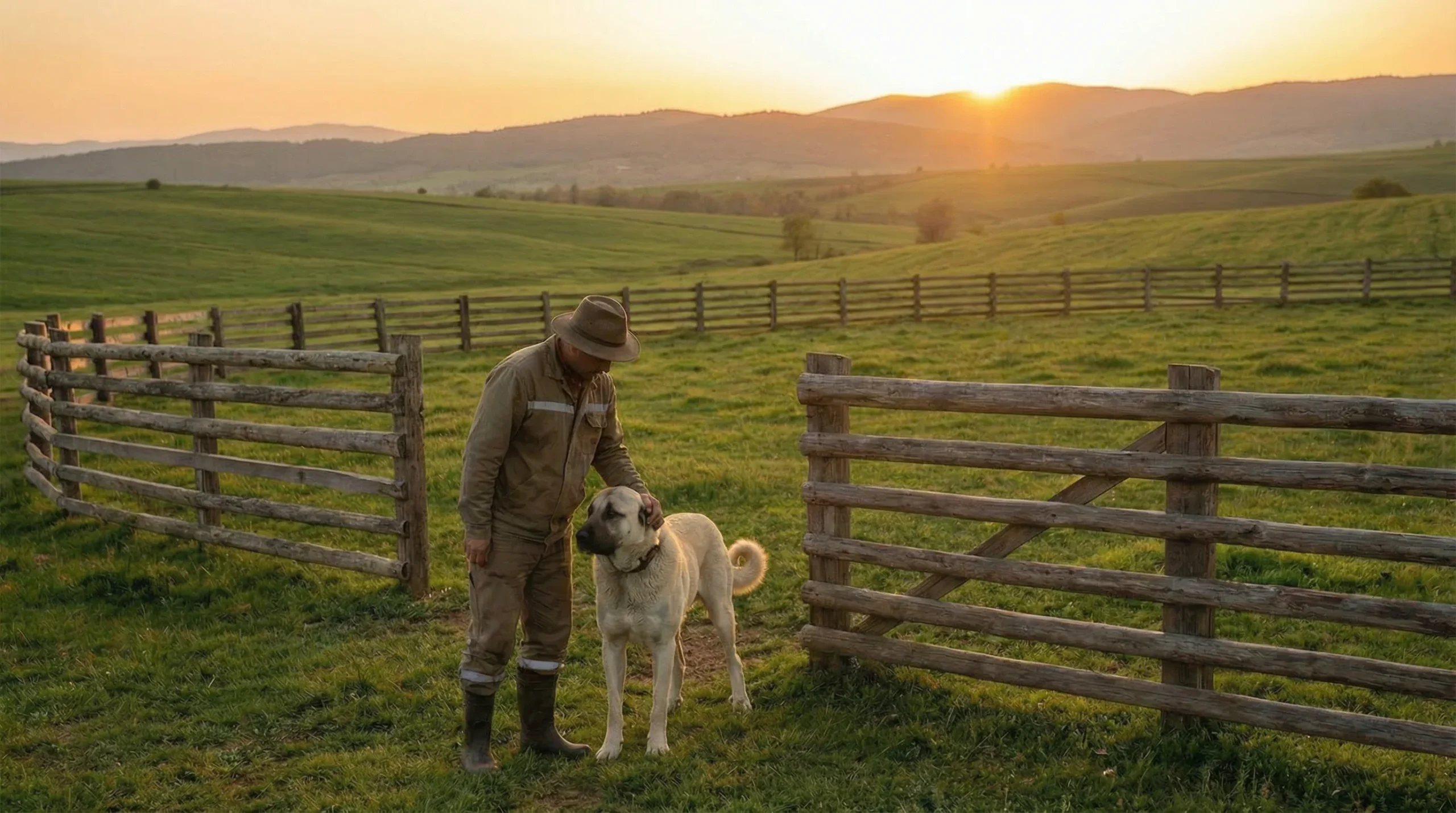
Above: The Kangal offers a balance of power and control, making it a safer choice for experienced owners needing integration with family life.
If you want a brutally honest verdict:
- Choose the Alabai only if you need uncompromising territorial defence and have the experience, land, and confidence to manage a dominant guardian.
- Choose the Kangal if you want a powerful protector that offers control, predictability, and safer integration with people.
For most owners — especially in the UK — the Kangal is the more realistic choice.
For raw independence and dominance, the Alabai remains unmatched.
Frequently Asked Questions
Is the Alabai stronger than the Kangal?
Physically, the Alabai is heavier and more imposing, but strength alone does not determine effectiveness.
Is Kangal vs Alabai a fair comparison?
Yes, but only when you consider purpose and environment, not just size or reputation.
Are either breeds good family dogs?
Both can bond with family, but neither is naturally suited to busy households or inexperienced owners.
Which breed is easier to control?
The Kangal is generally easier to manage due to its measured temperament and responsiveness.
Can either breed live in the UK comfortably?
Only with significant space, experience, and commitment. These are not casual ownership breeds.
Which dog is powerful than Kangal?
Power depends on how it’s defined. In terms of raw size and mass, some Mastiff-type breeds may outweigh a Kangal. However, the Kangal’s combination of strength, speed, endurance, and guarding instinct makes it one of the most effective livestock guardian dogs in the world, not just a “powerful” breed on paper.
Is Alabai the strongest dog?
The Alabai (Central Asian Shepherd Dog) is considered one of the strongest livestock guardian breeds due to its size, bone density, and independent guarding ability. That said, “strongest” is not an absolute term — strength varies by individual dog, environment, and purpose. In working roles, temperament and control matter as much as physical power.
Which dog is stronger, Kangal or Cane Corso?
The Kangal is generally considered stronger in a working guardian context due to its endurance, bite force, and livestock protection background. The Cane Corso is a powerful molosser bred for guarding and protection, but it was not developed to face large predators in open environments like the Kangal.
Who wins, hyena or Kangal?
This is not a realistic or ethical comparison. Hyenas are wild animals that operate in clans, while Kangals are domesticated working dogs bred for livestock protection. In real-world scenarios, Kangals are used as deterrents rather than direct combatants, and responsible comparisons focus on working ability, not staged confrontations.
