
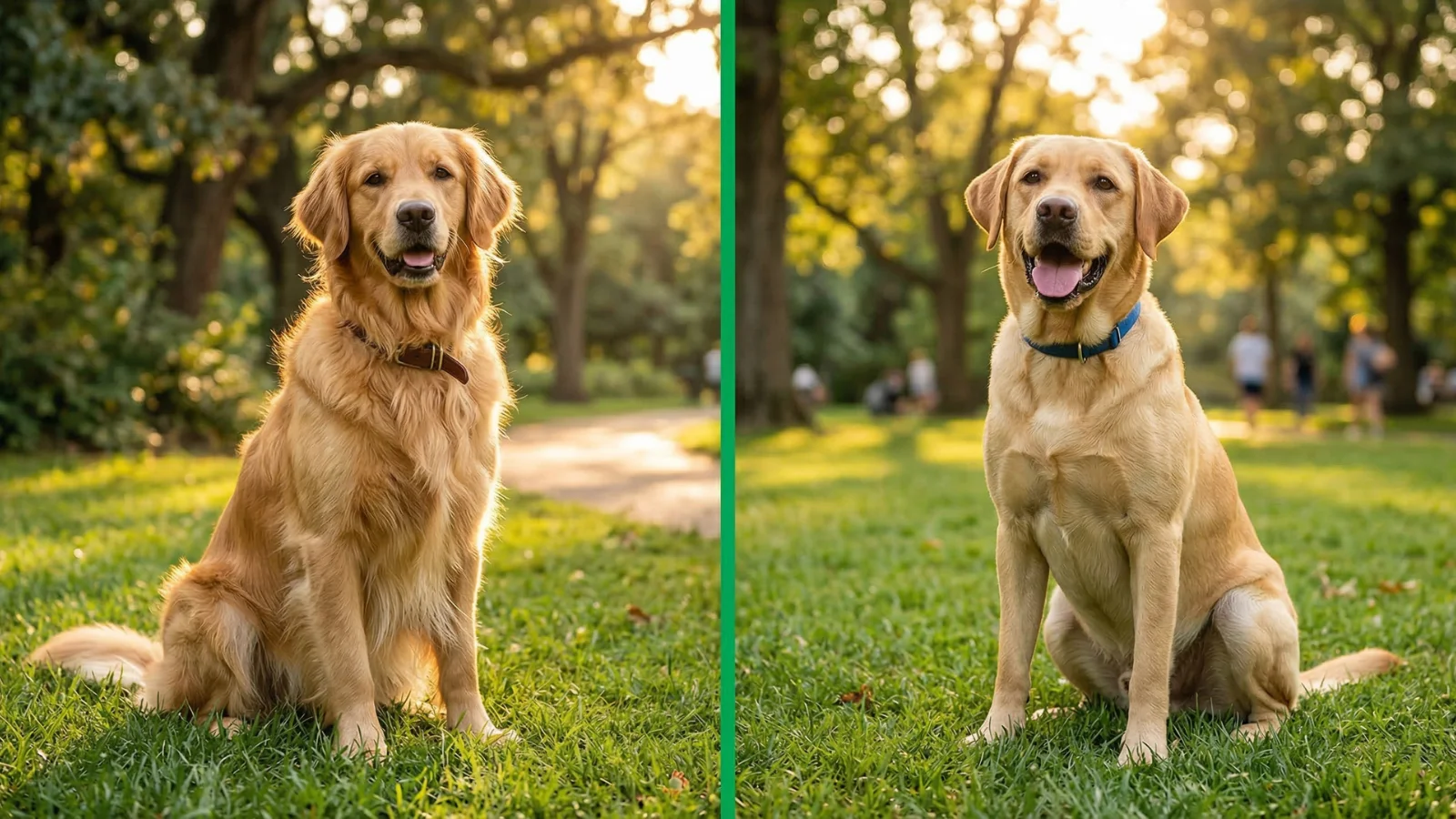
Golden Retriever vs Labrador is one of the most common family-dog decisions for UK households, and both consistently rank as the top two choices for households across the UK. It is the classic debate that has divided dog parks from the Highlands to Cornwall: the flowing golden coat versus the sleek, water-resistant otter tail. If you are looking for one of the best family dogs in the UK, understanding this nuance is key to a harmonious home.
At FlexK9, we don’t just look at cute puppies; we apply the “Dexter Test.” Our resident Cane Corso, Dexter, has set a high bar for stability, loyalty, and trainability. While we don’t currently own a Retriever, we have applied the same rigorous analysis to these breeds that we do for powerful working dogs. We have combined Kennel Club data, veterinary insights, and hands-on input from UK trainers to break down the Golden Retriever vs Labrador debate.
Both breeds are celebrated for their friendly nature, but they are not interchangeable. In this guide, we strip away the marketing to reveal the true differences in shedding, energy, and health risks to help you decide which dog actually suits your lifestyle.
TABLE OF CONTENTS
✅ Quick Verdict: Golden Retriever vs Labrador (Which Is Better for UK Families?)
Choose a Golden Retriever if:
- You want a calmer, more emotionally intuitive family dog
- You’re prepared for heavy grooming and regular coat maintenance
- You value gentleness, patience with children, and a softer temperament
- You prefer a dog that thrives on human connection over constant activity
Choose a Labrador Retriever if:
- You want a more energetic, robust, and food-motivated dog
- You enjoy outdoor activities like hiking, running, or water sports
- You prefer lower grooming effort but can manage higher exercise needs
- You want a highly trainable, work-driven dog that excels with structure
Bottom line: There is no better breed—only the right match between your energy level, grooming tolerance, and lifestyle.
🔍 Golden Retriever vs Labrador: At-a-Glance Comparison
| Feature | Golden Retriever | Labrador Retriever |
|---|---|---|
| Temperament | Calm, emotionally intuitive, people-focused | Energetic, outgoing, highly driven |
| Energy Level | Moderate–High (steadier pace) | High (needs daily outlet) |
| Trainability | Very high, eager to please | Extremely high, food-motivated |
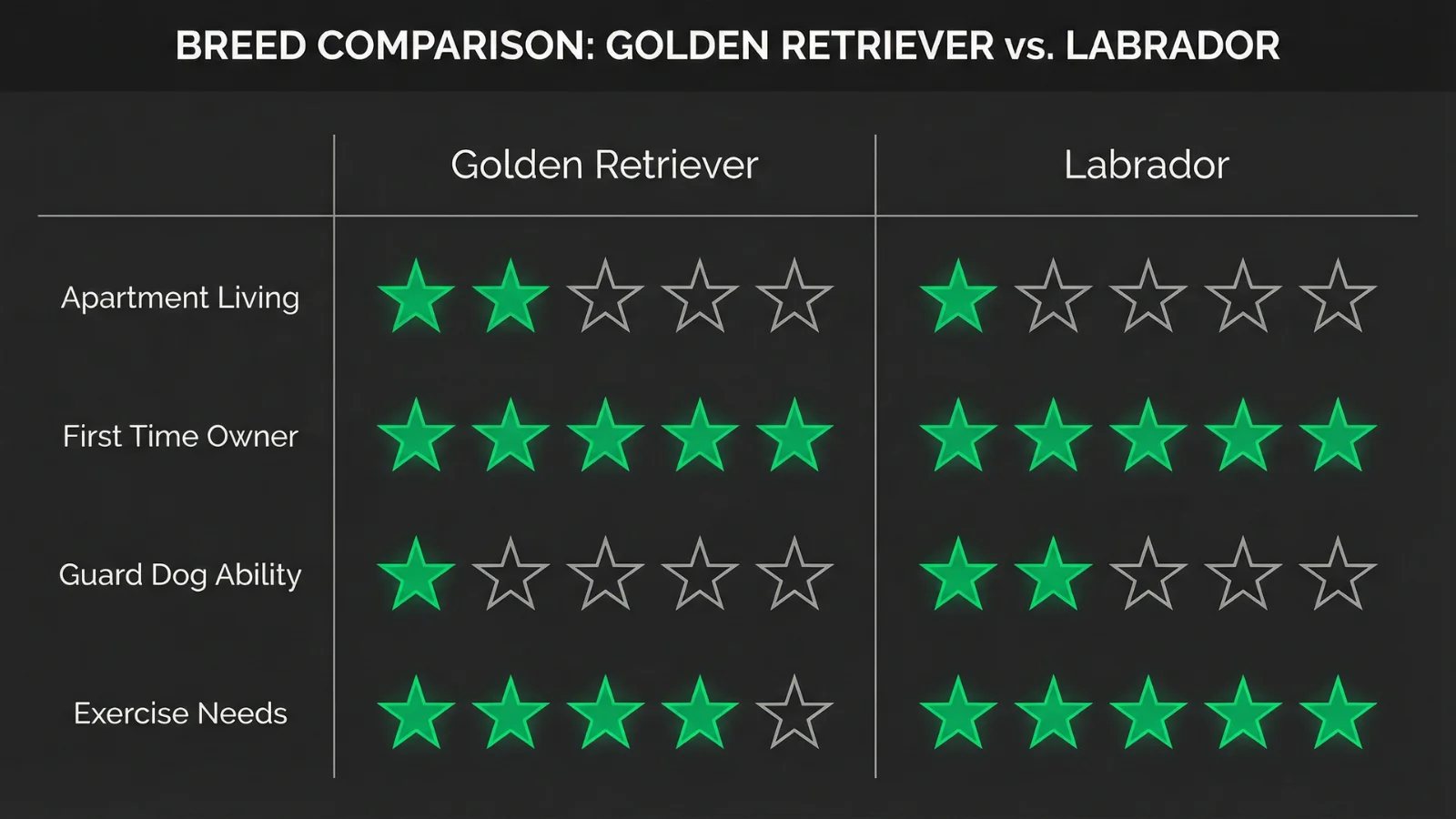
| Grooming Needs | ❌ High – long, feathered coat sheds heavily | ✅ Moderate – short coat, easy upkeep |
| Exercise Needs | 60–90 mins/day | 90+ mins/day |
| Health Watch-outs | Higher cancer risk, hip/elbow dysplasia | Obesity risk, joint strain if overweight |
| Best for Families | Excellent with children and calmer homes | Excellent for active, outdoorsy families |
| First-Time Owners | ✅ Yes (if grooming is managed) | ⚠️ Yes (if exercise is consistent) |
| Apartment Living | ⚠️ Possible with commitment | ❌ Not ideal without heavy exercise |
| UK Climate Suitability | Excellent | Excellent |
Temperament & Personality: The “Soft” vs. The “Social”
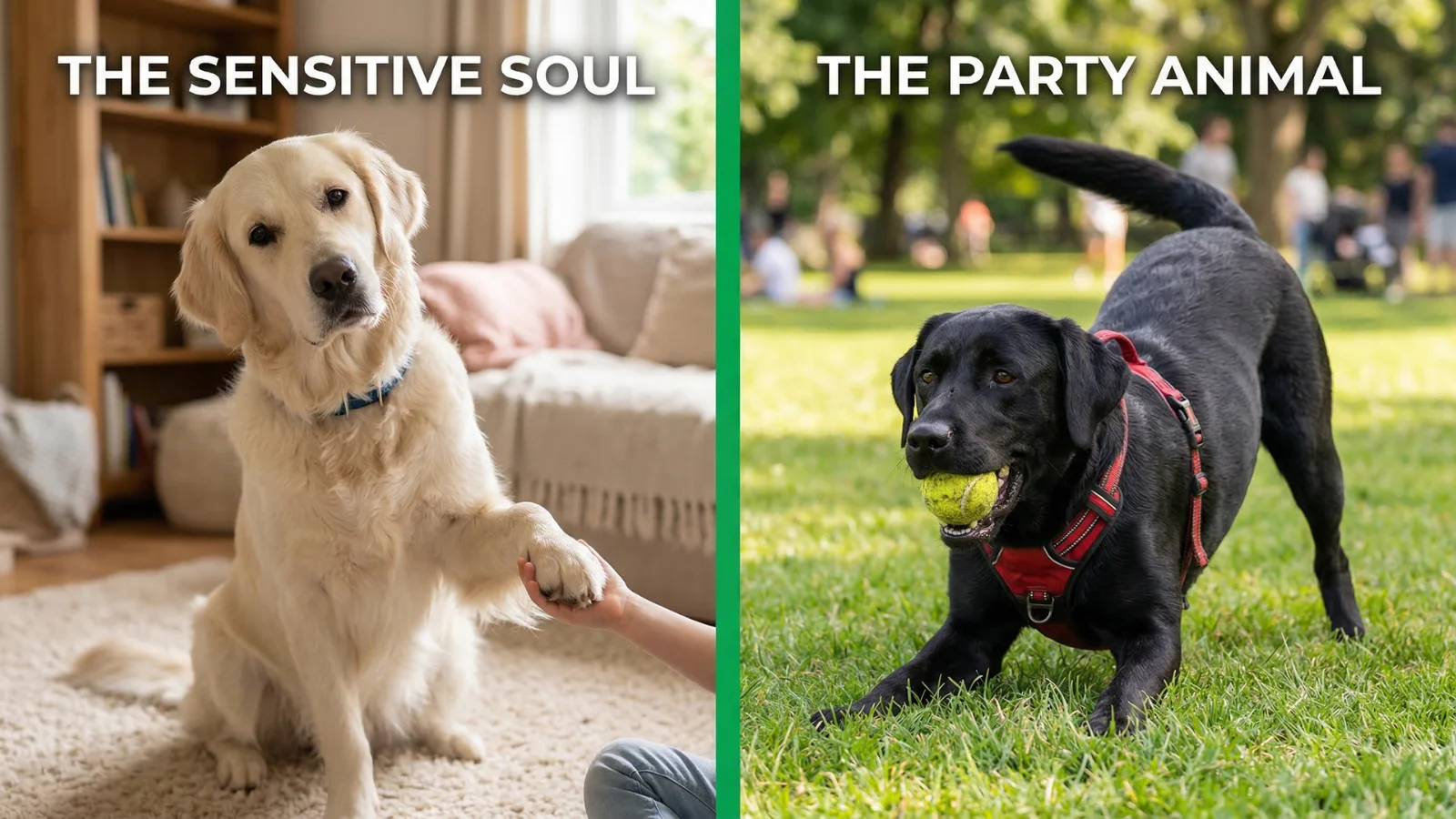
While both breeds are undeniably friendly, their social styles differ in ways that matter significantly for a family dynamic. If you are looking for the ultimate family companion, understanding this nuance is key to a harmonious home.
The Golden Retriever: The Sensitive Soul Golden Retrievers are widely regarded as the diplomats of the dog world. They tend to be more emotionally intuitive than Labradors. They are generally softer in temperament, meaning they do not respond well to harsh corrections or raised voices. Their desire to be close to their humans is intense, which is why they often feature on our list of the most intelligent dog breeds for their ability to read human cues. This sensitivity makes them fantastic therapy dogs, but it can also mean they are more prone to sulking if they feel unfairly treated.
The Labrador Retriever: The Party Animal Labradors are often described as “canine optimists.” They are bolder, more boisterous, and often have a much higher threshold for chaos. This makes them exceptionally resilient in busy households with loud children or frequent visitors. A Labrador is less likely to be offended by a chaotic environment than a Golden, but they are also more likely to cause the chaos themselves. Despite the chaos, well-trained Labradors are deeply loyal, emotionally stable dogs that thrive on structure and purpose. They love everyone, often indiscriminately, which is wonderful for socialisation but terrible for anyone expecting a guard dog.
Intelligence and Trainability
Both breeds are in the top tier of working intelligence, consistently ranking in the top ten of all breeds for obedience. However, their motivation differs, which changes how you train them.
Labradors are famously food-motivated. You can teach a Lab almost anything—from retrieving keys to closing doors—if you have a high-value treat in your hand. Their stomachs rule their brains, which is a powerful tool for a novice trainer. They are eager to work and will repeat a task fifty times just for a piece of kibble.
Golden Retrievers are also food-motivated, but they are equally driven by praise and the desire to please their handler. They work for the connection as much as the reward. This can make them slightly more focus-driven in obedience trials, but they might shut down if the training becomes too repetitive or the handler becomes frustrated. A Golden requires a gentle hand and a calm leader; a Lab requires a clear, consistent leader who can manage high excitement levels. If you are interested in how they stack up against scent hounds, you might find our comparison of the Beagle vs Labrador interesting, as it highlights just how much easier Retrievers are to train.
For a detailed breakdown of their official working standards, you can review the Kennel Club’s breed standard for Retrievers.
Are They Good with Children?
Both breeds are exceptionally good with children, but the way they interact is different. The Golden’s lower arousal levels often make them safer for toddlers who might be knocked over by a bouncy, exuberant Labrador. A Golden is more likely to lie down and let a child crawl over them (though this should never be encouraged).
Labradors are robust playmates for older, energetic children who want to throw a ball for hours. They have a “harder” body style and are less likely to yelp if a child accidentally steps on a toe. However, a young, untrained Labrador can be a bulldozer. Their sheer joy can result in accidental knocks and bumps. Regardless of the breed, supervision is mandatory. Even the gentlest Golden has a limit, and it is unfair to rely solely on a dog’s patience.
Exercise & Energy: The “Off-Switch” Myth

One of the biggest misconceptions we see at FlexK9 is that Goldens are “lazy” or purely indoor dogs. They are not. They are a sporting breed, originally designed to retrieve game from the Scottish Highlands. However, compared to a working-line Labrador, they often have a better “off-switch” indoors.
Labrador Energy: A young Labrador is a kinetic force. They require significant mental and physical stimulation. Without a job to do (retrieving, scent work, or agility), they can become destructive. This isn’t malice; it’s boredom. We often see owners needing specific dog enrichment toys just to get a moment of peace. They don’t just need a walk; they need to think.
Golden Retriever Energy: Goldens need daily exercise—at least an hour of quality movement but they are generally happier to settle down for a Netflix binge after their walk. They are “steady” rather than “intense.” They will happily hike up a mountain with you, but they won’t pace the living room if you miss one walk due to the flu.
Water Work: Both breeds have webbed feet and a genetic love for water. If you live near the coast or lakes, be prepared for a wet dog. The Labrador, in particular, will find mud in a drought. Their coat is designed to repel water, but that doesn’t mean they won’t bring the smell of the pond into your car. Always ensure you are compliant with government rules on controlling your dog in public, especially around livestock.
Grooming & Shedding: The Real Maintenance Gap

This is often the tie-breaker for potential owners. If you cannot tolerate dog hair, neither breed is for you. However, the type of maintenance varies significantly.
The Golden Retriever Coat: Goldens have a long, water-repellent double coat. They are high-maintenance grooming dogs.
- Feathering: The long hair on the legs, tail, and ears (feathers) picks up mud, burrs, and debris easily. After a walk in the woods, you will spend time picking twigs out of their furnishings.
- Matting: Without regular brushing (3-5 times a week), the soft undercoat can impact and cause painful mats, particularly behind the ears and under the armpits.
- The Tumbleweeds: Their shed hair tends to clump into soft “tumbleweeds” that drift into the corners of the room. It is easier to pick up than Lab hair, but there is more volume of it. It is notoriously difficult to remove from fleece or car upholstery, making our guide on how to get dog hair out of a blanket essential reading.
You will need a specific toolkit, and we have reviewed the best brush for a Golden Retriever to help you manage this.
The Labrador Coat: Labs have a short, dense, weather-resistant double coat.
- The “Blow out”: Twice a year (spring and autumn), Labs shed their undercoat in massive quantities. It will cover your floor, your clothes, and your furniture.
- Everyday Shedding: Unlike Goldens, whose hair clumps, Lab hair is needle-like and weaves itself into fabrics. It is notoriously difficult to remove from fleece or car upholstery.
- Tools: You don’t need slicker brushes as much as you need rubber currying brushes and the best deshedding tools for dogs to drag out that dead undercoat.
Health Watch: Cancer vs. Obesity

At FlexK9, we believe in radical transparency regarding health. Both breeds are generally healthy, but they have distinct genetic Achilles’ heels that every UK owner must be aware of before purchasing insurance.
Golden Retriever Health Risks:
- Cancer: Tragically, Goldens have a very high rate of cancer (hemangiosarcoma and lymphosarcoma), a topic we discuss deeply in our article: why are Golden Retrievers dying younger?
- Skin Allergies: They are prone to ichthyosis (fish scale disease) and atopic dermatitis. You may find yourself managing hot spots and itchy paws frequently.
Labrador Health Risks:
- Obesity: Labs lack the genetic “off switch” for hunger (a mutation in the POMC gene is common). They will eat until they burst. Managing their weight is critical to prevent joint strain. You must be the strict guardian of the food bowl.
- Joint Issues: Hip and elbow dysplasia are common in both, so we highly recommend starting preventative care early—read our 2026 analyst report on the best dog joint supplements. We highly recommend checking the BVA/Kennel Club Hip Dysplasia Scheme scores of the parents before buying a puppy.
Diet & Nutrition
Feeding these breeds requires precision. For Golden Retrievers, growth must be controlled to protect joints; use our Golden Retriever feeding chart by age to get the portions right. You want a slow, steady growth rate rather than a rapid bulk-up. For Labradors, you are constantly battling the bulge. Measuring cups are not optional; they are mandatory. High-quality protein with moderate fat levels is usually the best approach, but always consult with your vet or a canine nutritionist.
Cost & Lifestyle Compatibility
Owning a large breed in the UK is an investment. Beyond the purchase price, the monthly costs for high-quality food, comprehensive pet insurance (which is higher for Goldens due to cancer risks), and preventatives are significant.
Apartment Living
Can they live in a flat? Technically, yes, but it is hard work. Golden Retrievers generally adapt better to smaller spaces due to their lower indoor energy and ability to settle. However, stairs are a killer for their joints. If you are on a high floor without a lift, you must consider the long-term impact on their hips as they age. Carrying a 35kg dog up three flights of stairs is not feasible for most people.
The Dexter Test
In our experience raising a Cane Corso, we value a dog that is “bombproof” in public environments. Labradors generally pass this test with flying colours due to their sheer confidence; loud noises and crowds rarely faze them. Golden Retrievers pass it due to their lack of aggression and desire to be good boys. However, for a first-time owner, the Golden Retriever is often the “safer” bet emotionally because they are less likely to pull you over to say hello to a stranger, while the Labrador is the “easier” bet for grooming maintenance.
Frequently Asked Questions
Do Golden Retrievers shed more than Labradors?
Yes, in terms of volume and visibility, Golden Retrievers shed more. Their long coats produce significant amounts of dander and loose fur that forms “tumbleweeds” around the house. However, Labrador hair is often described as more annoying because it is short, needle-like, and sticks stubbornly to clothing and upholstery. Both are heavy shedders compared to single-coated breeds.
Which breed is calmer: Golden Retriever or Labrador?
The Golden Retriever is generally the calmer of the two, especially indoors. They have a better “off-switch” and are content to lounge around the house once they have had their exercise. Labradors retain a puppy-like exuberance well into adulthood (often until age 3 or 4) and can be more restless if they haven’t had a job to do.
Are Golden Retrievers or Labradors better for first-time owners?
Both are excellent choices, but the Labrador is often cited as slightly better for first-time owners due to their resilience. If you make a training mistake, a Lab is likely to bounce back and try again. A Golden Retriever is more sensitive and might take a harsh tone to heart. However, if you are naturally gentle and patient, the Golden’s eagerness to please can make them easier to handle than a boisterous Lab.
Which breed has more health problems?
Both breeds have serious health concerns, but they differ in nature. Golden Retrievers have a statistically higher risk of cancer (approx. 60% of Goldens die from it), which can shorten their lifespan unexpectedly. Labradors are healthier in terms of disease but are prone to obesity-related issues like arthritis and diabetes.
Can I leave a Golden Retriever or Labrador alone while I work?
Neither breed does well with long periods of isolation. Golden Retrievers, in particular, are prone to separation anxiety because they bond so intensely with their humans. Labradors can tolerate it slightly better but are prone to destructive boredom (chewing) if left alone too long. If you work full-time, a dog walker is essential, and you may want to look into the best calming products for dogs to help them settle.
Do they need a big garden?
A big garden is a bonus, but not a substitute for walking. A Labrador will not exercise itself in a garden; it will sit by the back door waiting for you. Golden Retrievers are similar. As long as you provide 60-90 minutes of structured exercise daily (walks, fetch, swimming), both breeds can live in homes with modest gardens.
Are they aggressive?
Neither breed is known for aggression; they are both bred to be cooperative working dogs. However, due to their popularity, Labradors are statistically involved in more bite incidents, often due to poor breeding or lack of training. A Golden Retriever is less likely to be territorial, whereas some Labradors can be protective of their space or food. Proper socialisation is vital for both.
