
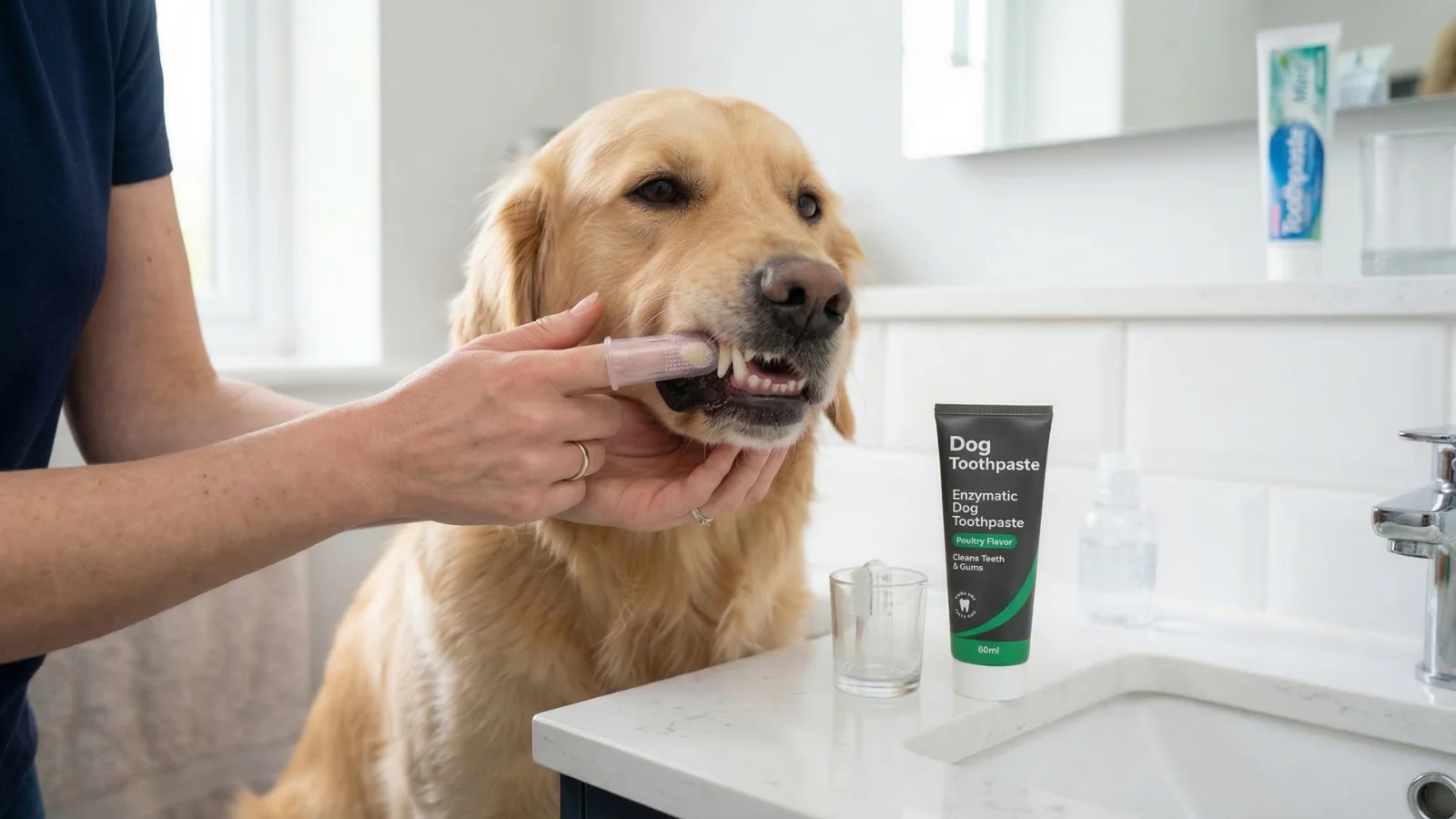
Many owners find themselves asking: Can dogs use human toothpaste in a pinch? The short answer is an absolute no. You should never use human toothpaste on your dog. It often contains artificial sweeteners like Xylitol and high levels of fluoride, both of which are highly toxic to canines.
FlexK9 is an educational resource for responsible dog owners, not a veterinary practice. The information in this guide is provided for general educational purposes only. If you suspect your dog has ingested human toothpaste containing xylitol or fluoride, contact your local UK veterinarian immediately or call the Animal PoisonLine (01202 509000) for urgent advice.
Unlike humans, dogs do not know how to rinse and spit; they instinctively swallow whatever is in their mouth. This fundamental biological difference turns a simple dental hygiene routine into a high-risk ingestion event. Because human toothpaste is formulated with the assumption that it will be spat out, it contains chemicals, foaming agents, and detergents that a dog’s digestive and metabolic systems simply cannot process.
According to the Blue Cross, even a tiny amount of Xylitol (sometimes labelled as birch sugar) can cause a dog’s blood sugar to plummet to life-threatening levels within 15 minutes, rapidly progressing to acute liver failure.
While we all want our dogs to have fresh breath and plaque-free teeth, human dental products are not the shortcut. In this guide, we will break down the exact toxic risks lurking in your bathroom cabinet, provide a clear emergency action plan if your dog swallows human toothpaste, and review the safest, canine-specific alternatives to keep your dog’s oral health in peak condition.
🚨 FlexK9 Emergency Action Plan
If your dog has swallowed human toothpaste, stay calm but act quickly. Follow these steps immediately:
- Remove the source: Take the toothpaste tube away and gently wipe any remaining paste from your dog’s mouth with a damp cloth.
- Check the label: Look for dangerous ingredients such as xylitol (also listed as birch sugar, E967, or xylite) and fluoride.
- Estimate the amount: Try to determine roughly how much toothpaste was swallowed (for example, a pea-sized amount versus half a tube).
- Do NOT induce vomiting: Never attempt to make your dog vomit unless a veterinary professional explicitly instructs you to do so.
- Call a professional immediately: If xylitol appears on the ingredient list or if you are unsure, contact your vet straight away or call the UK Animal PoisonLine on 01202 509000.
TABLE OF CONTENTS
Can Dogs Use Human Toothpaste? The Risks Explained
It is easy to assume that because a product is safe for us, it must be safe for our four-legged friends. However, just as we frequently warn owners who wonder if you can use human shampoo on dogs, human toothpaste is another household item that is completely incompatible with canine biology.
The fundamental difference lies in the application. When humans brush, we are taught from a young age to spit out the foam. Dogs do not have this ability. When you brush a dog’s teeth, they will inevitably swallow the paste. This turns a dental hygiene routine into a dietary event. Because human toothpaste is formulated with the assumption that it will not be ingested in large quantities, it contains chemicals and cleaning agents that a dog’s digestive system simply cannot handle.
Furthermore, the concentration of certain ingredients in human brands is far too high for a dog’s smaller body mass. Even a small amount of paste on a finger brush can contain enough toxins to trigger a medical emergency, particularly in smaller breeds.
Xylitol Toxicity: The Silent Killer in Toothpaste
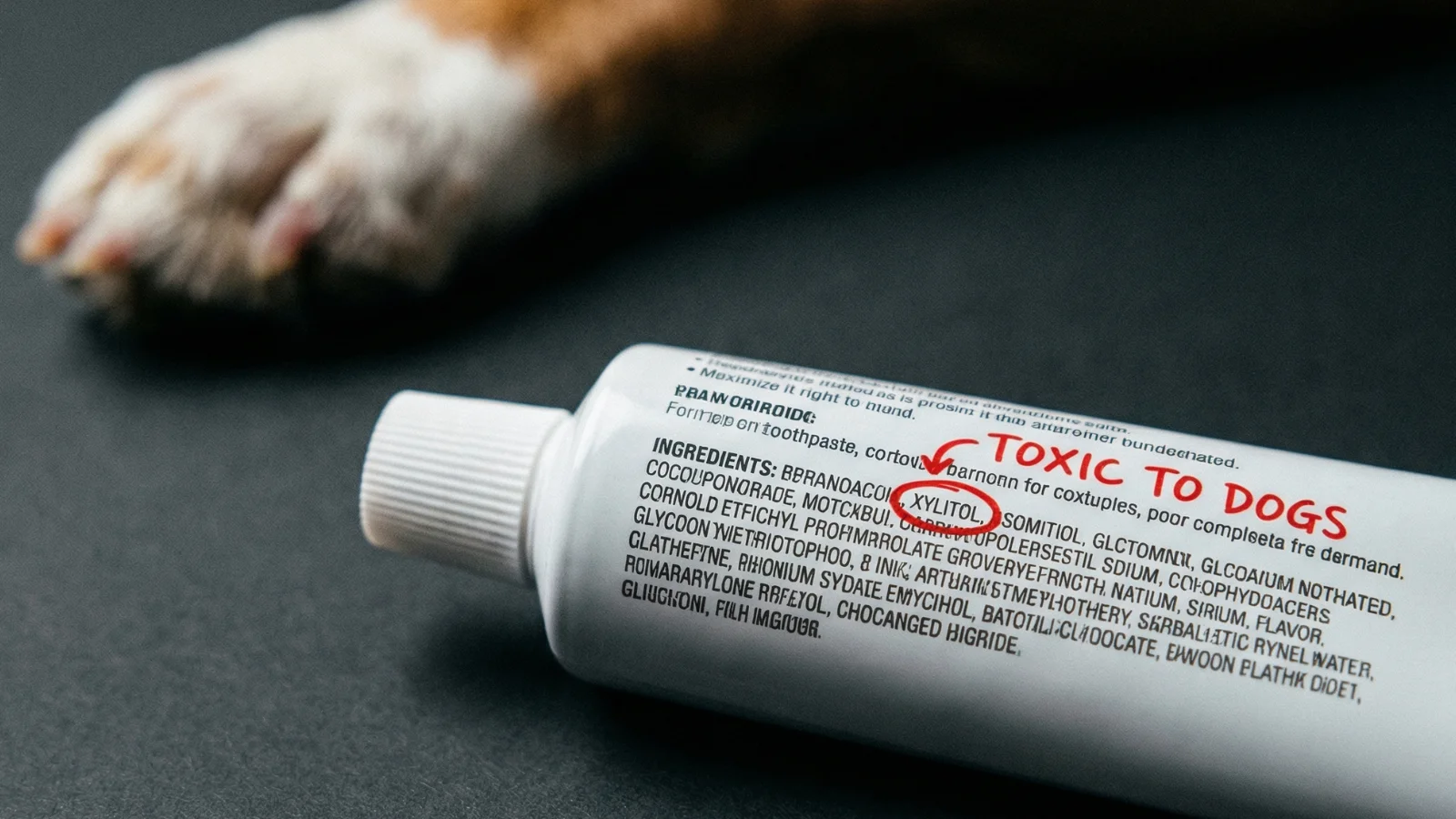
The single biggest danger lurking in your bathroom cabinet is Xylitol. This is an artificial sweetener used in countless human products, including sugar-free gum, peanut butter, and a vast number of toothpaste brands (to make them palatable without sugar).
While Xylitol is perfectly safe for humans, it is lethal to dogs and is a major offender on our list of 22 foods that can kill your dog.
When a dog ingests Xylitol, their body mistakes it for real sugar. This triggers the pancreas to release a massive, potent surge of insulin. This insulin spike causes the dog’s blood sugar levels to crash dramatically (hypoglycemia) within 10 to 60 minutes.
Symptoms of Xylitol Poisoning include:
- Vomiting
- Loss of coordination (stumbling or looking drunk)
- Collapse and seizures
- Liver failure (which can occur within a few days)
The Risks of Fluoride and Foaming Agents
Even if your toothpaste is Xylitol-free, it is still not safe. Most human toothpastes rely on fluoride to strengthen enamel. While beneficial for human teeth, the MSD Veterinary Manual explicitly classifies fluoride as highly toxic to pets. Chronic fluoride ingestion, which would happen if you brushed your dog’s teeth daily with human paste can lead to severe bone abnormalities and organ damage, while swallowing a large amount at once causes acute gastric pain and vomiting.
Another problematic ingredient is Sodium Lauryl Sulfate (SLS). This is a foaming agent that gives toothpaste that satisfying, bubbly texture we humans enjoy. For a dog, however, SLS causes significant gastrointestinal distress. Because dogs swallow the foam, SLS can cause gastrointestinal upset, including diarrhoea, vomiting, and stomach discomfort.
Finally, the strong mint flavours found in human paste, like peppermint, spearmint, or menthol, are often too intense for a dog’s sensitive nose and tongue. Using a product that stings or burns their mouth creates a negative association with toothbrushing, making it much harder for you to maintain a dental routine in the future.
Safe & Effective Alternatives to Human Toothpaste
Now that we have established what not to use, let’s look at the solutions. The good news is that the pet industry has evolved significantly. There are now excellent, safe products designed specifically for canine biology, ranging from enzymatic pastes to the best dog plaque removers.
The goal of dog toothpaste is twofold: to mechanically clean the teeth (abrasion) and to chemically reduce plaque (enzymes), all while being tasty enough that the dog views the process as a treat rather than a chore.
Commercial Dog Toothpastes: What to Look For
When shopping for dog toothpaste, ignore the flashy packaging and look straight at the label. You want a product that is “enzymatic.”
Enzymatic Toothpastes are the gold standard in canine dental care. They contain enzymes (proteins) that help break down plaque and tartar bacteria chemically. This is crucial because, let’s be honest, dogs rarely sit still long enough for us to scrub every single tooth perfectly. The enzymes continue working in the mouth even after you have finished brushing.
Key features of high-quality dog toothpaste:
- Non-Foaming: It should not bubble up like human paste.
- Swallow-Safe: Formulated to be digested without issue.
- Palatable Flavours: Look for poultry (chicken/turkey), beef, or peanut butter flavours. There are mint-vanilla options for dogs who tolerate them, but meaty flavours usually garner better cooperation.
At FlexK9, we always recommend testing a small amount of the new paste on your finger and letting your dog lick it off before introducing the toothbrush. This builds trust and ensures they like the flavour.
Human vs. Dog Toothpaste: Safety Comparison
| Toothpaste Type | Swallow-Safe? | Xylitol Risk | Fluoride Risk | FlexK9 Verdict |
| Human (Adult) | ❌ No | ⚠️ High | ⚠️ High | Toxic – Never use |
| Human (Child) | ❌ No | ⚠️ Moderate | ⚠️ Moderate | Unsafe – Do not use |
| Baking Soda (DIY) | ⚠️ Caution | ❌ None | ❌ None | Avoid – Too abrasive & salty |
| Coconut Oil (DIY) | ✅ Yes | ❌ None | ❌ None | Safe – Good for maintenance |
| Enzymatic Dog Paste | ✅ Yes | ❌ None | ❌ None | Best Choice – Breaks down plaque |
DIY Dog Toothpaste: Recipes and Natural Options
If you are in a pinch or prefer natural home remedies, you can make your own effective dog toothpaste. However, precise ingredients matter here to ensure safety.
1. Coconut Oil: Coconut oil is a fantastic natural cleaner. It contains lauric acid, which has antimicrobial and anti-fungal properties that can help kill the bacteria causing bad breath. Most dogs love the taste, making it an easy “starter paste.”
2. Baking Soda (With Caution): Baking soda is a common ingredient in DIY recipes because of its abrasive nature—it scrubs stains well. However, it has a high sodium content and tastes salty/bitter. It should only be used in very small quantities and not for dogs with heart conditions or those on low-sodium diets.
A Simple DIY Recipe:
- 1 tablespoon of unrefined coconut oil (softened)
- 1 teaspoon of turmeric (for natural whitening and anti-inflammatory benefits)
- 1 pinch of dried parsley (for breath freshening)
- Mix into a paste and store in the fridge.
Note: While safe, DIY options generally lack the enzymatic power of commercial veterinary pastes. They are great for maintenance but may not be enough to reverse heavy tartar build-up.
How to Brush Your Dog’s Teeth Safely (Step-by-Step)
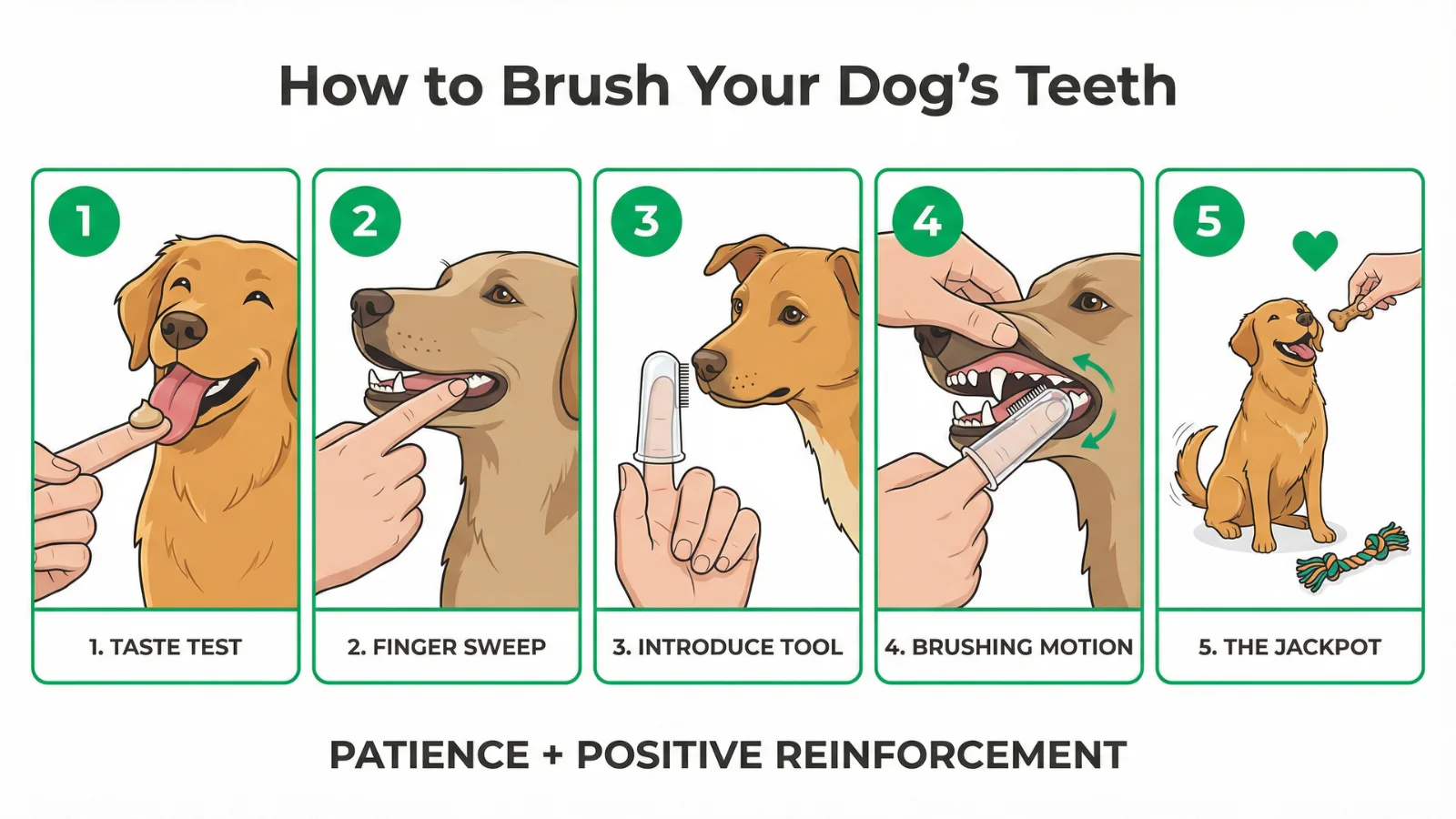
This visual infographic breaks down the essential five steps for a safe and happy dental routine with your dog, focusing on patience and reward-based training.
Knowing what to use is half the battle; knowing how to use it is the rest. Many owners give up on brushing because their dog struggles or bites. If this sounds like you, you may want to learn how to clean dog teeth without brushing, but if you are ready to train your dog to accept the brush, the secret is patience and positive reinforcement.
Step 1: The Taste Test
Before bringing a brush near the dog, put a pea-sized amount of dog-safe toothpaste on your finger. Let them lick it off. Praise them heavily. Do this for 2-3 days until they get excited when they see the tube.
Step 2: The Finger Sweep
Once they like the taste, apply the paste to your finger and gently rub it along their gum line and front teeth. Do not worry about the back teeth yet. This gets them used to the sensation of something rubbing against their gums.
Step 3: Introducing the Tool
Introduce a finger brush (a silicone thimble with bristles) or a soft-bristled dog toothbrush. Add the paste and let them lick it off the bristles first.
Step 4: The Brushing Motion
Gently lift the lip and brush in small circles, focusing on the gum line where plaque accumulates. Start with the canines (fangs) and molars. Do not worry too much about the inside of the teeth (tongue side)—the dog’s rough tongue actually keeps that area relatively clean. Focus on the outside surfaces that touch the cheeks.
Step 5: The Jackpot
Always finish with a high-value reward or a game, such as a 10-minute session with their favourite dog enrichment toys. This teaches your dog to link the toothbrush with their favourite treats, making them actually look forward to brushing time.
Spotting the Signs of Dental Disease
Even with regular brushing, it is vital to perform a weekly ‘mouth check.’ While owners often worry about a wide range of common dog health problems, research from the Royal Veterinary College confirms that periodontal disease is the most widely diagnosed issue, affecting a vast majority of dogs by just three years of age.
Watch out for these Red Flags:
- Halitosis: Dog breath shouldn’t smell like roses, but it shouldn’t smell like rotting garbage or fish. A truly foul odour usually indicates infection.
- Red or Bleeding Gums: Healthy gums should be bubblegum pink (unless pigmented black naturally). If you are wondering why your dog’s gums bleed when brushing, an angry red gum line is usually the first indicator of gingivitis and requires immediate veterinary attention.
- Yellow/Brown Crust: This is tartar (calculus). Once plaque hardens into tartar, a toothbrush cannot remove it; it requires professional scaling by a vet.
- Behavioural Changes: If your dog starts dropping food, chewing on one side, or shies away from having their head touched, they may be in dental pain.
Final Thoughts
Your dog’s dental health is a critical component of their overall well-being. Bacteria from the mouth can enter the bloodstream and affect the heart, liver, and kidneys, so this is about much more than just a nice smile.
While it might be tempting to grab your own tube of Colgate when you notice your dog’s breath smells, the risks simply aren’t worth it. The presence of Xylitol, fluoride, and detergents makes human toothpaste a significant hazard.
Invest in a quality enzymatic dog toothpaste or whip up a safe coconut oil blend at home. By establishing a routine with safe products, you protect their internal organs from dangerous mouth bacteria. In fact, good oral hygiene supports overall health and comfort throughout your dog’s life.
Frequently Asked Questions
Can dogs use human toothpaste?
No, dogs cannot use human toothpaste. It often contains Xylitol (which is toxic to dogs), fluoride, and foaming agents like sodium lauryl sulfate that cause gastrointestinal upset. Always use a toothpaste specifically formulated for dogs that is safe to swallow.
Can I use children’s toothpaste on my dog?
Generally, no. While children’s toothpaste often has lower fluoride levels than adult versions, it still contains fluoride and preservatives that are not meant to be swallowed in the quantities a dog would ingest. It may also contain Xylitol. It is safer to stick to canine-specific products.
What happens if a dog eats human toothpaste?
If a dog eats a small amount of fluoride toothpaste, they may vomit or have diarrhoea. However, if the toothpaste contains Xylitol, it is a medical emergency that can cause low blood sugar, seizures, and liver failure. If your dog eats human toothpaste, check the ingredients immediately and contact your vet.
Can I use baking soda to brush my dog’s teeth?
You can use baking soda in very small amounts as part of a mixture (like with coconut oil), but not on its own. Baking soda has a high sodium content and tastes bad to dogs, which may make them resist brushing. It is also abrasive and can damage enamel if used too aggressively.
How often should I brush my dog’s teeth?
Ideally, you should brush your dog’s teeth every day. Like humans, dogs build up plaque on their teeth daily. If daily brushing isn’t possible, aim for at least 3–4 times a week to prevent the plaque from hardening into tartar.
Is salt water safe for cleaning a dog’s teeth?
Salt water can be used to rinse a dog’s mouth if they have a minor gum injury, but it is not an effective toothpaste substitute. Swallowing too much salt water can make your dog vomit or lead to salt toxicity (hypernatremia). It does not have the abrasive or enzymatic properties needed to clean teeth effectively.
Can I use human mouthwash on dogs?
No, never use human mouthwash on dogs. It typically contains alcohol and high levels of fluoride or Xylitol, all of which are dangerous. There are water additives and oral rinses designed specifically for dogs that are safe to swallow and help control plaque bacteria.
