Bringing a large breed puppy home—whether it’s a clumsy Great Dane, a bounding Boxer, or a fluffy Bernese Mountain Dog—is a massive commitment. Literally. Unlike their Chihuahua cousins, large- and giant-breed puppies have a biological ticking clock: their skeletons must support rapidly increasing body weight, often reaching 30 kg+ in their first six months.
At FlexK9, we know the temptation is to “bulk them up” to see that impressive adult stature sooner. But here is the honest truth: rapid growth is the enemy of long-term health.
Choosing the best large breed puppy food isn’t just about picking a shiny bag from the shelf; it’s about orthopaedic engineering. You are building the foundation for a dog that needs to run, jump, and play pain-free for the next decade. If you’re raising a toy or miniature breed instead, see our guide to the best small breed puppy food designed for faster metabolisms and smaller kibble sizes.
In this guide, we strip away the marketing fluff to give you the nutritional facts, the calcium ratios that actually matter, and our top UK market picks for 2026.
TABLE OF CONTENTS
The Science of Large Breed Nutrition (It’s Not Just “More Food”)
Many new owners assume that a large breed puppy just needs more of a standard puppy food. This is a dangerous misconception.
Standard puppy formulas are often designed to be calorie-dense bombs to fuel high-metabolism toy breeds. If you feed that rocket fuel to a Mastiff or a Shepherd, you risk Developmental Orthopaedic Disease (DOD), including hip dysplasia and osteochondrosis (OCD).
The “Goldilocks” Zone of Growth
Your goal is not maximum growth; it is controlled growth. You want your puppy to reach their full adult size, but you want them to get there slowly. This allows their bones and joints to calcify and strengthen before the heavy muscle mass packs on.
Think of it like building a skyscraper: if you add the heavy glass windows before the steel frame is bolted tight, the structure will buckle.
The Calcium-to-Phosphorus Ratio
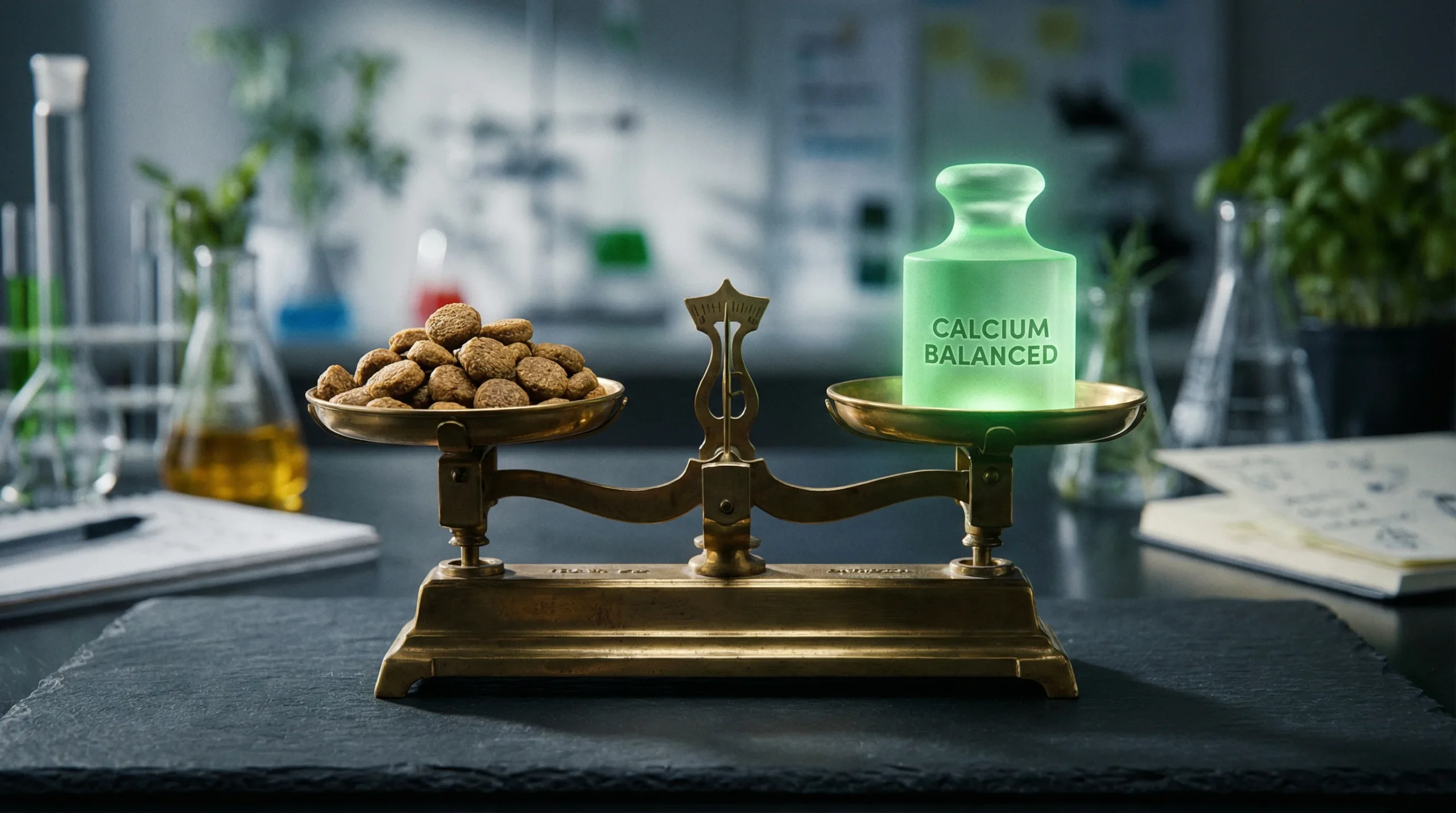
This is the single most critical metric to look for on the back of the bag. Large breed puppies cannot regulate how much calcium they absorb from their gut—they absorb it passively. If their food has too much calcium, their body takes it all in, leading to brittle bones and skeletal malformations.
- The Safe Zone: Look for a Calcium content between 0.8% and 1.2% (Dry Matter Basis).
- The Ratio: The ratio of Calcium to Phosphorus should ideally be between 1:1 and 1.3:1.
Breed-Specific Growth Curves
Not all “large” dogs grow at the same rate. A Greyhound puppy has different caloric needs than a heavy-set Rottweiler.
For example, when comparing popular family favourites, the nutritional strategy shifts slightly. Labradors are notoriously food-motivated and prone to obesity even as puppies. A Golden Retriever, while still a large breed, often has a slightly different metabolic rate. Understanding your specific breed’s genetic propensity for weight gain is the first step in selecting the right kibble.
The Protein Myth
For years, people believed high protein caused joint issues. This has been debunked. High protein is essential for strong muscles to support those joints. The culprit is excess calories and excess calcium, not protein.
Key Takeaway: You are looking for a food that is moderate in calories (to prevent fast weight gain) but high in quality animal protein (to build the support structure).
Top 5 Best Large Breed Puppy Foods in the UK (Honest Reviews)
There is no single “magic bag” of food, but there are clear winners when you look at the nutritional data. We have judged these against the criteria that matter for big dogs: controlled calories, joint support levels (Glucosamine/Chondroitin), and digestibility.
1. The Gold Standard: Orijen Large Breed Puppy Food

- 85% Quality Animal Ingredients: Biologically appropriate formula featuring fresh free-run chicken, turkey, wild-caught fish, and nest-laid eggs.
- First 5 Ingredients Fresh or Raw: The top 5 ingredients are always fresh or raw meat, providing nutrient-dense protein without heavy processing.
- WholePrey Diet: Incorporates nutrient-rich organs (liver, heart) and cartilage to supply vitamins and minerals naturally, reducing the need for synthetic additives.
- Large Breed Specific: Calorie and mineral distribution is engineered to support the optimum growth and skeletal development of puppies over 13kg.
- Grain-Free Composition: Uses red lentils, peas, and squash instead of grains to provide low-glycemic energy and prevent rapid weight gain.
Why it’s a top pick: If budget is no object, this is widely considered the “Rolls-Royce” of dry dog food. We selected Orijen as our #1 choice because it pushes the concept of “Biologically Appropriate” further than any other UK brand. With 85% quality animal ingredients, it offers the nutritional density of a raw diet with the convenience of kibble. Unlike standard puppy foods that rely on synthetic additives, Orijen uses a “WholePrey” ratio—meaning your puppy gets their nutrients from fresh meat, organs, and cartilage, just as nature intended.
Specification:
- Form: Dry Kibble
- Quantity: 11.4kg Bag
- Key Ingredients: Fresh boneless chicken (21%), raw turkey (11%), chicken liver, chicken heart, raw whole hake, raw whole herring, eggs, red lentils, and pumpkin.
- Target: Large breed puppies (target adult weight >13kg).
- Recommended For: Owners who want the closest alternative to a raw diet without the freezer hassle.
✅ Reasons to Buy:
- Unmatched Protein Quality: The first five ingredients are always fresh or raw, providing a depth of nutrition that meat meals alone cannot match.
- Digestive “Reset”: Verified buyers frequently report that switching to Orijen solved chronic loose stool issues (“pudding poo”) that other premium brands couldn’t fix
- Joint & Bone Support: The calcium and phosphorus levels are strictly regulated to support the slower, heavier growth curve of large breeds like Newfoundlands and Labradors
💬 Customer Feedback:
“Solved a very smelly, and runny, issue! Within days things had started to solidify and the farting stopped. Hallelujah!” — Verified Buyer
“My Newfoundland’s favourite food… The first main ingredients are directly sourced fresh and dried meats… helping prevent excessive weight gain.” — Verified Buyer
❌ Reasons to Avoid:
- The Price Tag: At over £86 per bag, it is significantly more expensive than standard veterinary diets.
- Transition Time: Because it is so rich (85% meat), you must transition slowly (over 7-10 days) or you risk upsetting your puppy’s stomach.
📝 Mini Verdict: This is expensive, but you get what you pay for. If you want to build a large dog with lean muscle and a gleaming coat, and you want to avoid cheap fillers like corn or wheat, this is the
2. The Vet’s Choice: Royal Canin Maxi Puppy Food

- Digestive Health: Contains highly digestible L.I.P. proteins and prebiotics (FOS) to support balanced intestinal flora and good stool quality.
- Immune System Support: Features a patented complex of antioxidants, including vitamin E, to boost natural defences during the immunity gap.
- Moderate Energy Content: Carefully calibrated calories (3838 kcal/kg) to meet the needs of large breeds without promoting excessive weight gain.
- Joint & Bone Support: Enriched with Glucosamine and Chondroitin to support the heavy skeletal structure of large puppies during intense growth.
- Kibble Technology: The kibble size and shape are specifically designed to encourage chewing and slow down eating for large jaws.
Why it’s a top pick: You will find this brand in almost every veterinary practice in the UK, and for good reason. While it may not have the “trendy” ingredient list of the boutique brands, Royal Canin invests more in clinical research and feeding trials than almost anyone else. We selected the “Maxi” specific formula because it addresses the single biggest risk for large breed puppies: inconsistent growth. The energy content is strictly moderated to prevent rapid weight gain, and the protein digestibility is engineered to stop the “puppy tummy” (loose stools) that often plagues German Shepherds and Labradors.
Specification:
- Form: Dry Kibble (Large ring shape to encourage chewing)
- Quantity: 4kg / 15kg Bags
- Key Ingredients: Dehydrated poultry protein, rice, maize flour, vegetable protein isolate*, beet pulp, fish oil, glucosamine, hydrolysed cartilage (chondroitin).
- Target: Large breed puppies (Adult weight 26-44kg) up to 15 months old.
- Recommended For: First-time owners who want a “safe hands” option that guarantees consistent growth and firm stools.
✅ Reasons to Buy:
- Digestive Safety: Uses L.I.P. proteins (Low Indigestible Proteins), which are 90% digestible, significantly reducing flatulence and loose stools.
- Immune Support: Includes a patented complex of antioxidants (including Vitamin E) to support natural defences during the vaccination gap.
- Joint Engineering: Contains precise levels of Glucosamine and Chondroitin from day one to support heavy skeletal frames.
💬 Customer Feedback:
“My Rottweiler pup was having terrible stomach issues. Our vet recommended this because it’s not too rich. She gobbles it down, her stools are finally solid, and she is gaining weight at a steady, healthy rate.” — Verified Buyer
“Perfect balance for our Labrador. Other kibbles were too small and he inhaled them. He actually has to chew these, which slows him down.” — Dog Owner
❌ Reasons to Avoid:
- Ingredient Snobbery: Contains maize and wheat gluten, which some owners prefer to avoid, though they are highly digestible in this specific formula.
- Price: It is expensive considering the primary ingredients are not fresh meats, but dehydrated meals.
📝 Mini Verdict: This is the “Safety First” choice. If you are worried about balancing calcium ratios yourself or if your puppy has a sensitive stomach, this is the most reliable option on the market. It might lack the “romance” of fresh wild ingredients, but it delivers predictable, healthy results for thousands of UK dogs every year.
3. Best Value UK Brand: Arden Grange Large Breed Puppy Food

- Triple Joint Support: Contains MSM, Glucosamine, and Chondroitin to protect growing joints and reduce inflammation during rapid growth spurts.
- Optimal Kibble Size: Extra-large kibble pieces encourage chewing and prevent large breeds from inhaling their food too quickly.
- Hypoallergenic: Free from wheat gluten, beef, soya, and dairy, making it suitable for puppies with food sensitivities.
- Controlled Energy: Moderate calorie content (399 kcal/100g) helps manage weight gain to reduce skeletal stress.
- Human-Grade Chicken: Uses fresh chicken and high-quality chicken meal as the primary protein sources for high digestibility.
Why it’s a top pick: Arden Grange is a staple of British dog ownership, bridging the gap between supermarket brands and ultra-premium imports. We selected this as the “Smart Value” choice because it doesn’t compromise on the one thing large breed puppies need most: joint support. Uniquely at this price point, it includes a “triple lock” of joint supplements—Glucosamine, Chondroitin, and MSM. The kibble is also physically engineered to be much larger than standard, which is a game-changer for breeds prone to “inhaling” their food.
Specification:
- Form: Dry Kibble (Extra Large size)
- Quantity: 2kg / 6kg / 12kg Bags
- Key Ingredients: Rice (26%), Fresh Chicken (18%), Chicken Meat Meal (18%), Maize, Refined Chicken Oil, Whole Dried Egg, Glucosamine, Chondroitin, MSM.
- Target: Large and Giant breed puppies (8 weeks to 18 months).
- Recommended For: Owners who want premium joint protection without the premium price tag.
✅ Reasons to Buy:
- Triple Joint Support: Unlike many competitors that only add Glucosamine, this formula includes MSM (Methylsulfonylmethane) to actively reduce inflammation during growth spurts.
- Kibble Mechanics: The physically larger biscuit forces dogs to chew, improving digestion and naturally cleaning teeth.
- Hypoallergenic Promise: Free from wheat gluten, beef, soya, and dairy, making it a safe starting point for puppies with unknown intolerances.
💬 Customer Feedback:
“I was worried about the price of feeding a Great Dane, but this food is brilliant. He is growing steadily, his coat is gleaming, and he actually crunches the biscuits instead of swallowing them whole.” — Verified Buyer
“No upset tummies since switching to this. It’s not as fancy as the £80 bags, but my vet is perfectly happy with his weight and condition.” — Dog Owner
❌ Reasons to Avoid:
- Grain Inclusion: Contains rice and maize, so it is not suitable for owners strictly following a grain-free philosophy.
- Moderate Protein: At 26% protein, it is lower than the “ancestral” diets (like Orijen), which some owners of high-drive working lines may find insufficient.
📝 Mini Verdict: This is the sensible, “bread and butter” choice for the majority of UK owners. It ticks every nutritional box for safety—calcium ratios, joint supplements, and digestibility—without breaking the bank. If you want a reliable, British-made food that prevents your puppy from growing too fast, this is the one to beat.
4. Best Fresh Option: Butternut Box
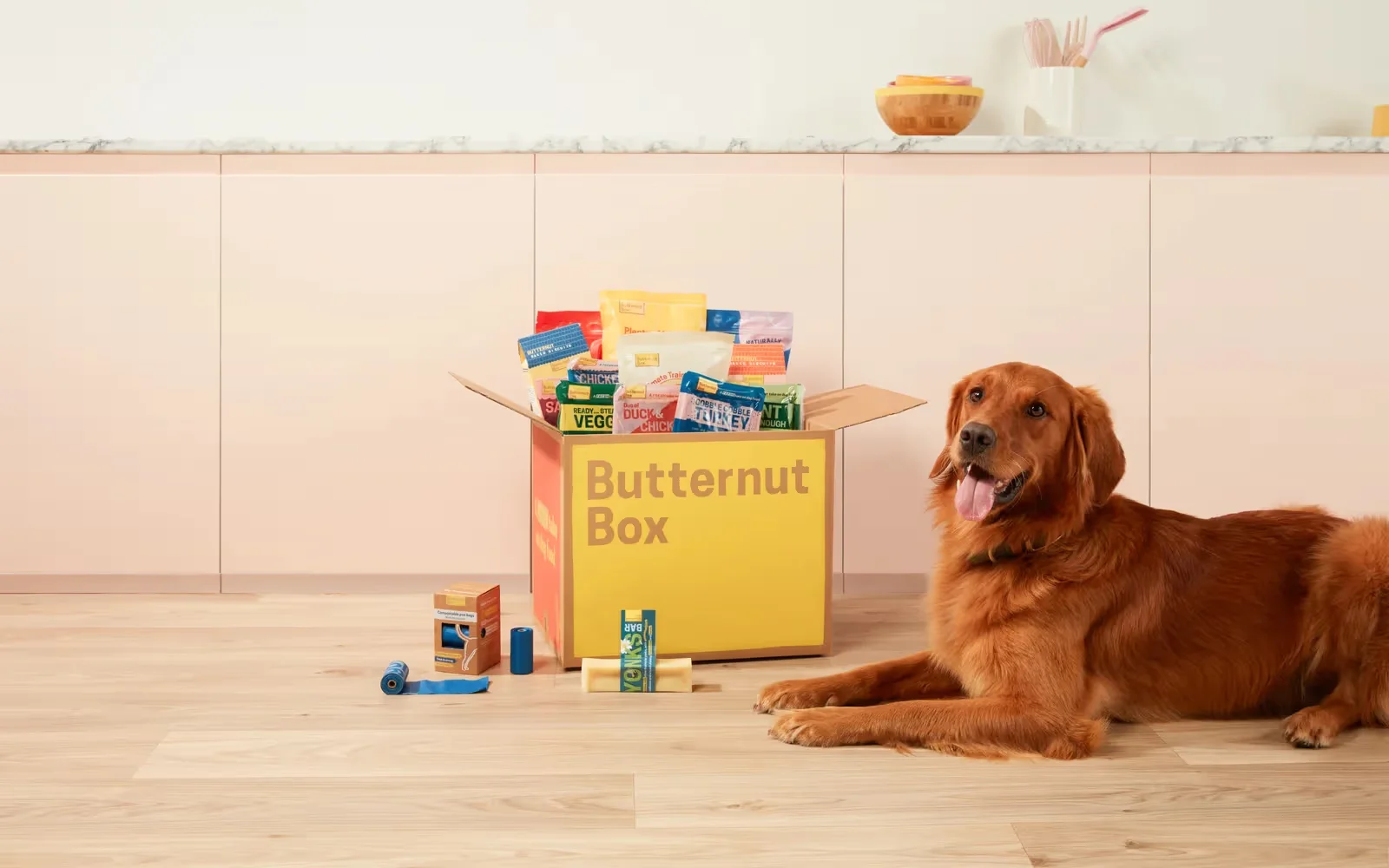
- Freshly Cooked Formula: Uses human-quality meat (60%+) and vegetables, gently cooked to retain nutrients.
- Perfect Portion Control: Tailored pouches based on your puppy’s exact age, weight, and breed to prevent rapid growth.
- High Palatability: Ideal for fussy eaters or transitioning puppies who refuse dry kibble.
- Vet Approved: Recipes formulated by nutritionists to meet all growth requirements for large breeds.
- Convenient Delivery: Frozen pouches delivered to your door; simply thaw and serve.
Why it’s a top pick: We selected Butternut Box as the leader of the “Fresh” category because it solves the single biggest problem with feeding large breed puppies: Portion Control. Overfeeding a Great Dane or Rottweiler puppy can be disastrous for their joints. Butternut Box’s algorithm calculates your puppy’s exact daily calorie needs based on their age, weight, and body condition score, then sends you pre-portioned pouches. You literally cannot get it wrong. It’s expensive, but it removes the risk of “eyeballing” scoop sizes and accidentally power-feeding your puppy into orthopaedic issues.
Specification:
- Form: Freshly Cooked Meals (Frozen Pouches)
- Quantity: 14 / 28 Day Subscription Boxes
- Key Ingredients: Human-quality meat (60%+), Lentils, Carrots, Peas, Green Beans, Minerals. (Recipes vary: Beef, Chicken, Turkey, etc.).
- Target: All breeds, tailored specifically to individual growth curves.
- Recommended For: Owners terrified of getting the feeding amounts wrong, or those with fussy puppies who refuse dry kibble.
✅ Reasons to Buy:
- Precision Engineering: The subscription model adjusts as your puppy grows. You update their weight in the app, and the next box has slightly larger portions—keeping them on the perfect growth curve without you doing the maths.
- High Palatability: Because it is real, gently cooked meat (not extruded biscuit), even the fussiest dogs usually devour it instantly.
- Hydration: The high moisture content is excellent for kidney health, unlike dry kibble, which requires the dog to drink significant amounts of water to digest.
💬 Customer Feedback:
“My Shepherd was so gangly and fussy with kibble. Since switching, he has filled out beautifully but hasn’t got ‘fat’. He loves the variety of the different meats.” — Verified Subscriber
“It is not cheap, but the peace of mind knowing he is getting exactly the right calories for his age is worth it.” — Dog Owner
❌ Reasons to Avoid:
- Freezer Tetris: For a 30kg+ dog, the boxes are huge. You will likely need a dedicated drawer (or an entire shelf) in your freezer just for the dog.
- The Cost: It is significantly more expensive than kibble. For a giant breed, you could be looking at £3.00 – £5.00+ per day once they are fully grown.
📝 Mini Verdict: This is the “Personal Trainer” of dog food. It handles all the maths, macros, and measuring for you. If you have the budget and the freezer space, it is arguably the healthiest way to feed a puppy. However, for owners of Giant Breeds (Great Danes/Newfoundlands), the sheer volume of food required might make this logistically difficult compared to a high-quality dry food.
5. Best for Sensitive Stomachs: James Wellbeloved Large Breed Puppy (Turkey & Rice)

- Hypoallergenic Promise: Excludes common allergens like beef, pork, soya, eggs, dairy, and wheat to reduce the risk of dietary intolerance.
- Single Source Protein: Uses only Turkey as the meat source, which is lean and gentle on delicate puppy digestion.
- Joint Protection: Fortified with Chondroitin and Glucosamine to support the heavier skeletal load of large breed puppies.
- Digestive Health: Includes natural prebiotics (chicory extract) and yucca to settle stomachs and reduce stool odour.
- Coat Condition: Balanced Omega-3 and Omega-6 fatty acids promote a healthy, glossy coat and reduce dry skin.
Why it’s a top pick: Large breed puppies are notoriously prone to “growth tummy”—loose stools caused by their digestive system struggling to keep up with their rapid body growth. James Wellbeloved is the go-to “reset” food in the UK. We selected this specific Turkey & Rice formula because it is naturally hypoallergenic. It strips away the common irritants found in cheaper foods (like beef, pork, wheat, and dairy) and relies on a single, gentle protein source. If your puppy has been suffering from flatulence or inconsistent stools, this is the safest switch to make.
Specification:
- Form: Dry Kibble (Large kibble size)
- Quantity: 2kg / 7.5kg / 15kg Bags
- Key Ingredients: Turkey meal (25%), brown rice (15%), white rice (15%), naked oats, linseed, alfalfa, seaweed, yucca extract.
- Target: Large breed puppies with sensitive digestion or known intolerances.
- Recommended For: Owners who value consistent digestion over high-meat “wolf” diets.
✅ Reasons to Buy:
- Hypoallergenic Promise: strictly excludes beef, pork, soya, eggs, dairy, and wheat, significantly reducing the risk of dietary intolerance.
- Stool Odour Control: Includes natural Yucca extract and prebiotics (chicory inulin), which are proven to settle the gut and reduce the smell of waste.
- Joint Protection: Fortified with Glucosamine and Chondroitin to support the heavier skeletal load of large breed puppies during growth spurts.
💬 Customer Feedback:
“My 4-month-old puppy absolutely loves this food. Her coat is shiny and soft, and her skin is now clear of the eczema she arrived with.” — Verified Buyer
“Stopped my dog’s colitis. It’s been hard work getting a food that didn’t give her the runs… after a month on this she was great.” — Dog Owner
❌ Reasons to Avoid:
- Grain Inclusion: It relies heavily on rice and oats, so it is not suitable for owners strictly following a grain-free philosophy.
- Recipe Changes: Long-term users have occasionally noted recipe tweaks that can unsettle dogs if not transitioned slowly.
📝 Mini Verdict: This is the “Safe Hands” option. It isn’t the most exciting food on the list—it doesn’t have wild boar or bison—but it works. It delivers rock-solid digestive health and steady growth. If you have a sensitive breed like a German Shepherd or a Boxer, this bag is often the end of your tummy troubles.
Beyond the Bowl: Total Care for Big Pups
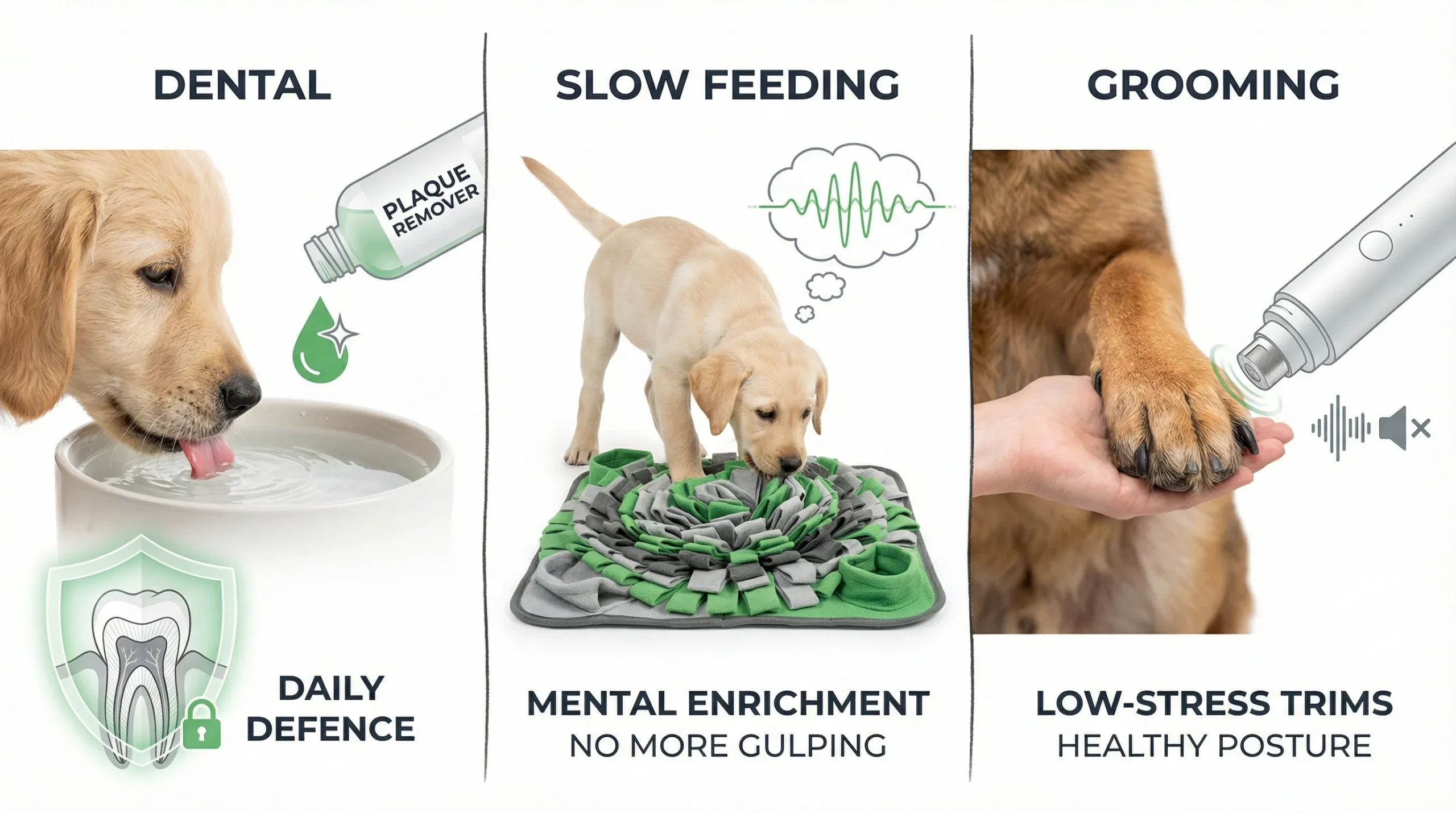
Feeding the right food is only 50% of the battle. Raising a large breed puppy requires a holistic approach to ensure their heavy skeletal frame—and their brain—develops correctly.
1. Dental Health Starts Now
Large breeds have large teeth, and tartar build-up can lead to systemic health issues. Many owners assume dry kibble cleans teeth—it helps, but it’s not a magic cure.
- Action: Introduce a daily dental routine while they are young and manageable.
- Recommendation: Check our guide on the best dog plaque removers for safe additives you can put in their water or food to soften tartar before it hardens.
2. Slow Down the “Wolfing”
Large puppies, especially those in the “working” group, often inhale their food in seconds. This increases the risk of bloat (GDV), a life-threatening condition for deep-chested breeds.
- Action: Ditch the bowl entirely for one meal a day.
- Recommendation: Use dog enrichment toys (such as Kongs or snuffle mats) to turn dinnertime into 20 minutes of mental stimulation. This tires them out mentally without putting stress on their growing joints.
3. Grooming Desensitisation
It is cute when a 5kg puppy wriggles away from a brush. It is a nightmare when a 40kg adult dog refuses to let you trim their nails. Large breeds have thick, fast-growing nails that can impact their posture and gait if left too long.
- Action: Get them used to the sound and vibration of clippers before they need a trim.
- Recommendation: See our review of the best dog clippers UK to find quiet, low-vibration tools perfect for nervous puppies.
FlexK9’s Verdict: How to Choose?
Choosing the best large breed puppy food ultimately comes down to your budget and your dog’s specific digestion.
- If you want the absolute best science-backed nutrition and budget is not an issue, Orijen Large Breed is the gold standard for “ancestral” feeding.
- If you need a guaranteed “safe” option that won’t upset a sensitive tummy, Royal Canin Maxi Puppy is the reliable choice used by vets nationwide.
- If you want to avoid processed food entirely, Butternut Box offers the ultimate peace of mind with pre-portioned, fresh meals that make overfeeding impossible.
Remember, the goal is not a “fat” puppy; it is a lean, slowly growing athlete. You should be able to feel their ribs (but not see them) with a light touch. Feed for the dog in front of you, keep them lean, and their joints will thank you for the rest of their life.
Frequently Asked Questions
When should I switch my large breed puppy to adult food?
Between 15 and 24 months. Unlike smaller breeds, large dogs continue growing structurally for up to two years. Switching before this age can deprive them of the specific calcium and phosphorus balance needed to support their joints and prevent orthopaedic issues.
Can I feed regular puppy food to a large breed?
No. Regular puppy food is often too calorie-dense and lacks the controlled calcium ratios required for large breeds. Feeding a standard formula can accelerate growth too quickly, leading to skeletal deformities and joint weakness. Always choose a bag labelled “Large Breed.”
Do large breed puppies need calcium supplements?
Absolutely not. High-quality large-breed puppy foods (such as Orijen or Royal Canin) are already perfectly balanced. Adding extra calcium is dangerous because puppies cannot regulate absorption, leading to bone hardening and conditions like Hip Dysplasia.
Why does my large breed puppy have loose stools?
It is usually due to overfeeding or food that is too rich. Large puppies have sensitive digestive tracts that struggle with high-fat diets or rapid dietary changes. If the issue persists, switch to a lower-fat, highly digestible option like Royal Canin Maxi or a hypoallergenic diet.
Is grain-free food better for large breed puppies? Not necessarily.
Unless your dog has a diagnosed grain allergy, high-quality grains like rice and oats (found in Arden Grange) provide excellent slow-release energy. The most important factor is the quality of the ingredients and the calcium-to-phosphorus ratio, not the presence of grain.
How much should I feed my large breed puppy?
Feed to their body condition, not the bowl. Guidelines on packaging are often overestimated. You should be able to feel your puppy’s ribs with a light touch but not see them. If you cannot feel the ribs, reduce their daily portion by 10% to protect their joints from excess weight.
Is it dangerous if my large breed puppy eats too fast?
Yes, it increases the risk of Bloat (GDV). Deep-chested breeds are susceptible to this life-threatening stomach twisting. To prevent “inhaling” food, use a slow-feeder bowl or an enrichment toy to extend mealtimes and improve digestion.
