Most dog diarrhoea and vomiting is mild and settles within a day or two. PDSA advises calling your vet if it has lasted more than 24 hours, if your dog seems unwell in themselves, or if there’s blood in their poo or sick. Puppies, older dogs and dogs with other health problems should be seen sooner.
This guide draws on vet-written advice from PDSA and Blue Cross, and on a 2025 study of UK vet records by the Royal Veterinary College’s VetCompass programme. Where we mention Dexter, my Cane Corso, it’s one dog’s experience, not advice. It’s general information and doesn’t replace your vet.
Before you start: If your dog may have eaten something harmful, such as chocolate, grapes or something that could block their gut, contact your vet straight away, even if they seem fine.
TABLE OF CONTENTS
When dog diarrhoea or vomiting needs a vet
One loose poo or a single bout of sickness in a dog who is bright and eating isn’t usually an emergency. Watch them closely, though, because some upsets turn serious quickly. PDSA’s vets advise contacting your practice if your dog has diarrhoea or vomiting and any of these:
- Diarrhoea, or soft poos, for more than 24 hours
- Blood or mucus in their poo, or blood in their sick
- Severe or constant watery diarrhoea
- Vomiting that keeps happening
- Eating or drinking less than usual
- Low energy, or a sore tummy (some dogs yelp when picked up or stand with their front legs down and bottom up)
- Sticky gums or sunken eyes, which can be signs of dehydration
- Disorientation or collapse
- Diarrhoea while taking medicine, especially anti-inflammatories
Some signs can’t wait. Retching over and over with nothing coming up, or a swollen, bloated tummy, can mean a twisted stomach (GDV), which the charity calls a life-threatening emergency. Call your vet straight away. Our guide to large breed food explains feeding a large dog safely around bloat.
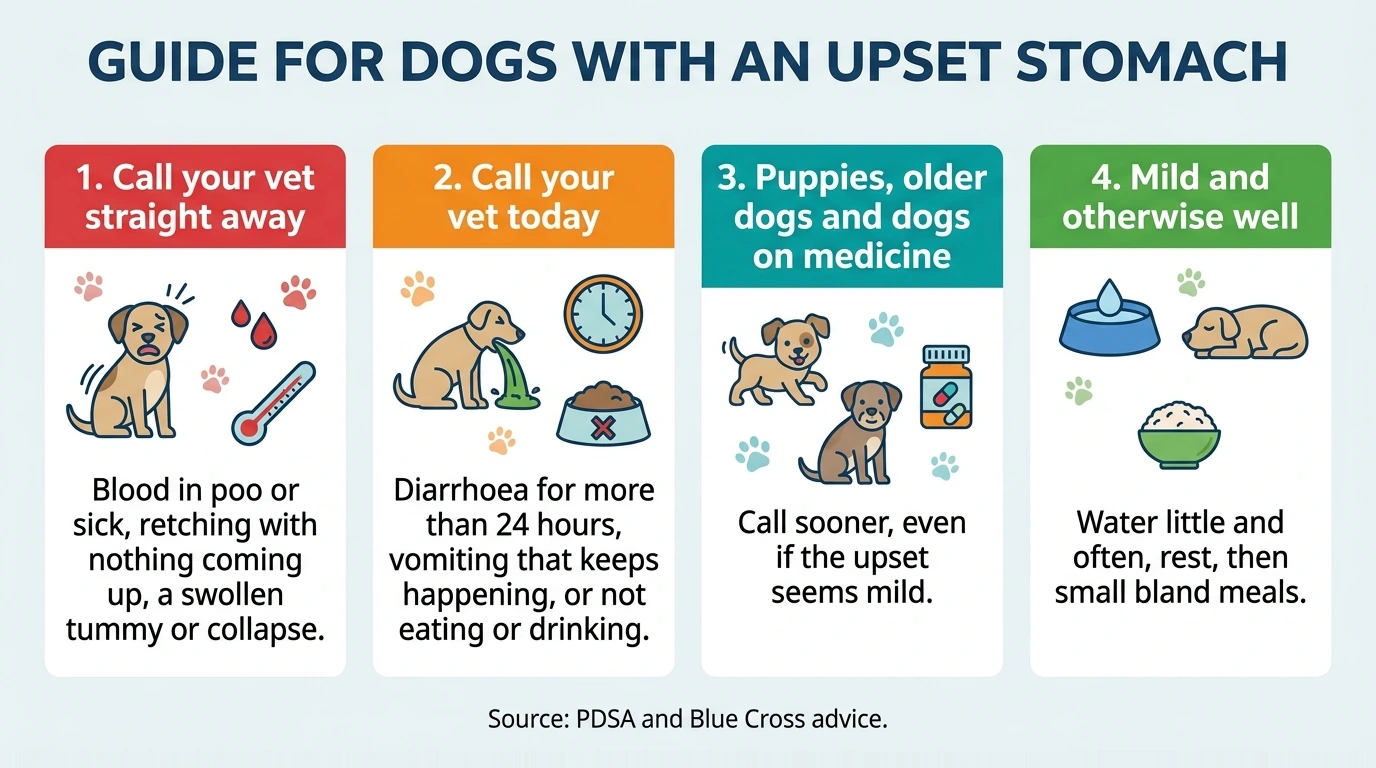
At any age, repeated vomiting, seizures, drinking or weeing more than usual, or anything unusual in the poo needs urgent advice, Blue Cross adds.
Puppies and older dogs: call your vet sooner
Diarrhoea in a puppy can be more serious, so seek advice rather than settling a puppy at home, PDSA says. Puppies are prone to serious infections and can become dehydrated quickly, which is why Blue Cross advises calling your vet about any sickness in a puppy. The same goes for elderly dogs and dogs with another illness.
Parvovirus is one reason for the caution. It’s a highly contagious virus that causes vomiting and severe, often bloody diarrhoea, and it’s especially serious in puppies under six months old and in unvaccinated dogs. Contact your vet immediately if you think your dog has it; vaccination is the best protection, according to PDSA.
My dog has diarrhoea but seems fine: what to do at home
If your dog has had diarrhoea for less than 24 hours and is otherwise bright and well, you may want to try settling their stomach at home first, PDSA says. If anything on the list above appears, or they aren’t better within a day, stop and call your vet.
Water comes first. Your dog loses fluid in their diarrhoea or sick, so keep fresh water down and encourage them to drink little and often. If they’re vomiting too, offer small amounts often rather than a big drink at once, which may bring it straight back up, Blue Cross suggests.
Rest helps too. Skip walks and energetic play until your dog has fully recovered, which also helps stop any illness spreading to other dogs, PDSA’s vets advise.
Some owners reach for a probiotic. Probiotic pastes and powders can help some dogs with diarrhoea, but not all, and where possible it’s best to use one your vet recommends, PDSA says. Our guide to the best probiotics for dogs compares the ones sold without a prescription.
Should you hold back food?
UK vet charities don’t agree on this. PDSA suggests that withholding food for 24 hours might help settle an adult dog with diarrhoea, but not a dog who is very young, old or ill. Blue Cross suggests skipping one meal after a dog has been sick, but not skipping meals for diarrhoea. Water should stay down either way. If you’re unsure which suits your dog, ask your vet.
Feeding a dog after diarrhoea or vomiting: the bland diet
A bland diet is a short-term feeding plan of foods that are easy to digest and low in fat and fibre, according to Blue Cross. The idea is to give your dog’s gut a break from anything rich while they recover.
The classic version is plain cooked white rice with boiled chicken breast or white fish, with no skin or bones, PDSA says. Blue Cross suggests roughly half protein and half carbohydrate:
- Protein: boiled skinless chicken or turkey, poached white fish, eggs or low-fat cottage cheese
- Carbohydrate: soft white or brown rice, pasta or boiled potatoes
Cook everything plain, with no oil, fat, salt or flavourings, and let it cool before serving. Feed small portions several times a day rather than one or two big meals, so the gut isn’t overloaded. You can also buy a ready-made bland food from your vet, a pet shop or online, which can be fed for longer because it contains all the nutrients a dog needs, PDSA adds.
Don’t give anything rich or fatty until your dog has fully recovered, because it’s likely to make diarrhoea worse, the charity warns.
How long to feed a bland diet, and going back to normal food
A home-cooked bland diet is for a day or two. Check with your vet before carrying on beyond a few days, because it isn’t a complete diet and an upset that drags on may need looking into, both charities advise.
Once your dog is passing firm poos again, mix their usual food back in slowly, starting with half bland and half normal. The timings vary: PDSA suggests three to five days after diarrhoea and two to three after vomiting, while Blue Cross blends the usual food back in over about 24 hours. Go at your dog’s pace and keep an eye on their poo as you go.
Vet-only foods and medicines
Some dogs need more than home care. Depending on the cause, your vet may prescribe a special gastrointestinal diet, anti-sickness medicine or something to protect the stomach. These are your vet’s decision, so we don’t name any here.
Antibiotics often aren’t needed for an upset stomach. They can even make diarrhoea worse by wiping out helpful gut bacteria, PDSA explains, and the RVC notes that recent research found no benefit from them in helping dogs recover from sudden diarrhoea.
Why dogs get diarrhoea and vomiting
Most upsets start with food. Eating something they shouldn’t, overeating, rich or fatty food and a sudden change of diet top the list, according to PDSA and Blue Cross. Dogs tend to eat the same food every day, so a sudden change can be a shock to their guts.
Other causes include:
- Infections and parasites, such as worms, Giardia, bacteria and parvovirus
- Something swallowed that blocks the gut, which tends to cause repeated vomiting and a very painful tummy and needs a vet
- Food allergies, which often cause diarrhoea and itchy skin (our guide to dog food allergies explains the food trial vets use, and our hypoallergenic dog food guide covers foods)
- Longer-term problems such as inflammatory bowel disease, pancreatitis, or liver and kidney disease
- Reactions to medicines, and travel sickness
Sudden diarrhoea is very common. A 2025 study of UK vet records from the RVC’s VetCompass programme found that about 1 in 12 dogs needed a vet for it in a year, and the risk was higher in dogs under three and over nine. Scavenging, gastroenteritis and sudden changes of diet were among the most common causes. Most dogs recovered within two days of seeing a vet, and fewer than 1 in 5 needed a second visit.
From our home: When Dexter swallowed part of a sauce pot, he had bad diarrhoea for about four days. Our vet gave him a probiotic paste from a syringe, and it helped a lot. We don’t know which brand it was.
Gastroenteritis in dogs, in brief
Gastroenteritis, often just called a stomach upset, is inflammation of the stomach and intestines. Vomiting, diarrhoea, a poor appetite, low energy and tummy pain are the classic signs, PDSA says. Mild cases last one to two days, while severe ones go on longer, with frequent vomiting and diarrhoea and a lot of discomfort.
Vets don’t always find the cause, especially in mild cases. A mild case may settle at home with the steps above, while a dog who is becoming dehydrated may need a stay at the vet’s and a fluid drip.
Haemorrhagic gastroenteritis (HGE) is a more serious form that causes vomiting and bloody diarrhoea, which can look like strawberry jam. Contact your vet immediately if you see it, the charity advises.
What your dog’s sick can tell you
Looking at what comes up can help you describe it to your vet. PDSA’s guide to vomiting describes four common things:
- Bile: yellow or green liquid, often foamy
- Food: digested or undigested, often brown
- Blood: red, black or brown, or looking like coffee grounds, which means contacting your vet immediately
- Grass: dogs often eat it, especially when they feel sick
Bile tends to come up when the stomach is empty and is rarely serious on its own, but frequent bile vomiting is worth a vet visit, Blue Cross says.
Vomiting, retching or bringing food back up?
These look alike but have different causes, PDSA explains. Vomiting is when a dog feels sick, heaves and brings up their stomach contents. Retching is heaving with little or nothing coming up: one retch is rarely a worry, but continuous retching can be a sign of GDV. Regurgitation is when undigested food comes back up with no heaving, often soon after eating. As a one-off it can mean your dog ate too fast, but if it happens regularly, see your vet.
How to stop stomach upsets coming back
You can’t prevent every upset, but a few habits help:
- Change food slowly. PDSA’s plan takes about two weeks, starting with a teaspoon of the new food beside the old; Blue Cross says to take at least three days.
- Stop scavenging. Keep bins and food waste out of reach and teach a reliable “drop” (PDSA). For a dog who keeps eating things they shouldn’t, Blue Cross suggests muzzle training.
- Skip scraps, leftovers and bones. Scraps can cause pancreatitis and bone fragments can cause blockages, Blue Cross warns.
- Keep up worming and vaccinations, including parvovirus.
The RVC’s lead researcher sums it up as “consistent diet leads to consistent poo”.
If your dog keeps getting loose stools or sickness, see your vet before changing food, because worms, allergies and gut disease all need a vet’s help. Once your vet has ruled those out, our guide to dog food for sensitive stomachs compares gentler recipes.
From our home: Dexter used to have loose stools now and then on his old chicken kibble. Moving him onto a sensitive food was our own choice after reading online, not his vet’s advice.
Final thoughts
Most dog diarrhoea and sickness passes in a day or two with water, rest and small bland meals. The skill is knowing when not to wait.
- If it has lasted more than 24 hours, or your dog seems unwell, call your vet.
- If there’s blood, constant retching or a swollen tummy, call straight away.
- If it’s a puppy, an older dog or a dog on medicine, call sooner.
- If your dog is bright and eating, offer water little and often, rest and a short bland diet, then go back to normal food slowly.
Our advice is based on PDSA’s guide to diarrhoea in dogs and its pages on vomiting and gastroenteritis, Blue Cross’s pages on bland diets, diarrhoea and sickness, and the RVC VetCompass study of acute diarrhoea in UK dogs.
Frequently Asked Questions About Dog Diarrhoea and Vomiting
How long does diarrhoea last in a dog?
Most mild cases clear up within 24 to 48 hours, according to PDSA. Diarrhoea after a change of food usually settles in one to three days. If it has lasted more than 24 hours, or your dog seems unwell, call your vet rather than waiting for it to stop.
Why is my dog being sick yellow or white foam?
Yellow or green foamy sick is usually bile, PDSA explains, and Blue Cross says it tends to come up when the stomach is empty. On its own it’s rarely serious. UK charities don’t single out white foam, so treat it like any vomiting: call your vet if it keeps happening or comes with other signs.
Can dogs have yoghurt, milk or cheese when their stomach is upset?
We wouldn’t use dairy to settle a stomach. Dogs make less of the enzyme that digests milk sugar as they get older, so dairy can cause vomiting, diarrhoea, bloating or tummy pain in some dogs, Blue Cross explains. Its bland diet does include low-fat cottage cheese as one protein option.
How long should a dog stay on a bland diet?
A home-cooked bland diet is meant for a day or two, PDSA says. Check with your vet before feeding it for more than a few days, because it isn’t a complete diet, Blue Cross adds. Once poos are firm, mix their usual food back in gradually, starting with half and half.
Can an upset stomach spread to other dogs?
Some causes can. Parvovirus is highly contagious and spreads through infected poo, PDSA warns, and resting a sick dog also helps stop any illness spreading. Pick up poo promptly, wash bowls, and keep a poorly dog off walks with other dogs until they’ve recovered.
Is it normal for a dog to eat grass and then be sick?
It’s common. Dogs often eat grass, especially when they feel sick, PDSA says, and Blue Cross notes many simply like the taste. The odd bout in a dog who is otherwise well isn’t usually a worry, but repeated vomiting needs your vet.
