
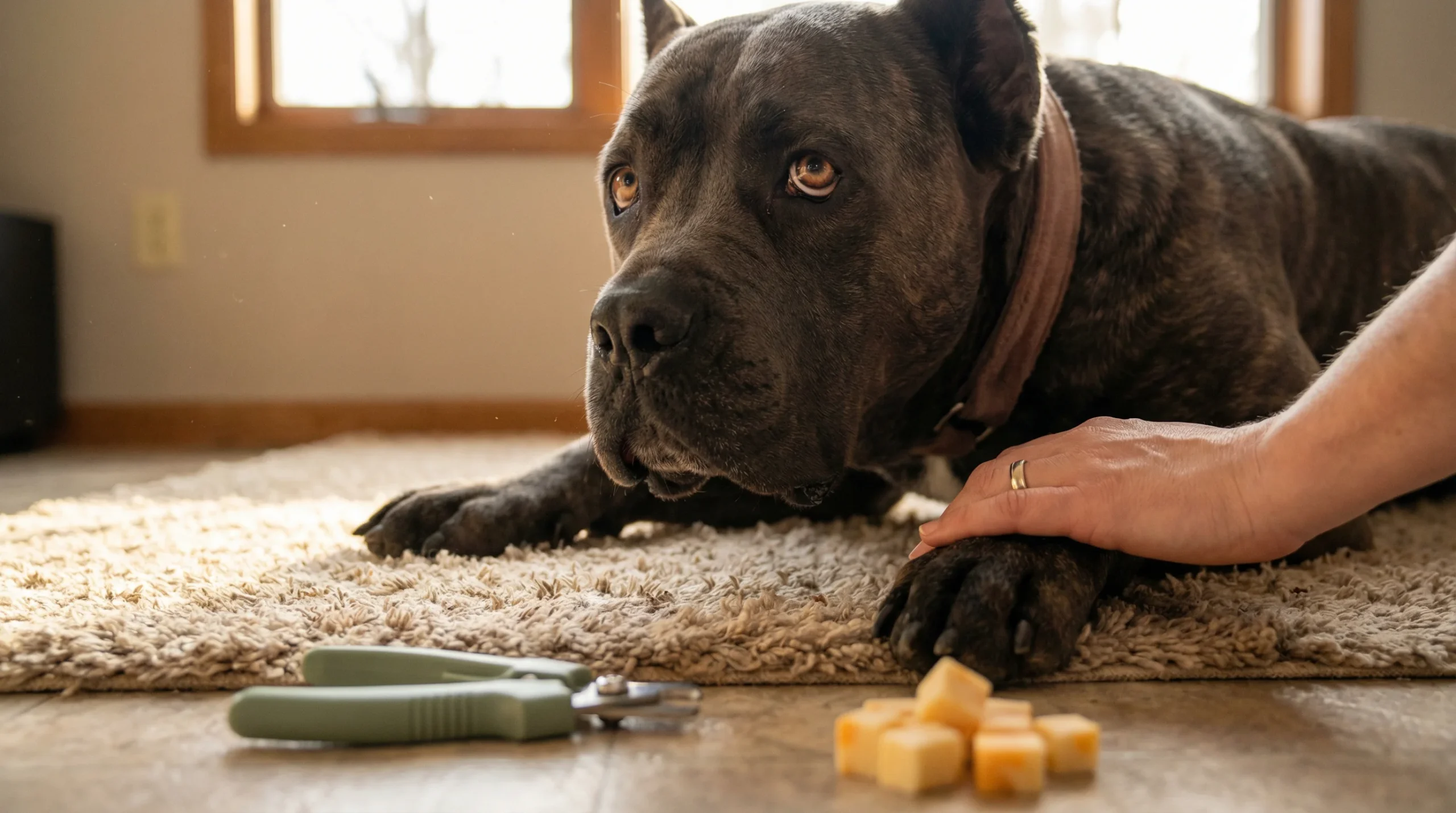
Trying to figure out how to cut an uncooperative dogs nails can feel like an impossible task. The moment the clippers come out, your dog pulls away, stiffens, growls, or completely shuts down. Some dogs scream. Others snap. Many simply refuse to cooperate at all.
If this sounds familiar, you’re not doing anything wrong.
This guide focuses on the training and desensitisation needed before you even pick up the clippers. Once your dog is calm and ready to be trimmed, switch to our technical guide on How to Clip Dog Nails Safely.
TABLE OF CONTENTS
Quick Look: How to Cut an Uncooperative Dog’s Nails Safely
- Do not restrain or rush an anxious dog
- Create a calm, distraction-free environment
- Use the right nail tools for control and visibility
- Trim one nail at a time, not all in one session
- Stop immediately if stress escalates
- Reward calm behaviour, not just completion
If your dog is extremely fearful or aggressive, skip to When You Should NOT Cut an Uncooperative Dog’s Nails below.
Step-by-Step: How to Cut a Dogs Nails When Dogs Won’t Cooperate
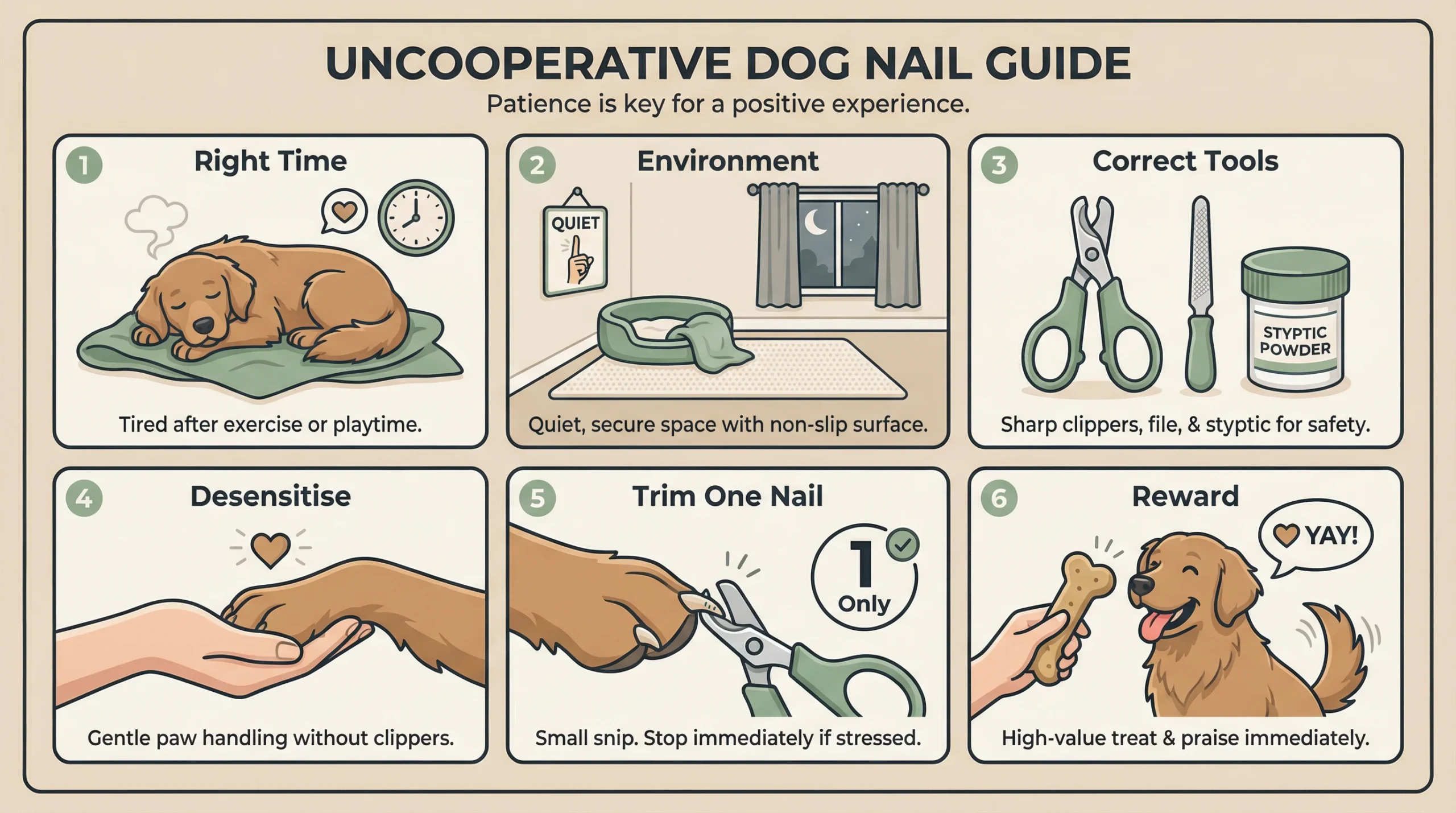
This is the exact process most owners skip — and the reason nail trimming keeps failing.
Step 1: Choose the Right Time (This Matters More Than You Think)
- Never attempt nail trimming when your dog is:
- Over-excited
- Hungry
- Already anxious
- Surrounded by noise or distractions
The best time is after exercise, when your dog is naturally calmer.
Step 2: Prepare the Environment First
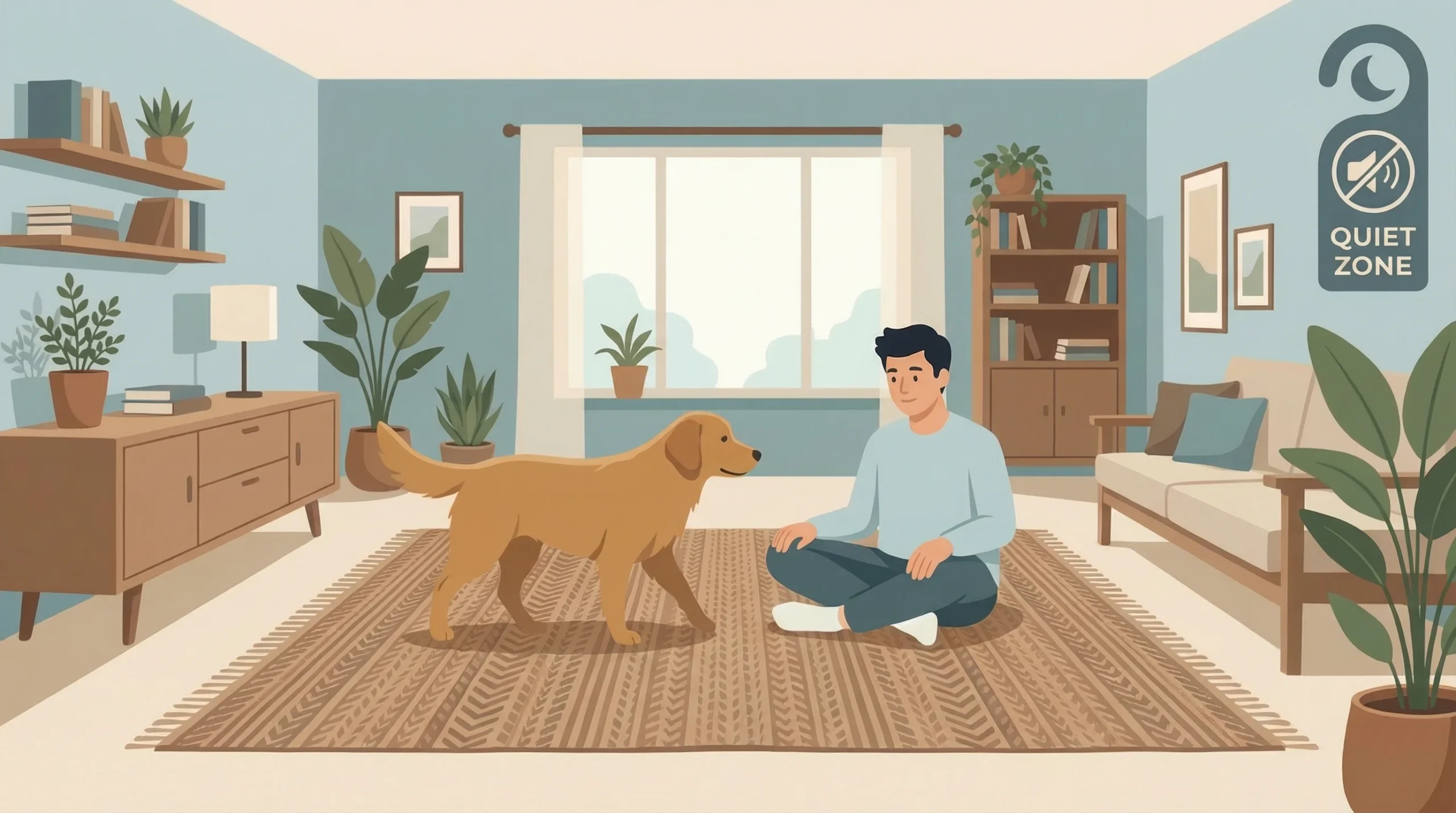
An uncooperative dog reacts to stress signals instantly.
- Do this before touching their paws:
- Turn off loud TVs or music
- Sit at ground level — never loom over your dog
- Use a non-slip surface (rug or mat)
- Keep sessions short (5 minutes max)
A calm environment reduces resistance before trimming even begins.
Step 3: Use the Correct Nail Clippers
Using the wrong tool makes an already difficult situation worse.
- For uncooperative dogs:
- Scissor-style clippers offer better control
- LED nail clippers help avoid cutting the quick
- Nail grinders can help, but noise can increase anxiety
Avoid blunt clippers — they crush the nail and cause discomfort. Avoid makeshift tools. If you’re unsure whether household tools are safe, read our guide on cutting your dogs nails with human clippers before attempting it.
Step 4: Desensitise Before You Cut Anything
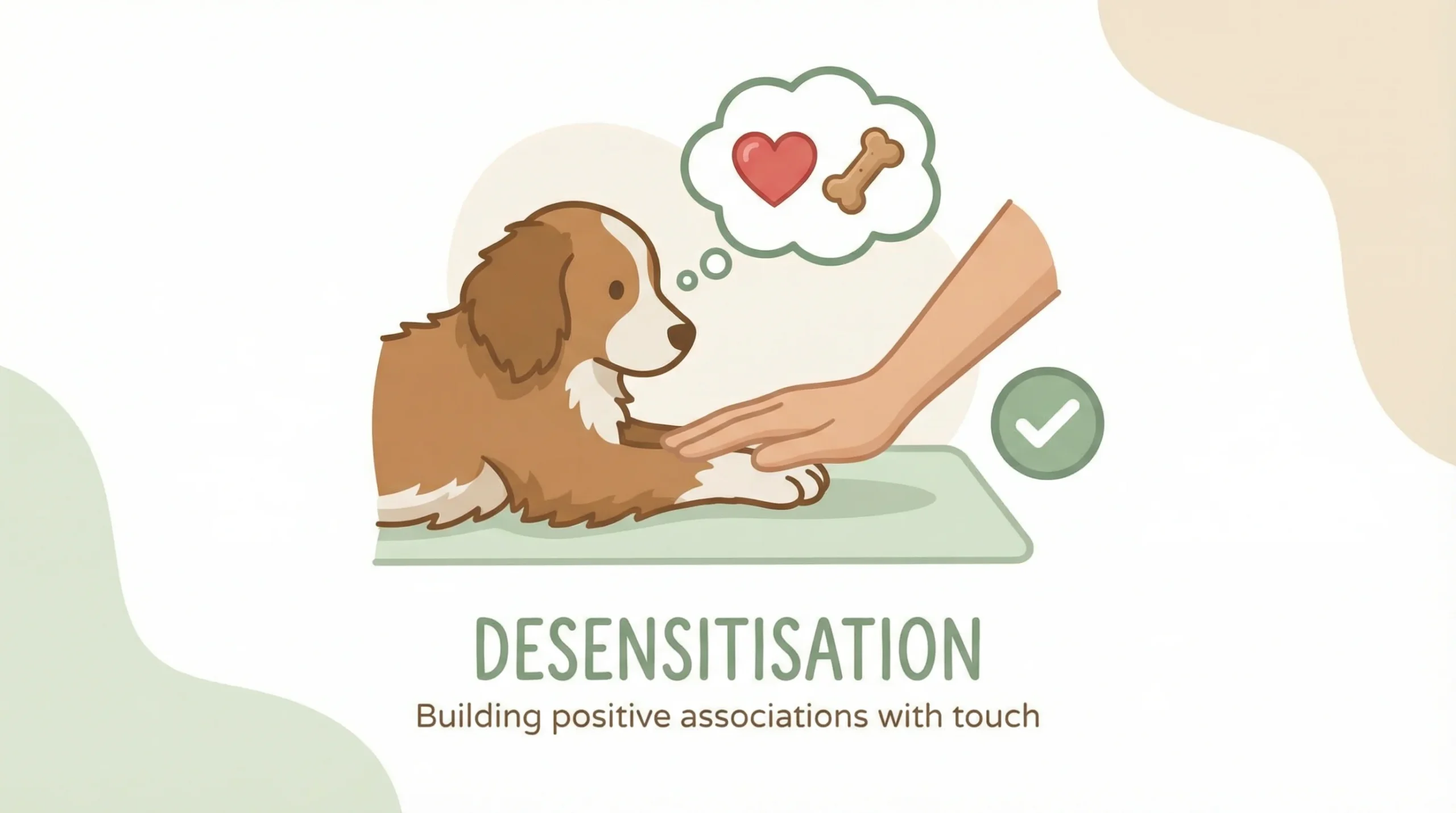
This is where most owners fail.
Before clipping:
- Gently touch one paw
- Release immediately
- Reward calm behaviour
Repeat this over several sessions if needed.
If your dog won’t tolerate paw handling yet, do not proceed to clipping.
Step 5: Trim One Nail Only
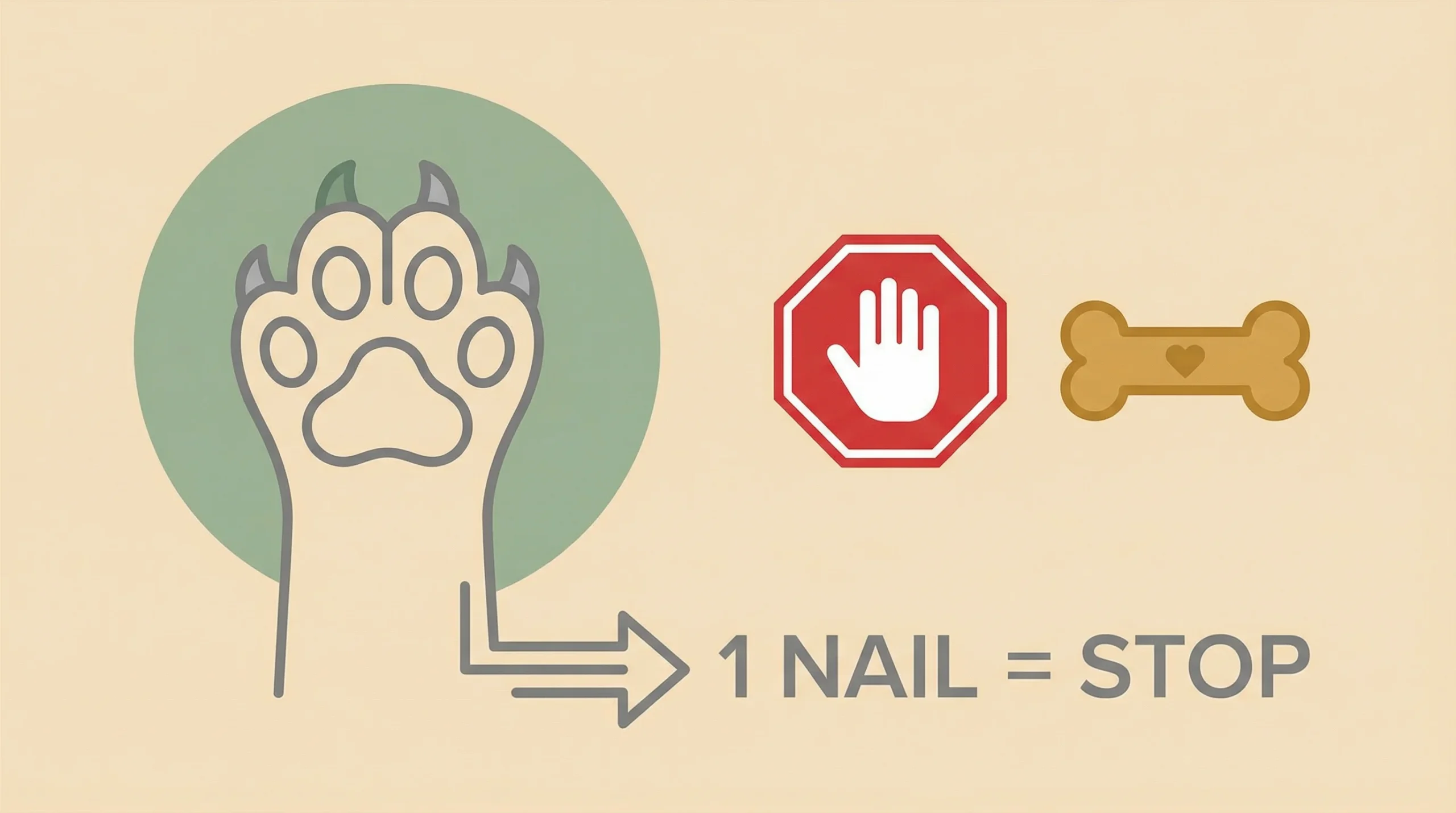
- When dealing with an uncooperative dog:
- Cut one nail
- Stop
- Reward
- End the session
Yes — even if there are nine nails left.
Consistency beats speed every time.
Step 6: Cut Small Amounts Only
- Never aim to “get it done” in one go.
- Trim tiny sections
- Stop well before the quick
- Watch for stress signs: lip licking, stiff posture, yawning
Small, controlled cuts prevent pain and build trust. If a nail splits or breaks during trimming, follow our step-by-step dog broken nail home treatment guide to prevent infection and pain.
Why Dogs Become Uncooperative During Nail Trimming
Understanding this helps you stop fighting your dog.
- Common reasons include:
- Previous painful experiences
- Fear of restraint
- Sensitivity in paws
- Poor handling technique
- Cutting the quick in the past
For many dogs, nail trimming isn’t stubbornness — it’s learned fear. For a trusted overview of safe nail trimming basics, see the Blue Cross guide on how to cut your dog’s nails.
For dogs that panic during grooming, using the best calming products for dogs can reduce anxiety and make nail trimming sessions more manageable.
Signs Your Dog Is Too Stressed to Continue
Stop immediately if you see:
- Growling or snapping
- Trembling
- Whites of eyes showing
- Sudden freezing or collapse
- Heavy panting or whining
Pushing through these signs makes future trimming worse, not better.
When You Should NOT Cut an Uncooperative Dog’s Nails
- Do not attempt nail trimming if:
- Your dog has bitten during grooming before
- They panic when restrained
- They are elderly with joint pain
- You cannot safely control the clippers
In these cases, professional help is safer for both you and your dog. For dogs that cannot tolerate trimming at all, there are alternatives to keep dog nails short without clipping that reduce stress entirely.
If you’re unsure about cutting too close to the quick, Dogs Trust explain the safest approach in their guide on how to clip your dog’s nails.
Additional Tips and Tricks
When it comes to cutting my dog’s nails, I’ve discovered a few extra tricks that can make the process easier and more enjoyable. From enlisting a helping hand to using positive reinforcement, these strategies have helped me tackle even the most uncooperative pups. Here are some tips that I’ve found particularly effective!
Use a Helper
Having one calm person gently support your dog can reduce stress significantly — without force.
Use Positive Reinforcement
Reserve special treats only for nail sessions. This creates a positive association over time.
Consider Professional Help
If I feel overwhelmed, I consider bringing a professional groomer. Many have experience with anxious dogs and can trim nails in just 10-15 minutes. Sometimes, knowing when to seek help is just as important as trying to do it all yourself.
Keep Sessions Predictable
Same place. Same routine. Same calm tone. Dogs thrive on predictability.
If your dog becomes more tolerant over time, this general guide on how to clip dog nails properly covers standard techniques in more detail.
Final Words
Learning how to cut an uncooperative dog’s nails isn’t about strength or speed — it’s about patience, timing, and trust.
With the right approach, even dogs that once panicked at the sight of clippers can learn to tolerate nail trimming calmly and safely. Progress may be slow, but it is possible — and every calm session makes the next one easier.
Once trimming becomes manageable, knowing how often to clip a dog’s nails helps prevent future stress and overgrowth.
Frequently Asked Questions
What are the signs that my dog is anxious about nail trimming?
Common signs include pulling away, growling, trembling, yawning, or refusing to let you touch their paws. These indicate stress, not bad behaviour.
How can I make my dog more comfortable during nail trimming?
Create a calm environment, go slowly, trim one nail at a time, and reward calm behaviour. Never rush the process.
What tools are best for cutting an uncooperative dog’s nails?
Scissor-style clippers and LED nail clippers are best for control and visibility. Avoid dull or noisy tools.
How can I tell when it’s time to trim my dog’s nails?
If you hear nails clicking on hard floors or see them touching the ground while standing, it’s time to trim.
What should I do if I accidentally cut my dog’s nail too short?
Apply styptic powder immediately to stop bleeding. Stay calm and end the session to avoid reinforcing fear.
If bleeding doesn’t stop quickly, see our full guide on how to stop a dog’s nail from bleeding safely at home.
How do groomers handle difficult dogs?
Groomers handle difficult dogs by using positive reinforcement techniques, remaining calm and patient, establishing a safe environment, employing gentle restraint methods, and taking breaks as needed. They may also use distractions, such as toys or treats, and ensure the grooming area is familiar to the dog to reduce anxiety.
