
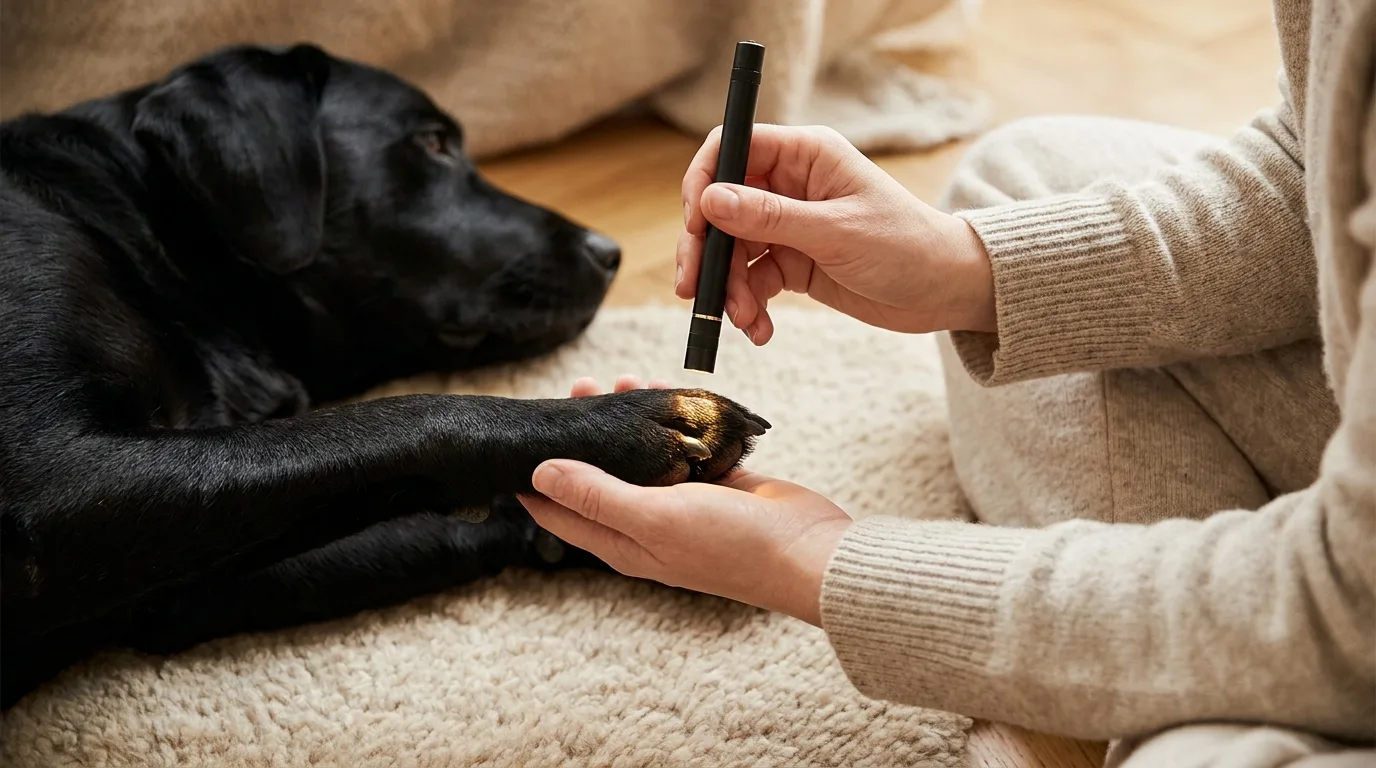
If you’re searching for how to cut dog nails that are black, you’re not alone. Black nails hide the quick — the sensitive core containing blood vessels and nerves — so trimming can feel like guesswork rather than a fixed procedure.
The good news: there are two reliable visual tests for finding it, and with the right tools and a bit of patience, you can trim black nails safely at home.
Quick Look: Cutting Black Dog Nails Safely
- Try the torch test first — shine a light through the nail to spot the quick as a shadow
- If that doesn’t work, trim in slivers and watch for the colour change: white/grey → dark dot → pink
- Cut at a 45-degree angle, 1–2mm at a time
- Keep styptic powder nearby in case you nick it
- Nails overgrown or growing fast? See our guide on how often to clip a dog’s nails
TABLE OF CONTENTS
Why Black Dog Nails Are Harder to Cut
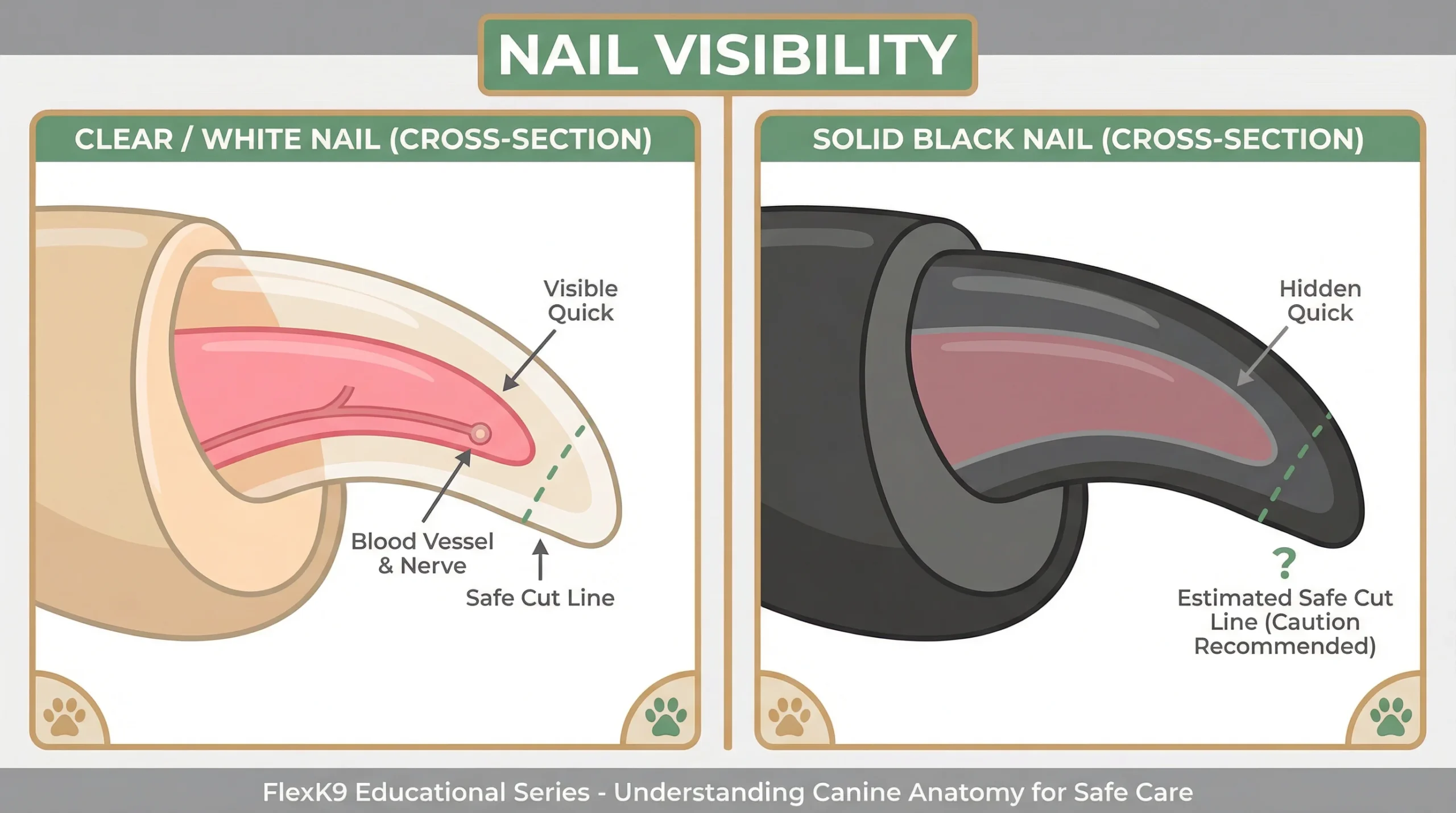
Black nails hide the quick completely, whereas light-coloured nails show it as a pink line running through the centre. That doesn’t make black nails more dangerous to trim — it just means you’re relying on technique and a couple of visual tricks instead of eyesight alone.
Every dog’s nail is built the same way underneath: a hard outer shell over the sensitive quick. For the full anatomy breakdown and the general clipping technique for a cooperative dog, see our complete guide on how to clip dog nails.
What You Need Before Cutting Black Dog Nails
Preparation matters more with black nails than any other type.
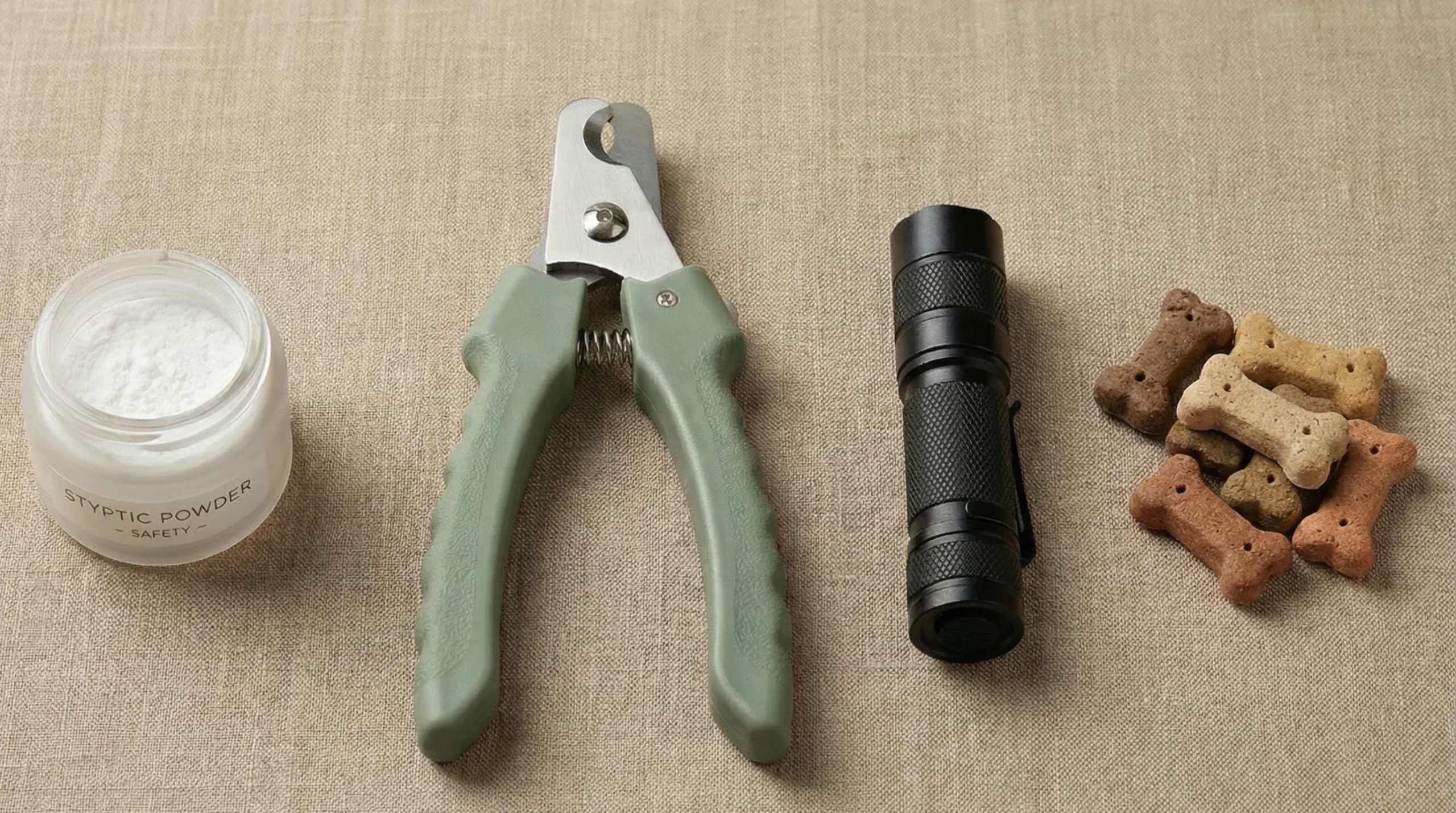
Essential Tools
- Sharp dog nail clippers (guillotine or scissor-style) or a rotary nail grinder
- Styptic powder or cornflour, in case of bleeding
- A small torch or phone flashlight
- Treats for positive reinforcement
Create a Calm Environment
- Choose a quiet room with good lighting
- Trim after exercise, when your dog is naturally more relaxed
- Ask someone to help hold your dog if needed
Two Ways to Find the Quick on Black Nails
This is the part that actually matters for black nails — the rest of the process is the same as trimming any dog’s nails.
Method 1: The Torch Test
Shine a small torch or your phone’s flashlight through the nail from underneath. On finer, thinner nails, this can reveal the quick as a slightly darker shadow inside the nail. It takes a few seconds to try and works well when nails aren’t too thick.
It doesn’t work on every dog — thicker, denser nails (large and giant breeds especially) often block too much light for the shadow to show clearly.
Method 2: The Slice-and-Look Test
If the torch doesn’t show anything useful, fall back on this — it works regardless of nail thickness or colour.
Trim a small sliver from the tip and look at the cut surface:
- White or grey, chalky centre → safe, keep going
- A dark dot or oval appears → stop immediately
- Pink tissue → you’ve reached the quick
This method relies on checking after every cut, not before — take your time with it.
How to Cut Dog Nails That Are Black: Step-by-Step
Step 1: Position Your Dog Correctly Have your dog sit or lie comfortably. Hold the paw firmly but gently so you can clearly see the nail from the side.
Step 2: Try the Torch Test First Shine your light through the nail before you cut anything. If you see a shadow, you have a rough guide for where to stop.
Step 3: Trim Small Amounts and Check the Cut Cut 1–2mm at a time at a 45-degree angle, checking the cross-section after every cut using the colour-change cues above. If you’re unsure, stop — you can always trim more later. For vet-written guidance, including what to do when all your dog’s nails are dark, see the PDSA’s advice on how to clip your dog’s nails.
Step 4: Smooth the Edges Use a nail file or grinder to smooth sharp edges once you’re done. This reduces splintering and gives better control near the quick on future trims.
Should You Use a Nail Grinder Instead of Clippers?
Grinders are often the safer choice for black nails because they remove material gradually rather than in one cut, which reduces the chance of a sudden, unexpected nick.
The trade-off:
- Some dogs dislike the noise or vibration at first
- Grinding takes longer than clipping, nail by nail
For nervous owners — or dogs with particularly thick nails — a grinder is usually worth the extra time.
My Experience with Dexter: I don’t actually watch for a colour change on Dexter’s nails any more. After five years of trimming my Cane Corso with a rotary grinder and a filer every two to three weeks, I go mostly by feel — I can tell the nail is narrowing in from the sides and front as I get close, and I finish with a smooth, slightly angled file rather than a hard stop. It works because grinding removes material in tiny amounts and I never push past what the nail is telling me.
If you’re newer to trimming, I’d still lean on the two tests above until you’ve built that same feel — that took years of regular practice, not one session.
Wondering whether ordinary human nail clippers would do instead of a dog-specific tool? On black nails specifically, precision matters even more since you can’t see the quick — see our honest breakdown of whether you can cut dog nails with human clippers before reaching for what’s already in your bathroom cabinet.
What to Do If You Cut the Quick on Black Nails
Accidents happen — even experienced trimmers hit the quick occasionally.
If Bleeding Occurs:
- Stay calm and reassure your dog
- Apply styptic powder with gentle pressure
- Hold for 30–60 seconds
- Prevent licking until the bleeding stops
If bleeding doesn’t stop within a few minutes, contact your vet. For the full bleeding first-aid protocol, see our guide on how to stop a dog’s nail from bleeding.
Aftercare Tips
- Reward your dog with treats and praise
- Check nails for rough edges
- Avoid strenuous outdoor activity for 30 minutes if the quick was nicked
- Monitor for limping or sensitivity
How Often Should You Cut Black Dog Nails?
Most dogs need trimming every three to four weeks, though this varies by age, breed, and how much walking they do on hard surfaces. For the full schedule broken down by those factors, see our guide on how often to clip dog nails.
Common Mistakes to Avoid
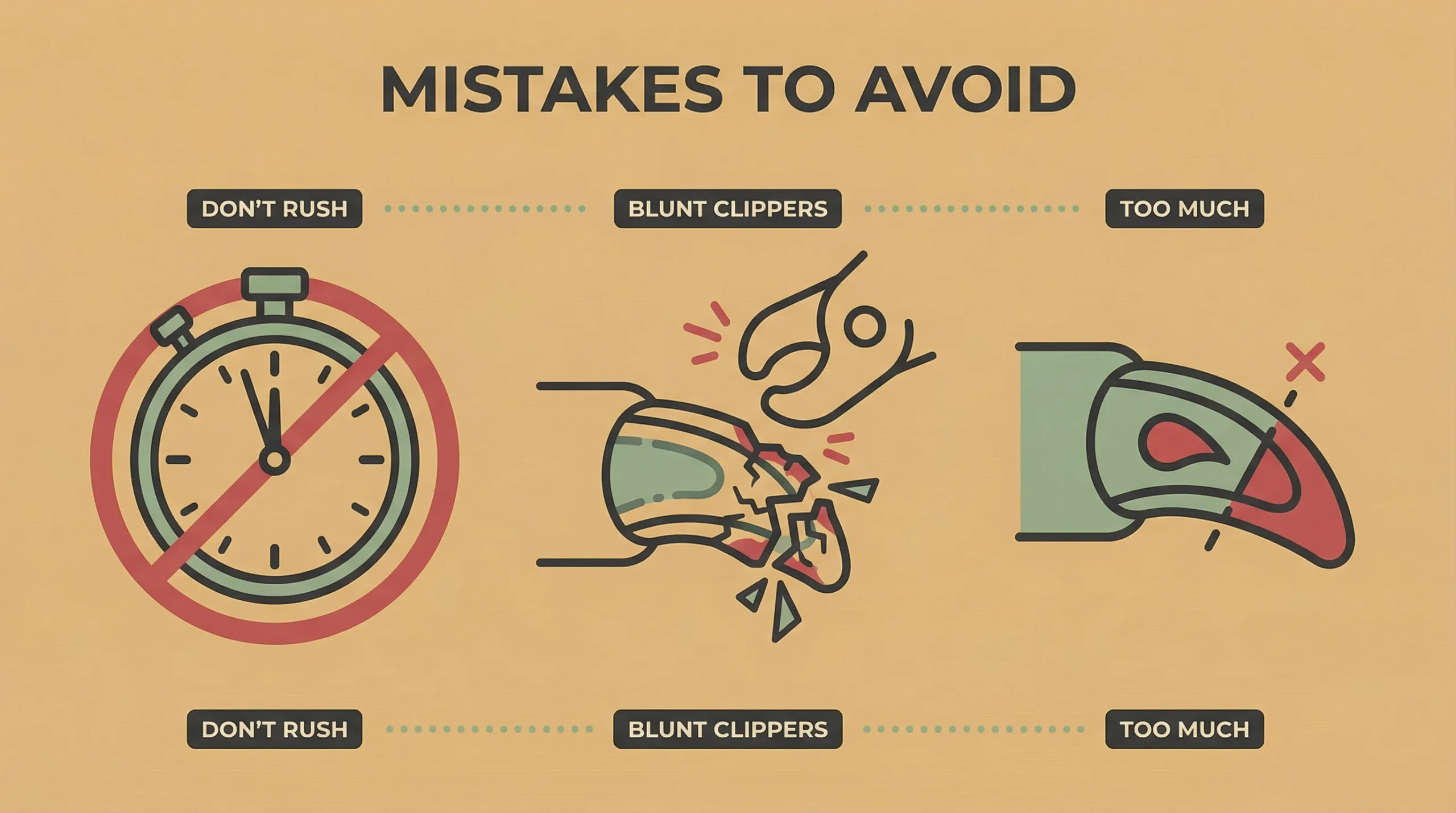
- Cutting too much at once
- Using blunt clippers
- Rushing the process
- Trimming when your dog is stressed
- Ignoring early warning signs of the quick
Patience matters more than speed.
Final Verdict
Cutting black dog nails is about technique, not bravery. Try the torch test first, fall back on the slice-and-look method if it doesn’t show anything, and trim in small amounts either way. Over time — as it did for us with Dexter — the feel for where to stop becomes second nature.
If you’re ever unsure, stop. Nail trimming should never feel like a gamble.
Frequently Asked Questions
How can you tell where the quick is on black dog nails?
Two ways: shine a torch or phone flashlight through the nail to look for a shadow, or trim in small slivers and watch the cut surface — a white or grey chalky centre is safe, a dark dot means stop, and pink means you’ve reached the quick.
Can you cut a dog’s nail if it’s black?
Yes. Black nails just hide the quick, so you rely on the torch test or the slice-and-look method instead of seeing it directly. Trim small amounts, use a clipper or grinder designed for dogs, and stop as soon as you see the warning signs above.
What angle do you cut black dog nails?
Cut at a 45-degree angle, aiming to avoid the quick.
Is it better to clip or grind black dog nails?
Grinding is often safer for black nails because it removes material gradually, giving more warning before you reach the quick. Clippers are faster but require more precision since there’s no gradual feedback.
Can I check for the quick by feel instead of looking at the nail?
Some experienced owners do rely on feel — sensing where the nail narrows or the texture changes — particularly when using a grinder, which allows very gradual removal. This comes with practice, though, so if you’re new to trimming, it’s safer to rely on the visual tests until you’ve built that intuition.
Why does my dog pull away when I clip black nails?
Often it’s discomfort near the quick or a previous bad experience rather than the colour of the nail itself. Short sessions, treats, and trimming small amounts at a time all help build tolerance over time.
