
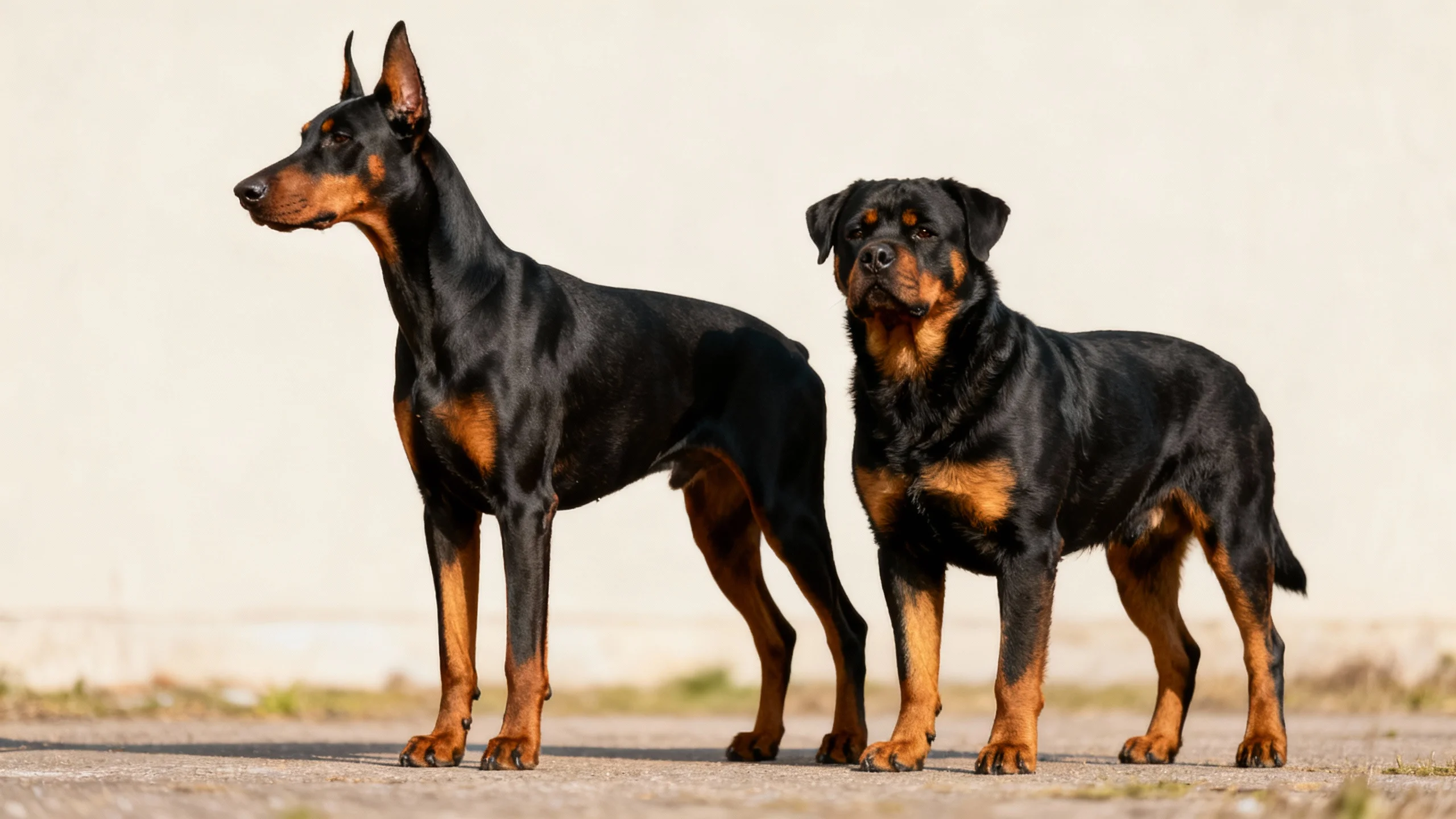
Choosing between a Doberman vs Rottweiler is a big decision. Both are powerful, loyal, and intelligent dog breeds that excel as family protectors and companions. But they’re not identical and the right choice depends heavily on your lifestyle, experience level, and how active your household is.
This updated 2026 guide breaks down the 8 key differences between these two popular breeds, from temperament and exercise needs to grooming, family compatibility, and health. Whether you’re a first-time owner or considering adding a working breed to your home, this comparison will help you decide.
They are known for their high energy, and Rottweilers have strong guarding instincts. Both breeds require proper training and attention to thrive in a family environment.
For more breed comparisons, see how the Golden Retriever vs Labrador differ in temperament and family suitability.
TABLE OF CONTENTS
⭐ Quick Comparison Table: Doberman vs Rottweiler
| Feature | Doberman | Rottweiler |
|---|---|---|
| Temperament | Alert, energetic, sensitive | Calm, confident, protective |
| Energy Level | Very high | Moderate–high |
| Lifespan | 10–12 years | 8–10 years |
| Coat | Short, smooth, low-maintenance | Double coat, heavier shedding |
| Best For | Active, experienced owners | Families, first-time owners (with guidance) |
| Strength | Agility, speed, responsiveness | Power, stability, guarding |
| UK Popularity | Growing | Very popular |
| Social Needs | Very attached to owners | Family-oriented, calm when trained |
1. Breed History & Origins
Doberman
The Doberman Pinscher was developed in late-19th-century Germany by Karl Friedrich Dobermann, who wanted an obedient, protective, highly responsive dog for personal security work. Their modern temperament still reflects this purpose — sharp, alert, and bonded closely to their owner.
Rottweiler
The Rottweiler is one of the oldest working breeds, descending from ancient Roman drover dogs used to move and guard cattle. In Germany, they became valued as butchers’ dogs and guardians. Today, their stable temperament makes them a favourite UK family protector.
In simple terms:
- Doberman: Protection-bred athlete
- Rottweiler: Steady, powerful guardian
For official breed standards and temperament details, you can also refer to the American Kennel Club breed profiles.
2. Size & Physical Build
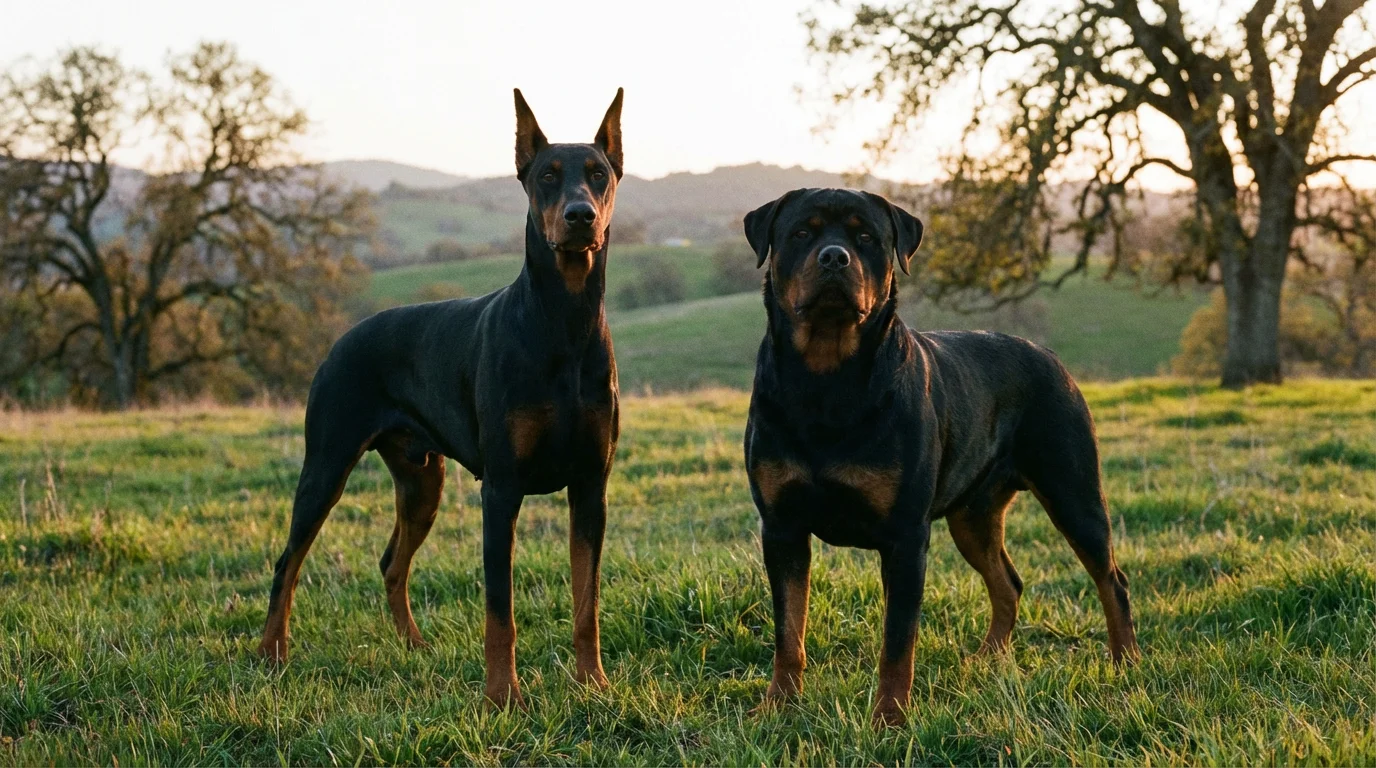
Doberman (Sleek & Athletic)
- Height: 26–28 inches
- Weight: 60–100 lbs
- Build: Lean, fast, powerful stride Dobermans look sharp and elegant, built for speed and agility.
Rottweiler (Strong & Stocky)
- Height: 24–27 inches
- Weight: 85–135 lbs
- Build: Thick-boned, deep-chested, muscular Rottweilers are visibly heavier and more powerful, with a low-centre-of-gravity build that makes them excellent guard dogs.
Summary:
Doberman = lighter, quicker
Rottweiler = heavier, stronger
If you’re exploring larger guardian breeds, the Canario dog vs Cane Corso guide is worth checking.
3. Temperament & Behaviour
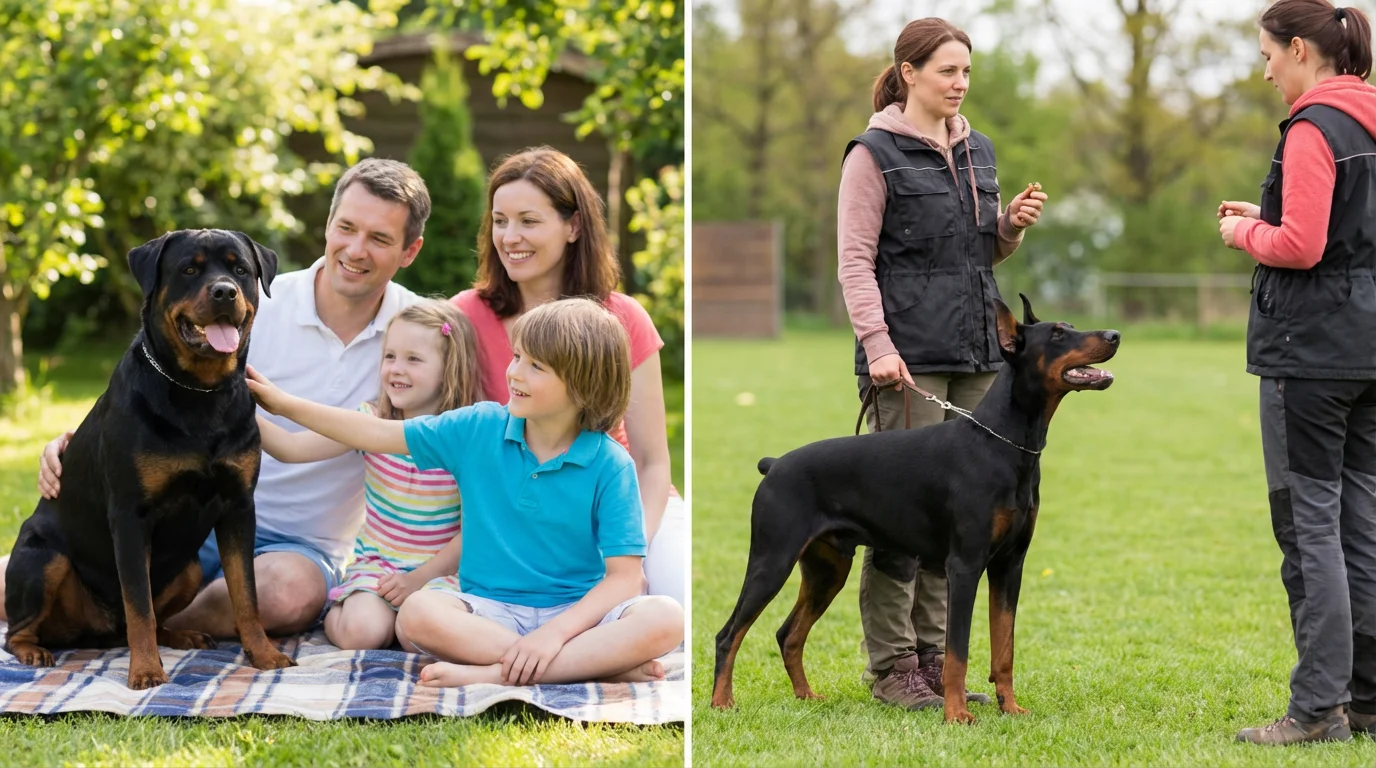
Doberman Temperament
- Very alert
- Emotionally sensitive
- Extremely bonded to owners (“velcro dog”)
- Reacts quickly to new sounds or situations
Dobermans thrive with structured routines and owners who enjoy training. If you are lucky enough to have both, Dobermans get along with Rottweilers if both dogs are socialised early.
Rottweiler Temperament
- Confident and calm
- Slow to react but very protective
- Good with children when socialised early
- Excellent at reading situations before acting
Rottweilers, in the Doberman vs Rottweiler comparison, are generally calmer and more predictable in family environments.
If you want the calmer of the two: Rottweiler wins.
If you prefer high-drive protection breeds, our Belgian Malinois vs German Shepherd guide offers another useful comparison.
4. Energy Levels & Exercise Needs
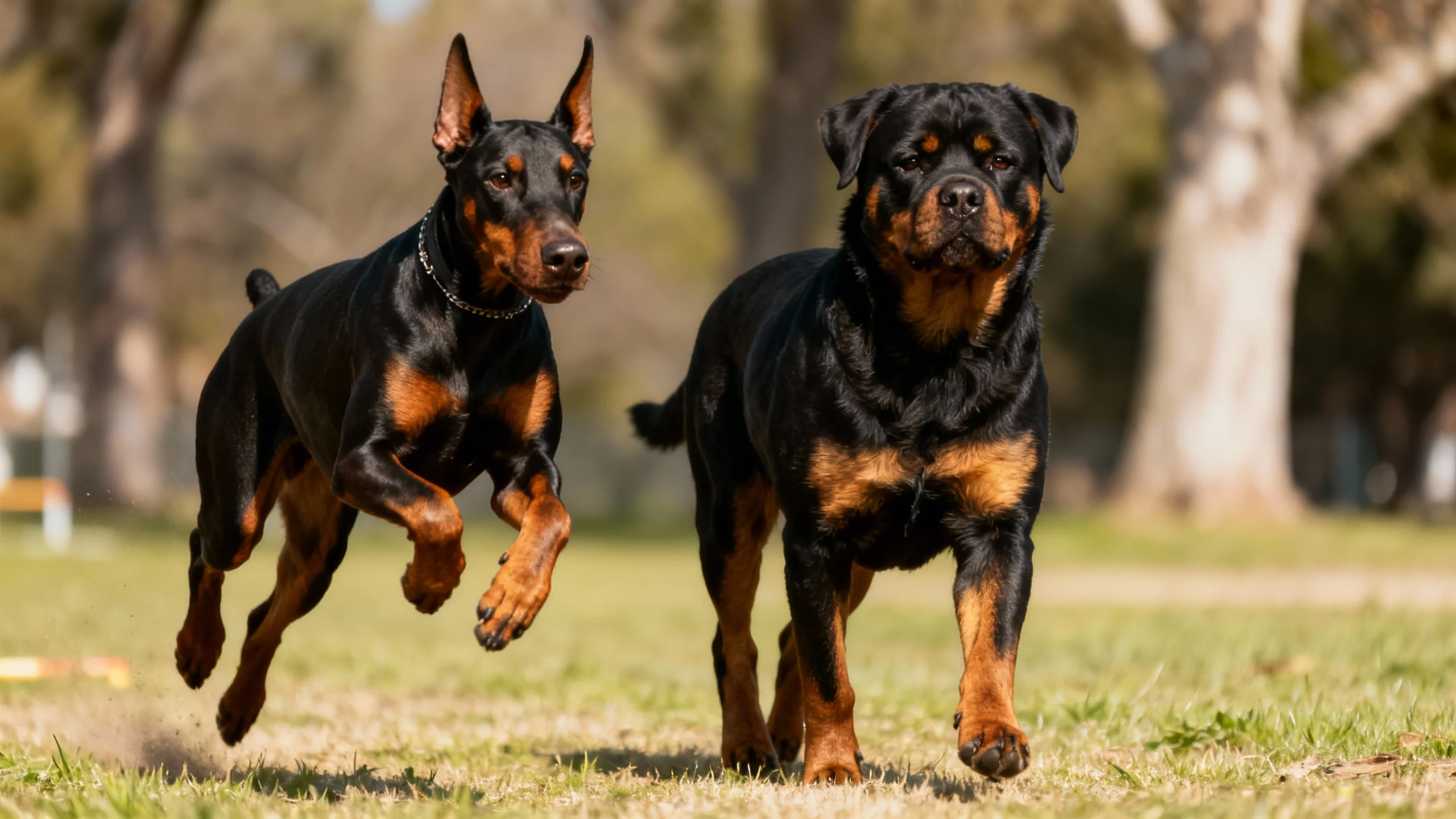
Both breeds are active, but Dobermans demand more.
Doberman Exercise Needs
- 1.5–2 hours daily
- High aerobic activity
- Agility work, running, structured training
- Needs mental stimulation or becomes anxious
Interactive dog enrichment toys are great for keeping Dobermans mentally stimulated.
Rottweiler Exercise Needs
- 1–1.5 hours daily
- Moderate intensity
- Walks, free play, obedience training
For active owners: choose the Doberman.
For busy families: choose the Rottweiler.
To compare another energetic, wolf-like breed, see Husky vs Wolf Dog.
5. Trainability & Intelligence
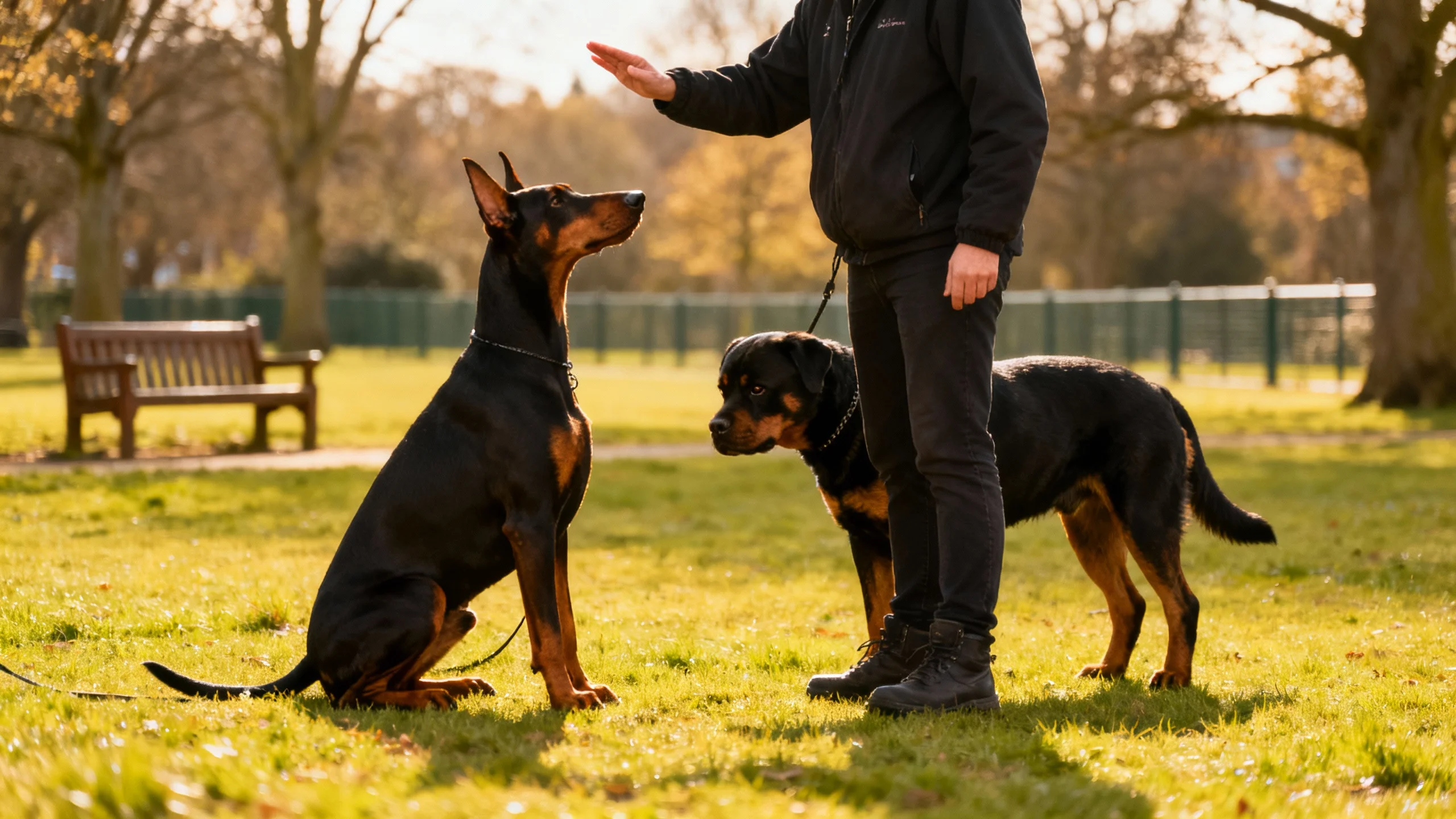
Doberman
- Learns very quickly
- Responds to consistent structure
- Great for advanced training
- Sensitive to tone and emotions
Rottweiler
- Highly intelligent but more independent
- Needs firm but calm leadership
- Excellent at real-world decision-making
- May test boundaries in adolescence
Overall:
Doberman = Faster learner
Rottweiler = More controlled guardian instincts
6. Health & Lifespan
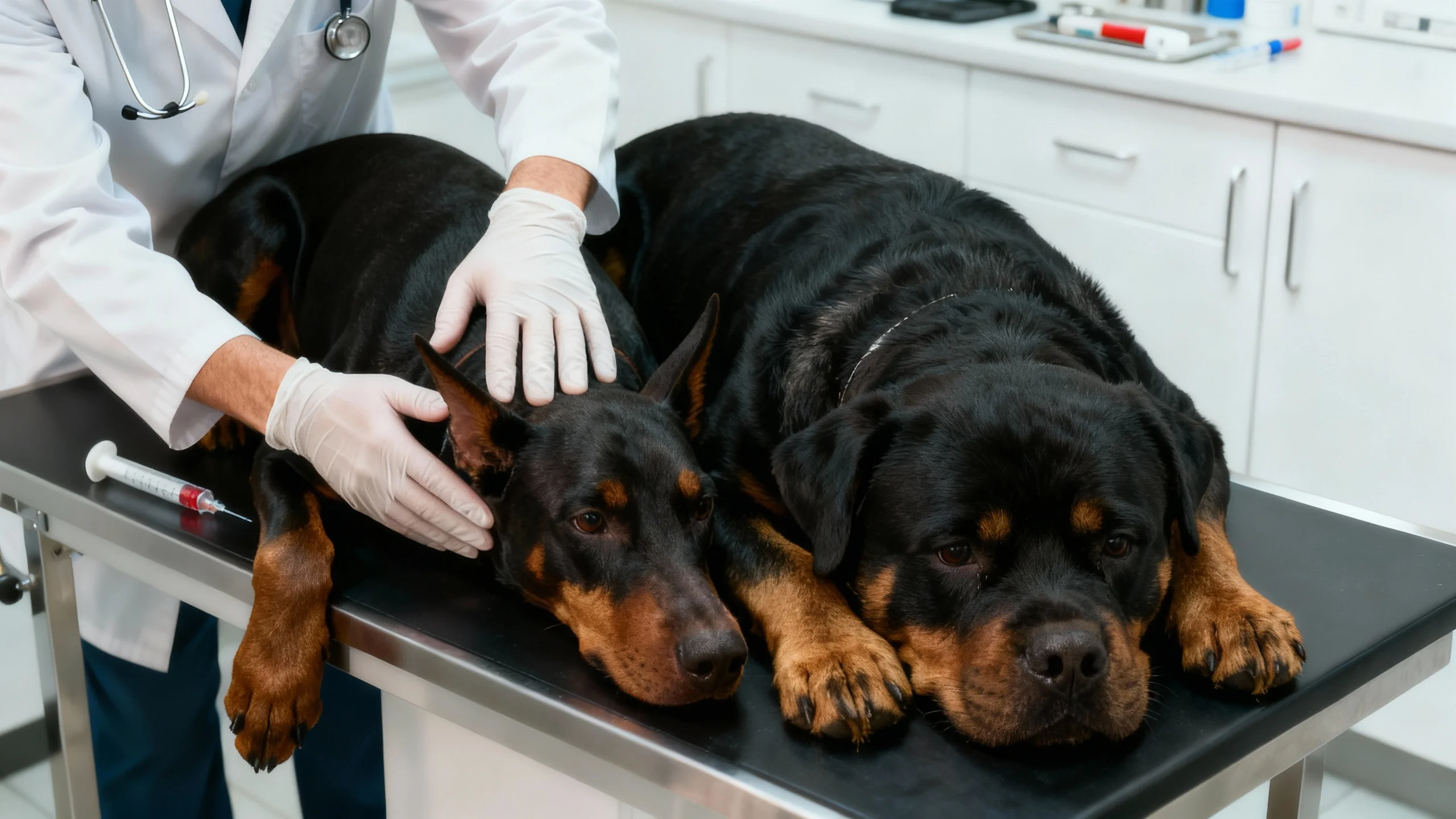
Both breeds are strong but prone to specific issues.
Doberman Health Concerns
- Dilated Cardiomyopathy (DCM)
- Hip dysplasia
- Hypothyroidism
- Bloat
Lifespan: 10–12 years
Rottweiler Health Concerns
- Hip & elbow dysplasia
- Osteosarcoma (bone cancer)
- Cruciate ligament injuries
- Heart issues
- Bloat
Lifespan: 8–10 years
Rottweilers generally have a shorter lifespan due to a higher risk of cancer.
7. Grooming & Coat Maintenance
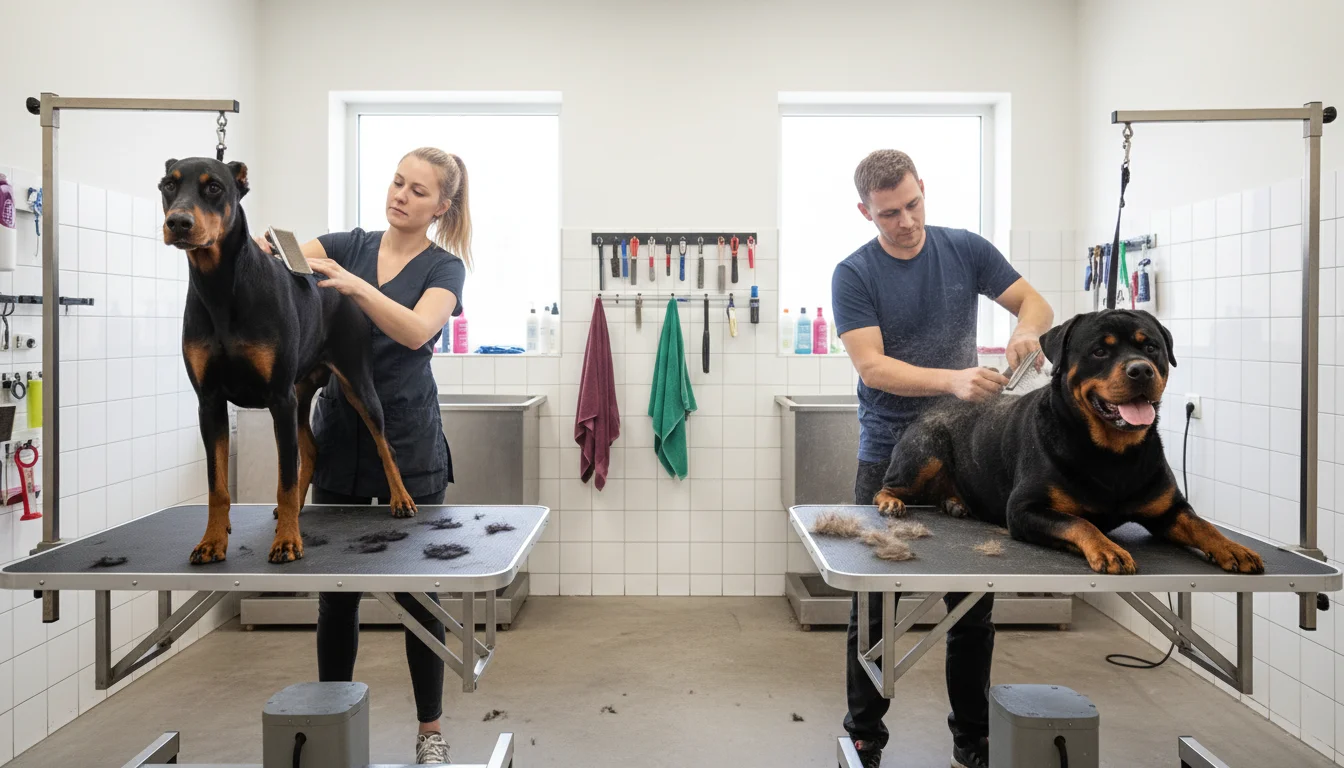
Doberman
- Short coat
- Low shedding
- Weekly brush is enough
- Rarely smells
Rottweiler
- Dense double coat
- Heavy seasonal shedding
- Needs brushing 2–3 times per week
- Can get “dog smell” quicker
If you prefer low-maintenance grooming, the Doberman is easier.
For grooming essentials, see our guide to the best dog shampoo for all coat types. If you’re unsure about nail care, here’s a guide on how to clip dog nails safely.
8. Family Suitability (UK Context)
Doberman
- Great with older children
- Needs supervision with toddlers due to speed and energy
- Requires secure fencing
- Can suffer separation anxiety
Rottweiler
- Calm, steady, and very family-focused
- More tolerant around younger children
- Naturally protective
- Excellent for quieter UK homes or gardens
For most British families, the Rottweiler is the easier day-to-day companion. Along with Rottweilers Doberman dogs are among the most popular guardian breeds in the UK.
Families looking for small companion breeds may prefer reading Lhasa Apso vs Shih Tzu dogs.
⭐ Which Breed Should You Choose? — Simple Recommendation
Choose a Doberman if you want:
✓ A highly energetic, athletic dog
✓ Fast training, sharp responsiveness
✓ A dog that stays close to you at all times
✓ A breed suited to active lifestyles
Choose a Rottweiler if you want:
✓ A calmer, more predictable family guardian
✓ A powerful but gentle dog with the right training
✓ Better suitability for children
✓ A more relaxed home companion
Both are fantastic breeds — but they suit different owners.
Doberman vs Rottweiler: Final Thoughts
Choosing between a Doberman vs Rottweiler really comes down to the type of home and lifestyle you have. If you want a fast, energetic, highly intelligent dog that thrives on activity and close companionship, the Doberman is an excellent fit.
If you prefer a calmer, steadier, family-focused guardian with a naturally protective nature, the Rottweiler is often the easier and more adaptable choice for most households.
Both breeds are loyal, capable, and deeply rewarding — understanding their individual traits will help you decide which one feels right for your home, routine, and experience level.
Frequently Asked Questions
Which is stronger, the Doberman or the Rottweiler?
The strength of a Doberman and a Rottweiler can vary based on individual dogs, training, and genetics. Generally, Rottweilers are considered to be physically stronger due to their larger size and muscle mass, while Dobermans are known for their agility and speed.
Are Dobermans safe family dogs?
Yes, Dobermans can be safe family dogs if properly trained and socialised.
Does a Doberman have a stronger bite force than a Rottweiler?
Yes, a Rottweiler has a stronger bite force than a Doberman.
Which dog is stronger than a Doberman?
The Rottweiler is often considered stronger than a Doberman.
Which breed is better for first-time dog owners, the Doberman or the Rottweiler?
Rottweilers are usually easier for first-time owners because they are calmer and more predictable, while Dobermans require more exercise and structured training.
Which dog is easier to train, the Doberman or the Rottweiler?
Dobermans typically learn commands faster, but both breeds train well with consistency and positive reinforcement.
Which dog sheds more, the Doberman or the Rottweiler?
Rottweilers shed more because they have a double coat. Dobermans shed lightly and are much easier to groom.
Which dog is easier to handle on walks?
Dobermans are lighter and easier to manage at speed, while Rottweilers are stronger and may require better lead training.
