
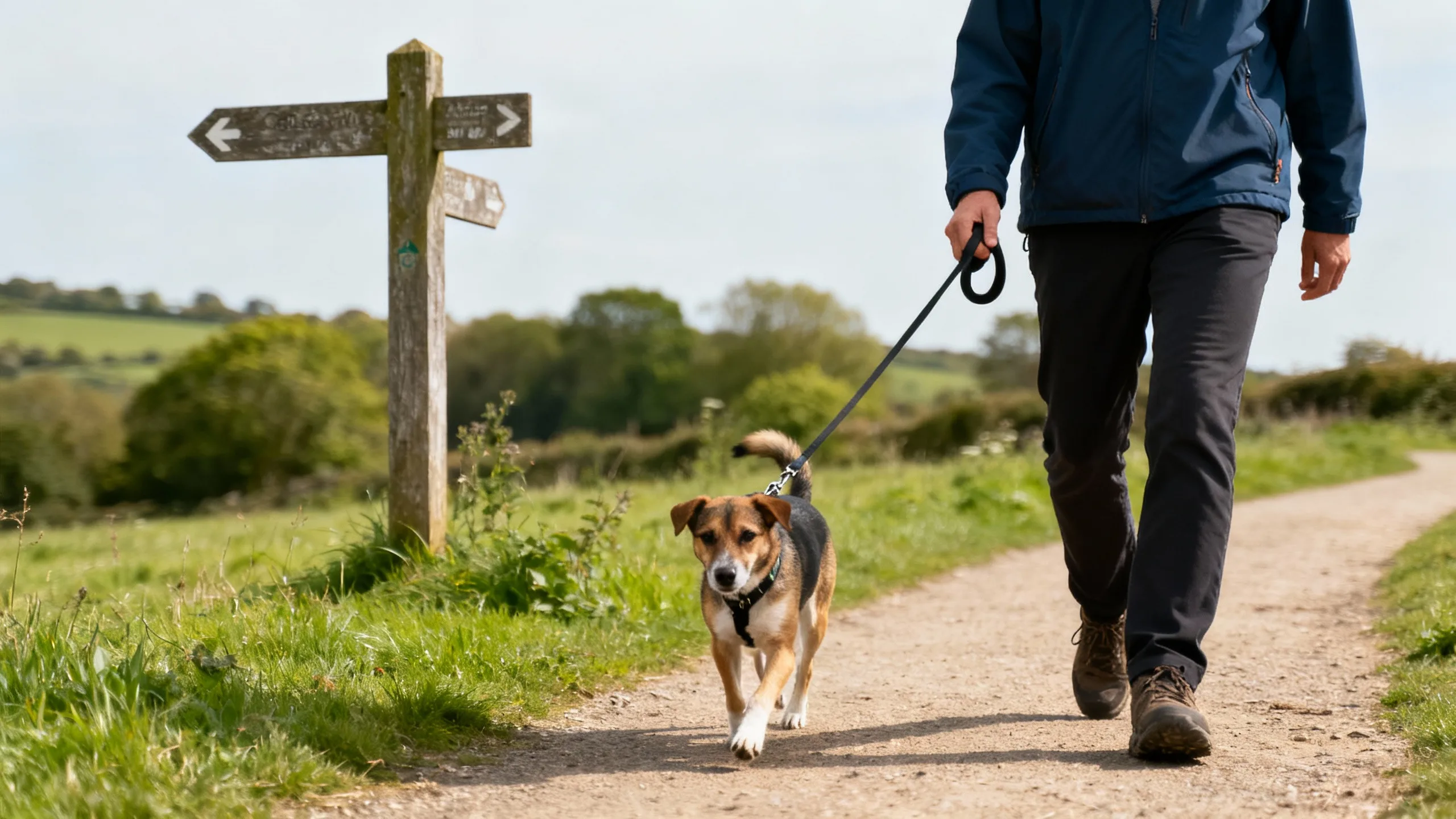
Dog leash laws in the UK are often misunderstood, yet they’re essential for keeping people, pets, wildlife and livestock safe. While there’s no blanket rule requiring dogs to be on a lead at all times, several national laws, local council regulations and Countryside Code rules set out exactly when your dog must be on a lead — and what “under control” really means.
For owners, knowing these rules is more than just following the law. It helps prevent accidents, avoids fines, and protects your dog from dangerous situations such as traffic, livestock encounters and conflicts with other dogs. In recent years, councils have increased enforcement through PSPOs (Public Spaces Protection Orders), meaning many parks, footpaths, and public spaces now have clear lead requirements.
This guide explains the latest UK dog leash laws, off-lead rules, PSPO restrictions, livestock protection laws and the key responsibilities every dog owner should follow in 2026.
TABLE OF CONTENTS
Why Dog Leash Laws Exist in the UK
Why Leash Law Compliance Matters
Compliance with dog leash laws is essential not only for the safety of others but also for the protection of your dog. A well-trained dog that is accustomed to being on a lead is less likely to react aggressively towards other animals or humans. Training your dog to walk calmly on a lead can also prevent potential accidents and injuries. Moreover, responsible dog ownership promotes a positive image of dog owners in the community, thereby fostering a more welcoming environment for both dogs and their owners.
Responsible ownership is at the heart of UK dog legislation. Following lead laws:
- Protects your dog from accidents, livestock encounters, or dangerous dogs
- Reduces conflict with other dog walkers and the public
- Helps prevent injuries, fear, or “out of control dog” offences
- Supports local wildlife conservation, especially in nesting season
Responsible walking also means being prepared for the everyday realities of ownership — including always carrying a dog poop bag holder, since leaving mess behind carries its own separate fines under UK fouling laws.
Dogs that are calm on a lead are less likely to behave unpredictably or put themselves at risk. Regular lead training and positive reinforcement make everyday walks safer and more enjoyable. Learn more about why it’s important to keep dogs on leads in public for safety and training compliance.
Public Awareness & Community Responsibility – Controlling your dog in public
Local Campaigns
Many councils and animal welfare organisations run campaigns promoting lead control in parks, towns, and farmland. These often highlight safe walking routes and seasonal restrictions.
Dog-Walking Groups
Local walking groups can be a great source of advice on lead rules, training, and safe walking areas. They’re also useful for learning about council rules that vary by postcode.
Public Safety Laws
It is illegal for a dog to be dangerously out of control. A dog is considered out of control if:
- It injures someone
- It causes someone to reasonably fear injury
Penalties can include fines, criminal prosecution, and restrictions on dog ownership. Owners and members of the public may need to know how to report a dangerous dog through the proper legal channels, especially if the dog is dangerously out of control or repeatedly violates leash laws.
The Outdoor Access Code and What It Means for Dog Walkers
Identification Requirements
All dogs in public must wear a collar and ID tag displaying their owner’s name and address.
Microchipping is also legally required by 8 weeks of age, and details must be kept up to date.
Local Regulations and Enforcement
Local councils can implement Public Spaces Protection Orders (PSPOs) to address specific issues in their areas. These orders can require dogs to be on leads in designated zones, restrict the number of dogs one person can walk, or even ban dogs from specific areas. Violations can result in fines up to £1,000.
Local Council Regulations & PSPOs
Councils can introduce Public Spaces Protection Orders (PSPOs), which may include:
- Mandatory lead zones in parks and town centres
- Limits on how many dogs one person can walk
- Seasonal restrictions
- Dog-free areas
Breaching a PSPO can result in a fine of up to £1,000.
Countryside & Livestock Rules
Under the Countryside Code and various laws:
- On access land, dogs must be on a lead no longer than 2 metres around livestock.
- Farmers are legally permitted to protect livestock, which can include shooting a dog that is actively worrying animals.
- During bird nesting season (1 March–31 July), dogs should be on a lead or under very close control in rural areas.
These rules make lead control essential in countryside walks.
Dogs and Livestock: Legal Responsibilities in the UK
Consequences of Non-Compliance
Failure to comply with dog leash laws can lead to severe consequences. Not only can dog owners face hefty fines, but they may also encounter legal actions if their dog causes injury to another person or animal.
Failing to follow dog leash laws can lead to:
- Fixed penalty fines
- Court action
- Claims for injury or livestock damage
- Loss of the right to keep a dog (in severe cases)
Repeated breaches significantly increase penalties and may involve police or council enforcement teams.
Role of Training & Socialisation
Lead training is one of the most important aspects of responsible ownership. Benefits include:
- Improved control in busy environments
- Reduced leash reactivity
- Better behaviour around unfamiliar dogs or children
Obedience classes, reward-based training, and controlled socialisation help ensure a dog behaves safely in all environments.
Recent Developments & Legal Updates
Breed-Specific Legislation
The Dangerous Dogs Act 1991 prohibits certain breeds. In 2023, the American Bully XL was added due to concerns about its potential for aggression. Owners of banned or exempted breeds must comply with strict control and lead requirements. Some breeds are subject to stricter control rules under UK law, including mandatory lead and muzzle requirements, which are outlined in the full list of banned dog breeds in the UK.
Council Enforcement
More councils across England and Wales now issue higher numbers of fixed penalty notices for dog-related violations than any other public offence, showing increased enforcement of dog control orders.
Lead Safety Awareness
The Royal Society for the Prevention of Accidents has reported a rise in injuries involving dog leads, highlighting the need to handle leads safely and avoid finger entanglement or misuse of retractable leads.
Final Thoughts on Dog Leash Laws
As the landscape of dog ownership evolves, staying informed about Dog Leash Laws and any changes in regulations is vital. By being proactive in understanding local laws, engaging in community resources, and promoting responsible ownership, dog owners can contribute to a safer environment for everyone. Education, awareness, and respect for the rules not only protect the public and livestock but also enhance the quality of life for dogs and their owners. Ultimately, responsible pet ownership is a shared community effort that fosters goodwill and harmony.
Frequently Asked Questions
Is it a legal requirement for dogs to be on leads?
Yes, it is a legal requirement for dogs to be on leads in certain areas, such as public places and during specific circumstances, including the Countryside Code and local bylaws. Always check local regulations.
Is it illegal for dogs to be off-lead in the UK?
In the UK, it is not illegal for dogs to be off-lead in public spaces; however, owners must ensure their dogs are under control. Specific areas, such as designated dog parks, may allow off-lead activity, while other locations may have restrictions. Always check local regulations and guidelines.
Do dogs legally have to be strapped in?
In the UK, there is no specific law requiring dogs to be strapped in while in a vehicle, but the Highway Code advises that dogs should be properly restrained to prevent distraction and injury.
Do dogs have to be on a lead on pavements and roads?
Yes, under the Highway Code (Rule 56), dogs must be kept on a short lead when walking on pavements, roads, or paths shared with cyclists and horse riders. This rule exists to prevent dogs from startling traffic or causing accidents.
Which dog breeds are legally required to wear a muzzle in public?
Dogs classified as banned breeds under the Dangerous Dogs Act 1991 (including the XL Bully, Pit Bull Terrier, Japanese Tosa, Dogo Argentino, and Fila Brasileiro) must legally be muzzled and kept on a lead in public. Additionally, individual dogs subject to specific court orders (Community Protection Notices) may also require muzzling regardless of breed.
Are dogs allowed off-lead on UK beaches?
It depends on the local council and the time of year. Many councils use Public Spaces Protection Orders (PSPOs) to ban dogs from specific beaches during the summer months (typically May to September). Always check signage at the beach entrance to avoid fines.
Can I be fined if my dog runs up to strangers but is friendly?
Potentially, yes. Under the Dangerous Dogs Act 1991, a dog can be classed as “dangerously out of control” if someone has reasonable grounds to fear injury — even if the dog is friendly and never bites. A confident, boisterous approach can be enough, especially with someone who’s nervous around dogs or a child. Keep your dog on a lead around strangers and work on recall, rather than relying on good intentions alone.
