
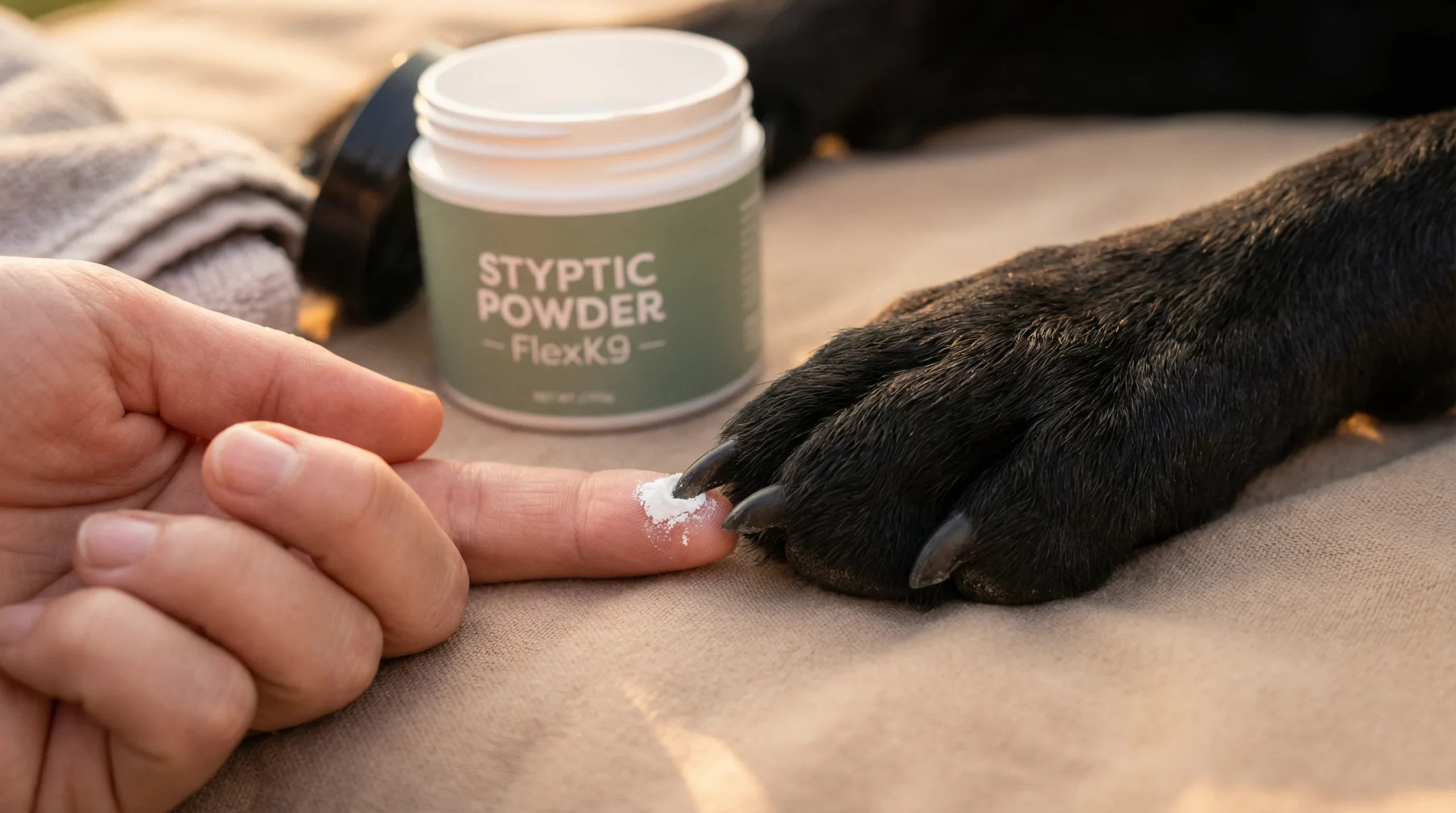
If your dog’s nail is bleeding right now, you don’t have time to guess or scroll endlessly. The good news? In most cases, a bleeding dog nail can be stopped at home within 5 minutes using simple, safe first-aid steps.
This guide shows you exactly how to stop a dog’s nail from bleeding, what actually works, what to avoid, and when bleeding is serious enough to call the vet.
TABLE OF CONTENTS
How to Stop a Dog’s Nail from Bleeding (Quick Answer)
To stop a dog’s nail from bleeding, apply firm pressure with a clean cloth for 60–120 seconds. If bleeding continues, apply styptic powder, cornflour, or baking soda directly to the nail and hold for a further 30–60 seconds. Keep the paw elevated and restrict movement. If bleeding lasts longer than 20 minutes, seek veterinary care immediately.
These steps are designed to stop dog nail bleeding quickly while keeping your dog calm and preventing further injury.
Why Dog Nails Bleed So Easily
Dog nails contain a sensitive inner core called the quick, which holds blood vessels and nerves — for the full breakdown of how it’s built and why it recedes with regular trims, our guide to clipping dog nails safely covers that in depth. What matters here is simpler: if the nail is cut too short, cracked, or torn, the quick is exposed — and that produces bleeding that looks dramatic but is usually very manageable.
Common causes include:
- Cutting the nail too short during trimming
- Torn or cracked nails from rough surfaces
- Overgrown nails that split or snag
- Accidental trauma during play or running
I hit Dexter’s quick myself, early on, in a routine trim gone wrong with standard scissor clippers — not long before my little one arrived, back when I still had very little experience reading where his quick actually sat. Dexter, to his credit, barely reacted — a brief flinch and he was back to normal within a minute. I was the one who struggled: it was properly bloody, I didn’t have styptic powder to hand, and without knowing what I was doing, it took a genuinely long time — hours, not minutes — before I’d got it fully stopped.
That gap between hours and the five minutes this guide is built around comes down entirely to having the right steps and kit ready before you need them, not during. It’s also why I switched Dexter to a rotary grinder afterwards, and started trimming more often to help his quick recede rather than waiting until nails were overdue.
If your dog pulls away, panics, or resists during trims, improper handling is a common cause of nail injuries in the first place. See our step-by-step guide on how to cut an uncooperative dog’s nails safely.
Step-by-Step: How to Stop a Dog’s Nail from Bleeding Fast
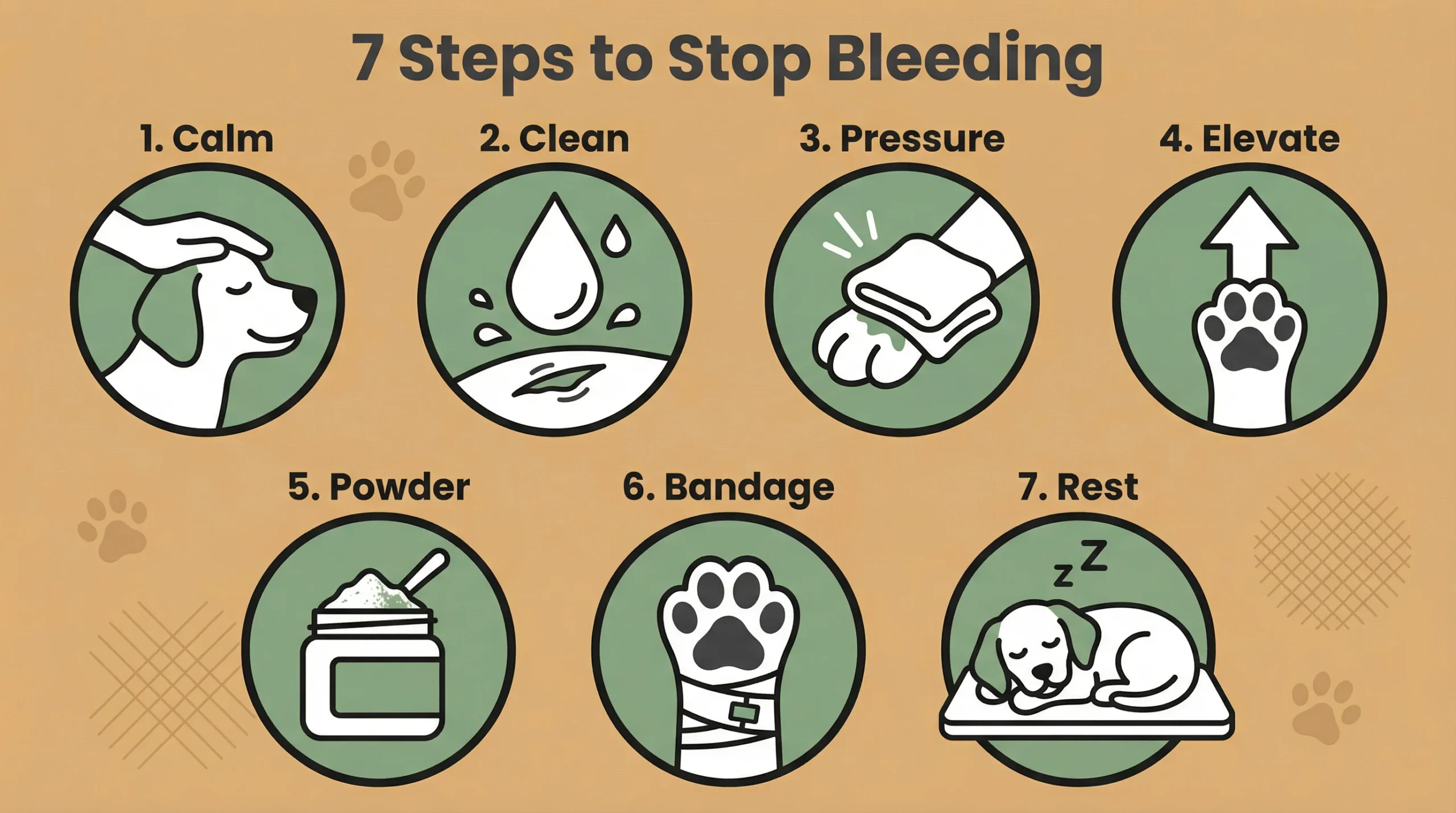
Step 1: Stay Calm and Secure Your Dog
Dogs react to your energy. If you panic, they panic — which increases bleeding.
- Speak calmly
- Gently hold the paw
- Prevent running or jumping
Movement increases blood flow and delays clotting.
Step 2: Clean the Nail Area
Lightly clean the nail to remove blood so you can see where the bleeding is coming from.
- Use warm water and a soft cloth
- Avoid alcohol or hydrogen peroxide (they delay healing)
Step 3: Apply Firm Pressure
This step alone stops bleeding in many cases.
- Wrap the nail with clean gauze or cloth
- Apply steady pressure for 60–120 seconds
- Do not check too early — let the clot form
If bleeding slows or stops, keep the paw still for several minutes.
Step 4: Elevate the Paw
If bleeding continues, gently raise the paw above heart level.
- Elevation reduces blood flow
- Helps pressure work more effectively
Hold this position for another 60 seconds.
Step 5: Use a Clotting Agent
If pressure alone isn’t enough, apply a clotting substance directly to the nail.
Best options:
- Styptic powder (fastest and most reliable)
- Cornflour
- Baking soda
How to apply:
- Dip the nail into the powder, or press it firmly onto the nail
- Hold pressure for 30–60 seconds
Bleeding should slow or stop quickly.
Step 6: Bandage If Necessary
If the nail still oozes slightly:
- Apply a light bandage or gauze wrap, snug but not tight
- Remove after 1–2 hours
- Never leave a tight bandage on overnight
Step 7: Monitor and Restrict Activity
Once bleeding stops:
- Keep your dog calm for 12–24 hours
- Avoid walks, running, or rough play
- Check the nail periodically
Re-bleeding usually happens due to activity, not poor treatment.
Other Remedies to Stop a Dog’s Nail From Bleeding
1. Styptic Powder (Best Option)
Stops bleeding in seconds, designed specifically for nail injuries, and recommended by vets and groomers. If you trim nails regularly, keep this in your kit.
2. Cornflour or Baking Soda
Effective in emergencies and works best for minor bleeding — press firmly and hold. A good backup when styptic powder isn’t available.
3. Bar Soap (Emergency Method)
Rub the nail into a dry bar of soap. Can help seal very minor cuts if nothing else is available.
Avoid: Superglue and other adhesives are sometimes suggested online as a nail-bleeding fix. Don’t use them — sealing an open wound with adhesive can trap bacteria and delay healing. Stick to styptic powder or the household alternatives above.
Aftercare Once Bleeding Stops
Proper aftercare reduces infection risk and prevents re-bleeding.
- Rinse the nail gently after 24 hours
- Apply dog-safe antiseptic if needed
- Limit activity for at least one day
- Avoid trimming nails again for a week
Most minor nail injuries heal fully within 7–10 days.
When to Seek Veterinary Care
For additional veterinary guidance on managing nail injuries at home, PetMD provides a clinically reviewed overview on how to stop a dog’s nail from bleeding.
Call your vet if:
- Bleeding lasts longer than 20 minutes
- The nail is torn or hanging
- Your dog shows severe pain or limping
- Bleeding keeps restarting
- Your dog has a known bleeding disorder
Some injuries require professional treatment or partial nail removal.
Important: This article provides first-aid guidance only and does not replace professional veterinary advice.
How to Prevent Dog Nail Bleeding in the Future
Prevention is far easier than treatment.
- Follow a consistent trimming schedule — see our full guide to how often to clip dog nails for the right frequency by age, breed, and lifestyle
- Cut small amounts at a time
- Use a nail grinder for dark nails
- Keep styptic powder nearby
- Desensitise your dog to nail handling
Short, regular trims reduce the risk of cutting the quick.
Final Takeaway
A bleeding dog nail looks scary — but in most cases, it’s manageable at home.
- Apply pressure first
- Use a clotting agent if needed
- Restrict movement
- Call the vet if bleeding won’t stop
Knowing how to stop a dog’s nail from bleeding is a skill every dog owner should have — and one that prevents panic, pain, and unnecessary vet visits.
Frequently Asked Questions
How do you stop a dog’s nail from bleeding at home?
To stop a dog’s nail from bleeding at home, apply firm pressure with a clean cloth for 60–120 seconds. If bleeding continues, use styptic powder, cornflour, or baking soda directly on the nail. Keep the paw elevated and restrict movement until bleeding stops. If bleeding lasts over 20 minutes, contact a vet.
How long does it take for a dog’s nail to stop bleeding?
In most cases, a dog’s nail stops bleeding within 2–5 minutes when pressure or a clotting agent is applied. Minor cuts often stop quickly, while deeper cuts may take longer. If bleeding continues beyond 20 minutes despite treatment, veterinary care is recommended.
What stops a dog’s nail from bleeding the fastest?
Styptic powder stops a dog’s nail from bleeding the fastest because it promotes rapid clotting. It’s commonly used by vets and groomers and is more reliable than household alternatives for active bleeding.
Can a dog bleed too much from a cut nail?
Most nail bleeds look worse than they are and stop within a few minutes of pressure or styptic powder. It becomes a genuine concern if bleeding continues beyond 20 minutes despite treatment, or if your dog shows signs of significant blood loss such as pale gums or weakness — in either case, contact your vet straight away.
How can I prevent my dog’s nails from bleeding next time?
Regular trimming on a consistent schedule, cutting small amounts at a time, and using proper nail clippers or grinders all reduce the risk of bleeding. Keeping your dog calm during trims also helps avoid accidents.
When should I take my dog to the vet for a bleeding nail?
Take your dog to the vet if the nail continues bleeding after 20 minutes, appears torn or broken, or if your dog shows signs of severe pain, swelling, or limping.
