
As dog owners, we absolutely adore snuggling up on the sofa with our four-legged friends, even when they have their own luxurious dog beds to sleep in. However, the aftermath of those cosy evenings is usually a thick layer of fur embedded into our favourite throws. If you find yourself constantly battling the fluff, you are certainly not alone. While investing in the best deshedding tools for dogs is a great preventative measure, learning exactly how to get dog hair out of a blanket is a vital skill for any pet parent looking to maintain a clean home without completely banning the dog from the furniture.
At FlexK9, we understand that maintaining household hygiene alongside pet ownership can feel like an endless chore. In this comprehensive guide, we will break down the most effective, stress-free methods to remove pet hair from your textiles, keeping both your home looking pristine and your washing machine functioning perfectly.
TABLE OF CONTENTS
Understanding the Stubborn Nature of Pet Hair
Before diving into the solutions, it is incredibly helpful to understand exactly why our dogs’ hair seems to cling to our soft furnishings for dear life. Understanding how fast dog hair grows and sheds explains the sheer volume of fur we deal with; furthermore, this fur contains natural oils, and the strands themselves often generate static electricity when rubbing against household textiles. This combination creates a surprisingly strong bond between the fur and the fibres of your blankets.
Furthermore, establishing a consistent grooming routine, as advised by animal welfare experts at Blue Cross, will help gently remove dead fur and significantly reduce the overall amount of loose hair your dog sheds onto your furniture in the first place.
Why Certain Fabrics Trap Fluff
Not all blankets are created equal when it comes to attracting fur. Materials like fleece, velvet, and loosely woven wool are notorious magnets for pet hair. The textured surfaces of these fabrics grab onto the microscopic scales on the dog hairs, which is the primary reason for fur sticking to your bedding and blankets. Conversely, tightly woven materials like heavy cotton or specialised pet blankets are much easier to keep clean. When figuring out how to get rid of dog hair, identifying the type of fabric you are dealing with is half the battle.
The Pre-Wash Strategy is Crucial
One of the biggest mistakes dog owners make is throwing a fur-covered blanket straight into the wash. Wet dog hair clumps together and adheres even more strongly to the fabric, while simultaneously posing a massive risk to your appliance’s plumbing. A solid pre-wash strategy is non-negotiable. Removing as much hair as possible while the blanket is dry will save you time, effort, and potentially expensive repair bills.
Proven Methods to Get Dog Hair Out of a Blanket
Now that we understand the mechanics of the problem, let us explore the most reliable techniques for restoring your textiles. These methods have been tested by countless dog owners and are highly effective for everyday household maintenance.
Manual Removal Techniques Before Washing
Manual removal is your first line of defence. While it requires a bit of elbow grease, it remains the most effective way to prep your textiles before they even touch water, much like using the right types of brushes for dogs prepares their coat before a bath.
While it requires a bit of elbow grease, it remains the most effective way to prep your textiles before they even touch water.
The Rubber Glove Trick
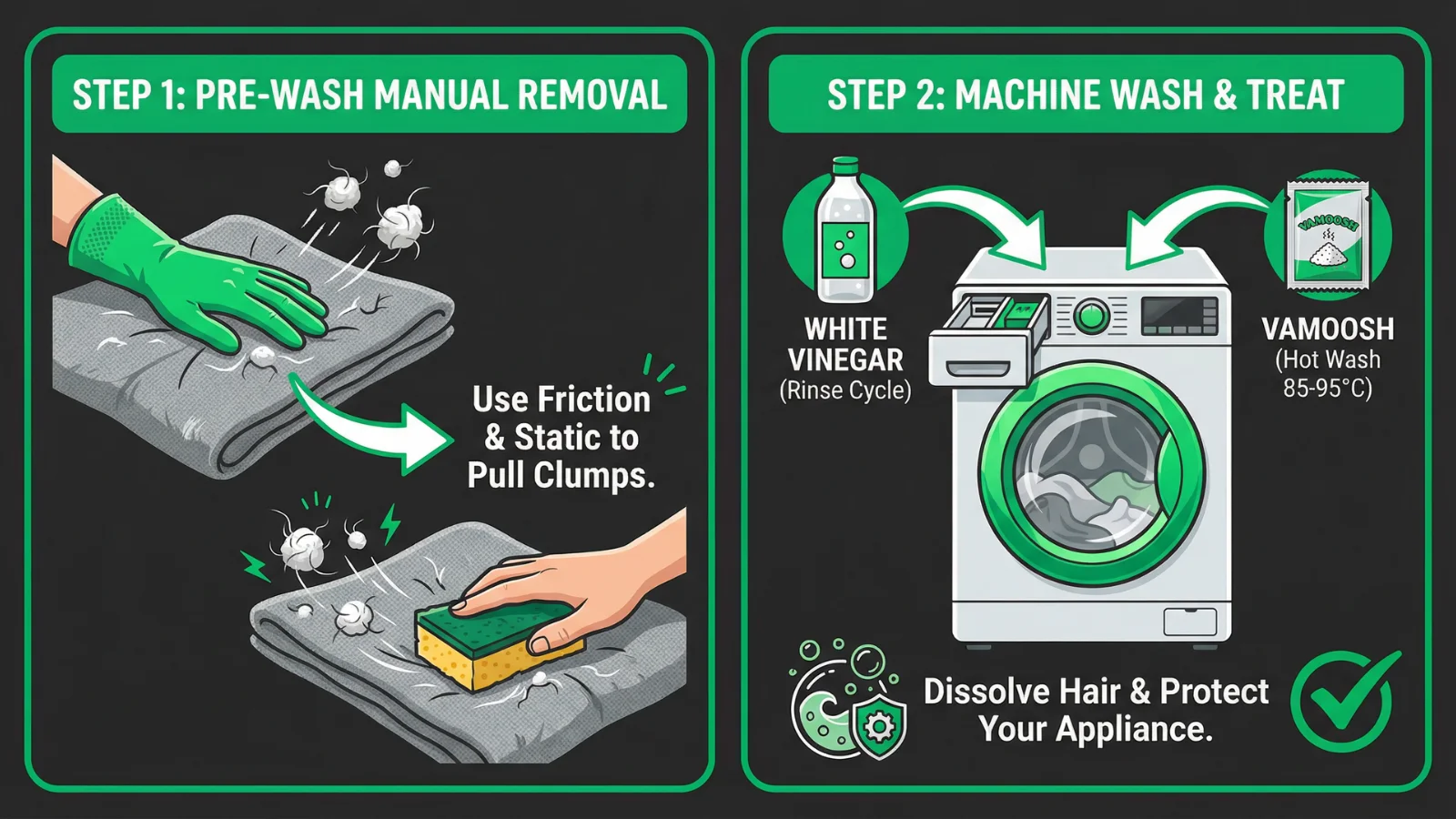
This is an old household secret that works wonders. Put on a standard pair of rubber washing-up gloves and gently rub your hands over the surface of the blanket in short, sweeping motions. The rubber generates friction and static, which pulls the embedded hair out of the fabric fibres and rolls it into easily manageable clumps. You can then simply pick these clumps off and throw them in the bin.
Using Specialised Sponges
If you do not have rubber gloves to hand, a completely dry, clean kitchen sponge can serve a very similar purpose. The rough, abrasive side of the sponge acts like a gentle rake, pulling the fur to the surface.
Dry vs Damp Application
While starting dry is generally the best approach for fleece and wool, slightly dampening the rubber glove or the sponge can increase its grip for tightly woven cotton blankets. A light misting of water helps to neutralise the static electricity that binds the hair to the material, making it easier to sweep away.
Avoiding Fabric Damage
When using abrasive tools like sponges, you must apply light pressure. Scrubbing too vigorously can cause pilling or completely ruin the delicate weave of luxury blankets. Always test a small, inconspicuous corner first to ensure the fabric can withstand the friction.
Mastering the Washing Machine Cycle
Once you have manually removed the bulk of the fur, it is time to wash. If you have ever wondered how to efficiently deal with stubborn hair on clothes and bedding in the laundry, the secret lies in the machine settings and the right additives.
Before washing, run the blanket through a cool, 10-minute tumble dry cycle to loosen any remaining strands. Then, transfer it to the washing machine. Remember, keeping your dog’s coat clean and healthy with the best dog shampoo can also significantly reduce the amount of oily residue and loose fur left on your blankets in the first place.
To tackle how to get pet hair off blankets in washing machine cycles, try adding half a cup of white vinegar to the rinse drawer; this softens the fabric and helps prevent pet hair from sticking to the fibres.
Alternatively, for severe cases, many dog owners highly rate the Vamoosh pet hair dissolver. This product is specifically designed to break down the proteins in pet hair during a hot wash (usually 85-95 degrees Celsius), leaving your machine and your blankets completely fur-free. It is a fantastic tool to have in your cleaning arsenal, provided your blankets are safe to wash at such high temperatures.
Conclusion: Enjoying a Fluff-Free Home
Dealing with shedding is simply a part of the wonderful journey of dog ownership. However, by mastering exactly how to get dog hair out of a blanket using these straightforward, effective methods, you no longer have to banish your furry best friend from the sofa. Whether you rely on the simple friction of a rubber glove for a quick daily tidy-up or trust white vinegar for a deep clean in the washing machine, keeping your home fresh and your textiles pristine is entirely achievable. Implement these easy habits, stick to a regular grooming schedule, and you can get right back to enjoying those cosy, stress-free cuddles with your dog.
Frequently Asked Questions
How do I get embedded dog hair out of fleece blankets?
Fleece requires a gentle touch due to its texture. Use a dry rubber glove or a designated pet hair squeegee to gently pull the hairs into clumps before washing. Avoid sticky lint rollers, as they often leave a residue on fleece.
Does white vinegar dissolve dog hair in the washing machine?
No, white vinegar does not dissolve dog hair. However, it acts as a natural fabric softener, relaxing the fibres of the blanket so that the trapped hair is more easily flushed away by the water during the rinse cycle.
Is it safe to put a hair-covered blanket straight into the wash?
No, this is highly unadvised. Throwing a heavily furred blanket directly into the washing machine can cause the hair to clump together, which may severely clog your machine’s filter and drainage pipes, leading to costly repairs.
Can a Vamoosh pet hair dissolver be used on all fabrics?
The Vamoosh pet hair dissolver is incredibly effective, but it requires a very hot wash cycle (typically 85-95°C) to activate properly. Always check the care label on your blanket first, as delicate materials like wool or silk will shrink or warp at these temperatures.
What is the best way on how to get pet hair out of laundry generally?
The best overarching method is prevention and preparation. Use a 10-minute cool tumble dry before washing to loosen hair, employ a lint trap in your washing machine, and always shake out your textiles outdoors before bringing them anywhere near your laundry appliances. Brushing your dog regularly reduces shedding immensely, so if you struggle with this, it is worth looking into why your dog hates being brushed to help make grooming easier.
