
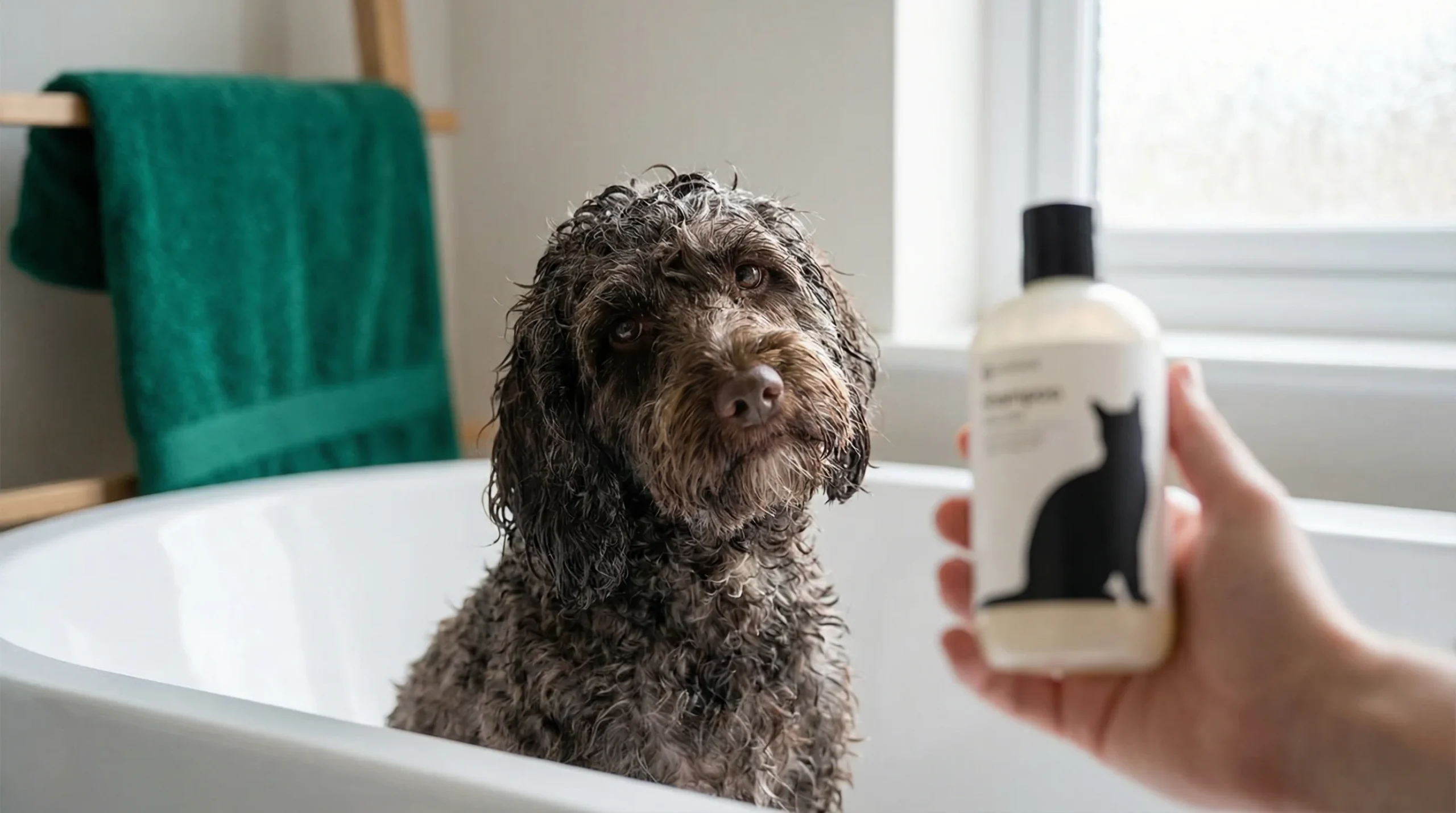
If you’ve ever run out of dog shampoo mid-bath, you’ve probably asked the question: Can I use cat shampoo on my dog just this once?
It sounds reasonable — after all, cats and dogs both have fur, sensitive skin, and grooming needs.
Unfortunately, the answer is no. Using cat shampoo on a dog can irritate their skin, disrupt the natural skin barrier, and, in some cases, expose them to ingredients that are unsafe for dogs.
In this guide, we’ll explain why cat shampoo isn’t suitable for dogs, what to do in an emergency, and which safer alternatives you should use instead.
TABLE OF CONTENTS
Why Dog Owners Ask: Can I Use Cat Shampoo on My Dog?
Cat shampoos are designed specifically for feline skin and metabolism. While cats and dogs may look similar on the surface, their skin chemistry and tolerance to ingredients differ significantly.
Using the wrong product can turn a simple bath into a skin problem that lasts weeks.
The two biggest issues are skin pH differences and ingredient safety.
Dogs and Cats Have Different Skin pH Levels
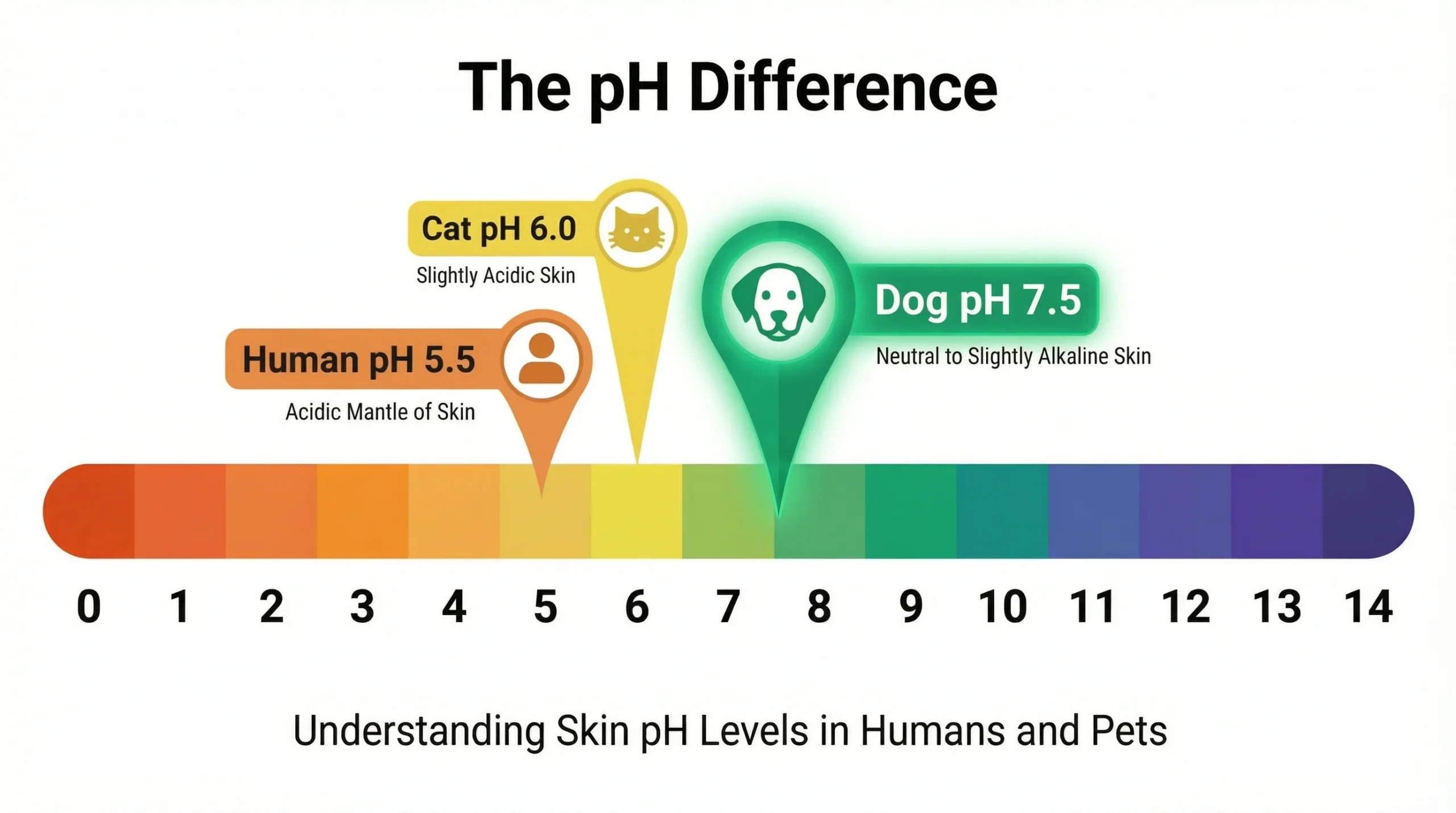
A dog’s skin has a more neutral pH compared to a cat’s. Cat shampoos are typically formulated to suit a more acidic skin environment, which works for cats but not for dogs. This confusion is similar to what many owners face when asking whether human products are safe for pets, which we explain in detail in our guide on whether you can use human shampoo on dogs.
When cat shampoo is used on dogs, it can:
- Strip away natural oils that protect the skin
- Dry out the coat and underlying skin
- Weaken the skin barrier
- Increase itching, flaking, and redness
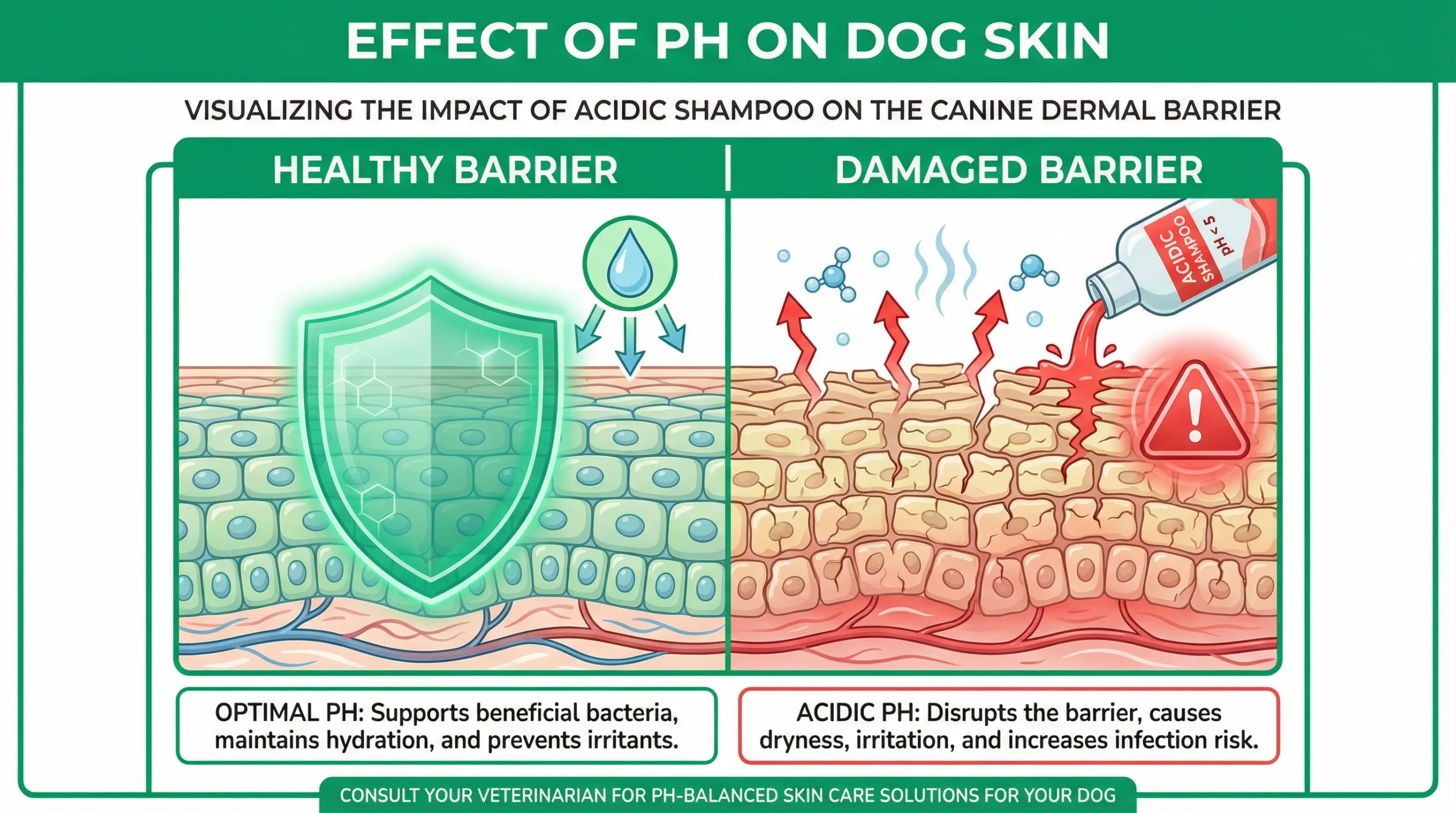
Once the skin barrier is compromised, dogs become more vulnerable to allergens, bacteria, and secondary infections. This is one of the most common reasons dogs develop persistent itching after “one harmless wash” with the wrong product.
Ingredient Risks: The Bigger Concern
Beyond pH balance, the ingredients in cat shampoo are simply not designed for canine physiology.
- Ineffective Pest Control: Cat flea shampoos often use lower concentrations of active ingredients (like Pyrethrins) because cats are more sensitive to chemicals. These weaker formulas are often insufficient to protect a dog from fleas and ticks.
- Scent Confusion: Cat shampoos often use scents tailored to feline preferences. These can be confusing or unpleasant for dogs, who rely heavily on scent for social signalling.
If fleas are the underlying concern, it’s far safer to choose a dog-specific treatment designed for parasites, such as those covered in our breakdown of the best flea shampoo for dogs.
⚠️ CRITICAL WARNING: Dog Flea Products Can Kill Cats
Unlike cat shampoo on dogs (which is just ineffective), dog flea products often contain Permethrin—an insecticide safe for canines but fatal to cats. Never swap flea treatments in multi-pet households. Permethrin toxicity is a major danger cited by the RSPCA.
Can I Use Cat Shampoo on My Dog in an Emergency?
In short: it’s still not recommended.
If your dog is muddy, dirty, or smells unpleasant and you don’t have dog shampoo available, the safest option is warm water only.
A thorough rinse with water will remove dirt, pollen, and surface debris without exposing your dog to unsuitable ingredients.
Using cat shampoo “just once” may seem harmless, but even a single wash can dry the skin or trigger itching — especially in dogs with sensitive skin, allergies, or existing irritation.
Why Cat Shampoo Can Make Itching Worse
Many owners reach for cat shampoo because it’s labelled “gentle” or “for sensitive skin.” Unfortunately, this label is species-specific.
When used on dogs, cat shampoo can:
- Remove protective oils that keep skin hydrated
- Increase transepidermal water loss
- Cause tightness, dryness, and flaking
- Exacerbate allergy-related itching
Dogs already suffering from allergies, flea irritation, or dry skin are particularly vulnerable. Instead of soothing the problem, cat shampoo often amplifies it, leading owners to bathe more frequently, which makes the cycle even worse.
What Dog Shampoo Substitutes Should You Use Instead?
If you’re out of dog shampoo or unsure what to use, these are the safest options in order:
- Dog-specific shampoo matched to your dog’s skin condition
- Plain warm water rinse (temporary solution)
- Vet-recommended medicated shampoo if infection or allergies are present
Avoid improvising with products made for cats, humans, or other animals. Skin care products are not interchangeable across species.
What If I Already Used Cat Shampoo on My Dog?
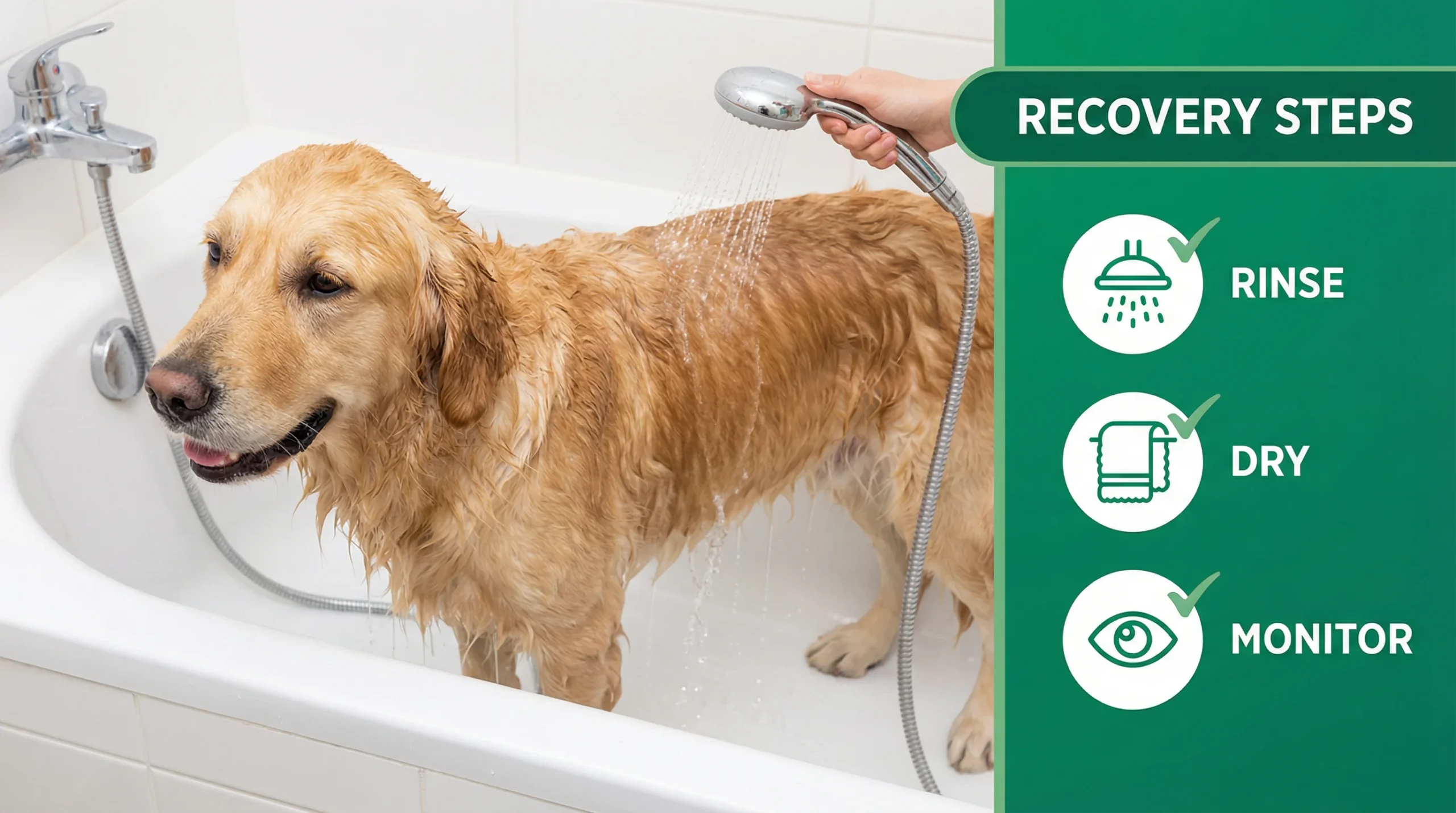
If it’s already happened, don’t panic.
Take these steps:
- Rinse your dog thoroughly with warm water to remove residue
- Dry the coat completely
- Monitor for redness, itching, flaking, or behaviour changes
- Contact your vet if symptoms appear or worsen
A single exposure doesn’t always cause harm — problems usually arise with repeated use or flea-specific cat shampoos.
If itching appears after bathing, the shampoo may be the trigger — not the underlying condition. Stop washing and allow the skin barrier to recover.
What Should You Use Instead of Cat Shampoo?
If dog shampoo isn’t available, use one of the following — in this order:
- Dog-specific shampoo matched to your dog’s skin condition
- Plain warm water rinse (temporary solution)
- Vet-recommended medicated shampoo if skin infection or allergies are suspected
Avoid improvising with products made for cats, humans, or other animals. Grooming products are not interchangeable across species.
Why “Gentle” or “Sensitive” Labels Can Be Misleading
Many cat shampoos are marketed as “gentle,” “natural,” or “hypoallergenic.” These labels are species-specific, not universal.
A product can be gentle for cats and still be irritating for dogs.
Always choose products formulated specifically for dogs, even if the ingredient list looks similar at a glance.
Final Verdict: Can I Use Cat Shampoo on My Dog?
No. While it likely won’t send your dog to the ER, it is a grooming mistake that can lead to long-term skin issues.
Cat shampoo is too acidic for your dog’s neutral skin. Using it strips away the Acid Mantle, leaving the skin dry, flaky, and vulnerable to bacteria. In an emergency, warm water is superior to the wrong product.
If dog shampoo isn’t available, warm water alone is the safest option until you can use a product designed specifically for dogs. For everyday cleaning and skin support, using a properly formulated canine product matters far more than brand swapping, which is why we’ve rounded up the best dog shampoos that are genuinely safe for regular use.
Protecting your dog’s skin starts with using the right shampoo and avoiding shortcuts that create bigger problems later.
Frequently Asked Questions
What happens if I accidentally washed my dog with cat shampoo?
Don’t panic. A single wash is unlikely to cause serious harm or send your dog to the vet. However, you might notice their coat feels “squeaky” or dry afterwards because the acidic formula has stripped their natural oils. The Fix: Rinse them thoroughly with warm water to remove any residue. If they seem itchy the next day, apply a dog-safe aloe vera gel or use a soothing oatmeal rinse to rehydrate the skin.
Can I use dog shampoo on my cat?
ABSOLUTELY NOT. This is the most dangerous mistake you can make. Many dog shampoos—especially flea treatments—contain Permethrin, a synthetic insecticide that is safe for dogs but highly toxic and fatal to cats. Cats cannot process this chemical, and exposure can cause seizures, organ failure, and death. Never use a dog product on a cat unless the bottle explicitly says “Safe for Cats.”
Is baby shampoo a safer alternative?
Yes. If you are in a genuine emergency (e.g., your dog rolled in fox poo at 9 PM), unscented baby shampoo is a safer choice than cat shampoo. Baby shampoo is pH-neutral (around 7.0), which is much closer to a dog’s skin pH (7.5) than acidic cat shampoo (5.5). However, it should only be a one-time fix, as it lacks the conditioning oils dogs need for a healthy coat.
Will cat flea shampoo kill fleas on my dog?
Likely not. Cat flea shampoos are formulated with very low concentrations of active ingredients because cats are biologically more sensitive to chemicals. If you use this on a dog (especially a medium or large breed), the dose will likely be too weak to kill the infestation, leaving your dog unprotected and still scratching. You are better off using a dedicated dog flea shampoo or a flea comb with warm water.
Can I use kitten shampoo on a puppy?
No. While kitten shampoo is “gentle,” it faces the same pH problem as adult cat shampoo. Puppies have even more delicate skin barriers than adult dogs, making them highly susceptible to pH disruption. Using an acidic kitten shampoo can leave a puppy’s skin dry, flaky, and vulnerable to bacterial infections. Always stick to a specifically formulated puppy shampoo.
Can I use washing-up liquid (dish soap) instead?
We do not recommend it. While you will see “hacks” online claiming dish soap kills fleas, it is an industrial degreaser designed to strip fat off cooking pans. It will strip 100% of the natural sebum (oils) from your dog’s skin, potentially causing severe dryness and dermatitis. Warm water alone is a safer way to remove surface dirt in an emergency.
Why is my dog itching after using cat shampoo?
Itching is the most common side effect of using the wrong product. It happens because the acidic cat shampoo has disrupted your dog’s Acid Mantle (their protective skin barrier). When this barrier is broken, the skin tightens and dries out. If the itching persists for more than 24 hours, or if you see red patches, consult your vet, as it may have triggered a contact dermatitis reaction.
