
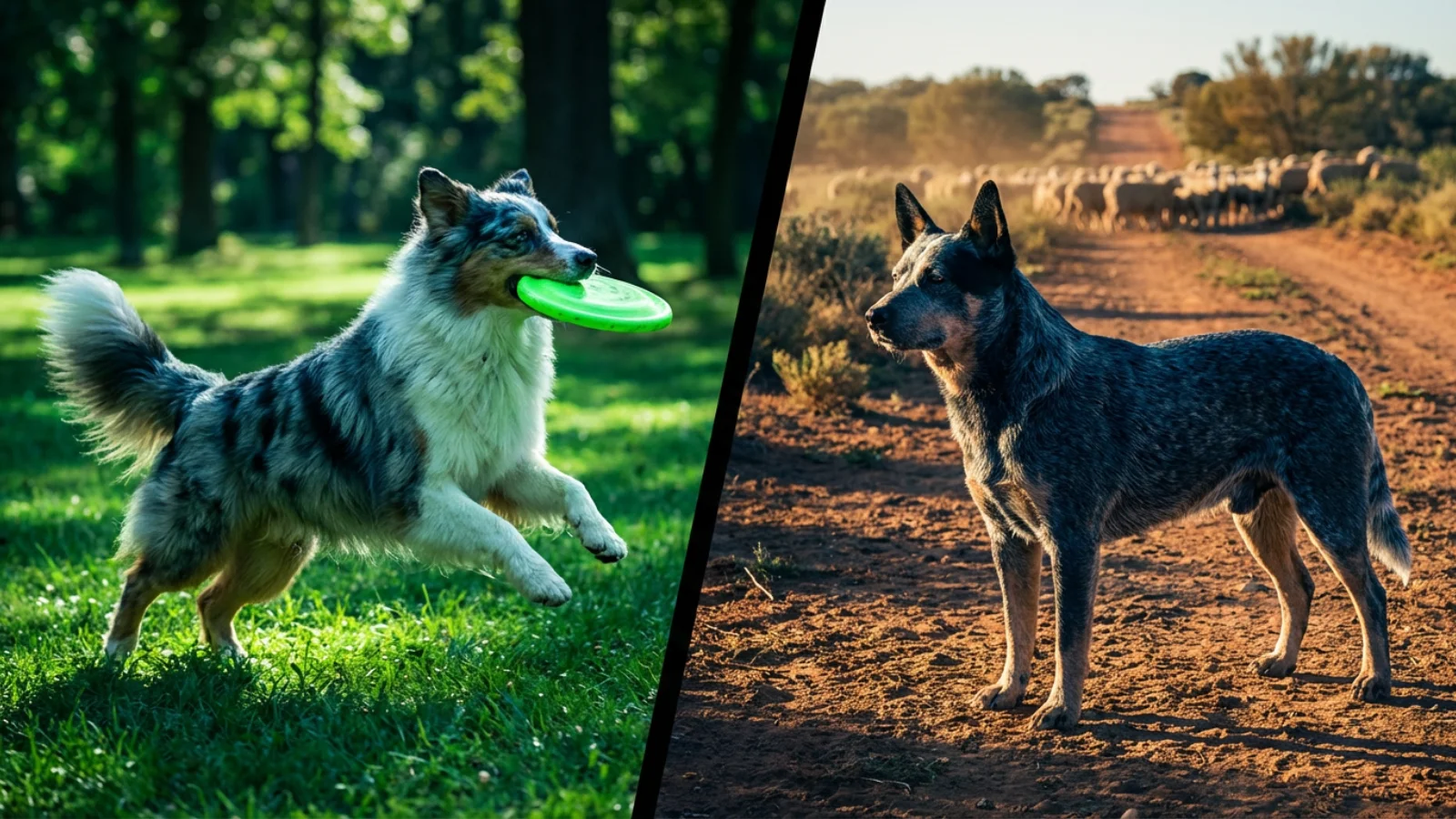
When choosing a high-energy working companion, the Australian Shepherd vs Cattle Dog debate is a common one for active owners. While they share a name and a legendary work ethic, these two breeds have vastly different histories, temperaments, and physical needs.
Whether you are looking for an agile athlete or a rugged outback survivor, understanding the core differences between the Australian Shepherd vs Cattle Dog is the first step in finding your perfect match.
Australian Shepherd vs Cattle Dog: The Surprising History of Two Icons
Despite what the name suggests, the Australian Shepherd is an all-American breed. Developed in the United States to work on ranches in the 19th century, their ancestors likely travelled from the Basque region of Spain via Australia, which is where the naming confusion began. They are “headers,” meaning they work at the front of the flock to turn and guide movement.
The Australian Cattle Dog (ACD), often referred to as a Blue Heeler, is the true Aussie native. Bred specifically to handle the harsh, expansive terrain of the Australian Outback, the ACD was created by crossing Smithfield Collies with wild Dingoes and even a touch of Dalmatian. Unlike the Aussie, the Cattle Dog is a “heeler,” nipping at the heels of stubborn cattle to keep them moving over vast distances.
While the ACD was bred for heeling, other Australian legends like the Kelpie were developed with a different working style in mind.
TABLE OF CONTENTS
Physical Differences: Coats, Colours, and Conformation
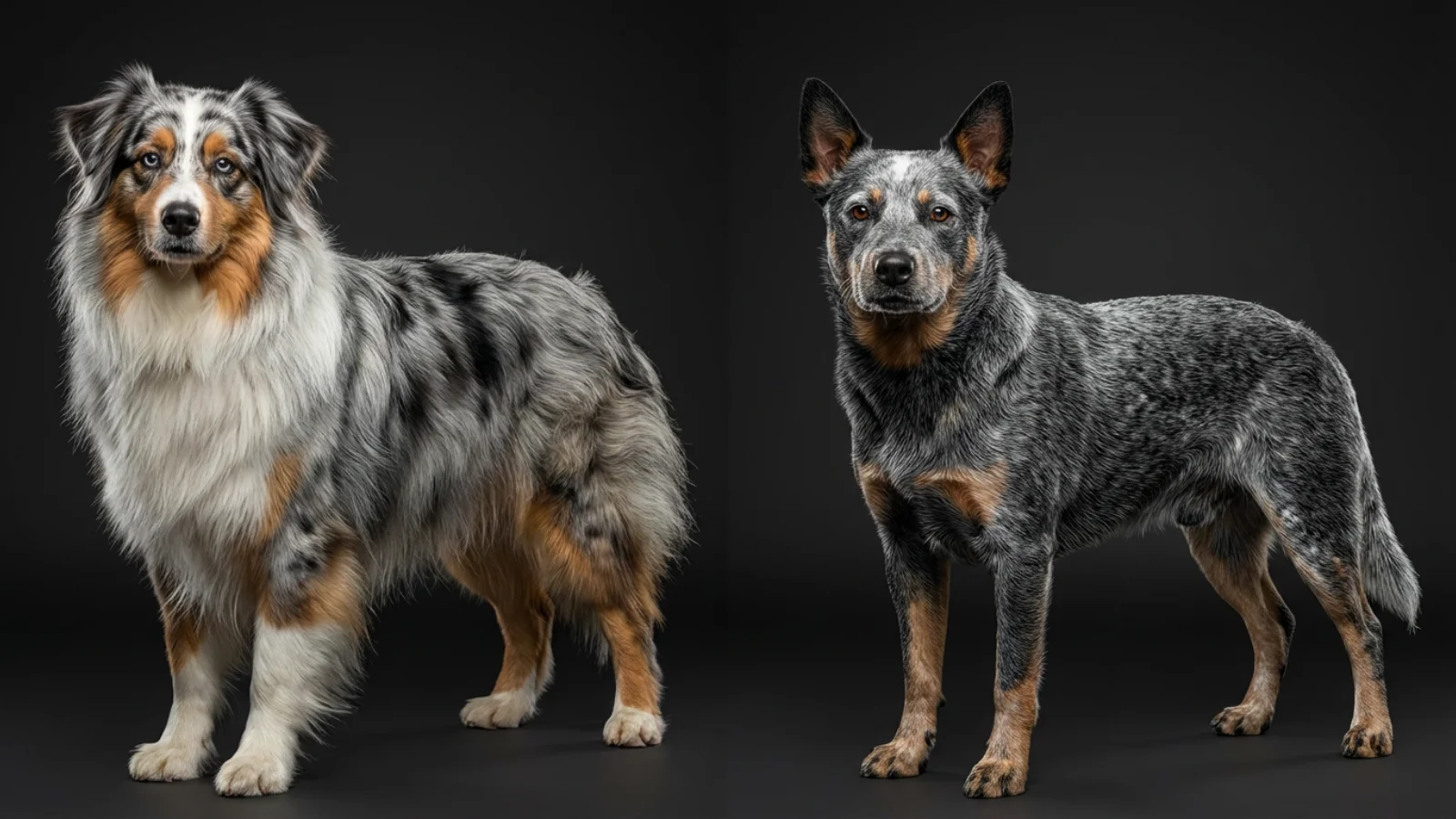
At a glance, these two breeds look remarkably different. The Australian Shepherd is famous for its medium-length, wavy double coat that comes in striking patterns like blue merle and red merle, often paired with piercing blue or heterochromatic (two-coloured) eyes. They have a “ruff” around the neck and feathering on their legs, giving them a softer, more “boutique” appearance. Maintaining that striking coat requires a regular routine; learn more about the best dog brush for Australian Shepherds to keep them mat-free.
The Australian Cattle Dog is built for utility and endurance in the heat. Their coat is short, dense, and rain-resistant, designed to shed dust and burrs easily. Because they have a weather-resistant double coat, using the best brush for short hair dogs during shedding season is essential. While they can have mottled or speckled patterns (Blue or Red), they lack the long, flowing fur of the Aussie. The ACD is more muscular and compact, sitting lower to the ground with a powerful, sturdy frame that suggests “toughness” over “agility.”
Temperament and Personality: The Velcro Dog vs. The Shadow
Both breeds are intensely loyal, but they express that loyalty in different ways.
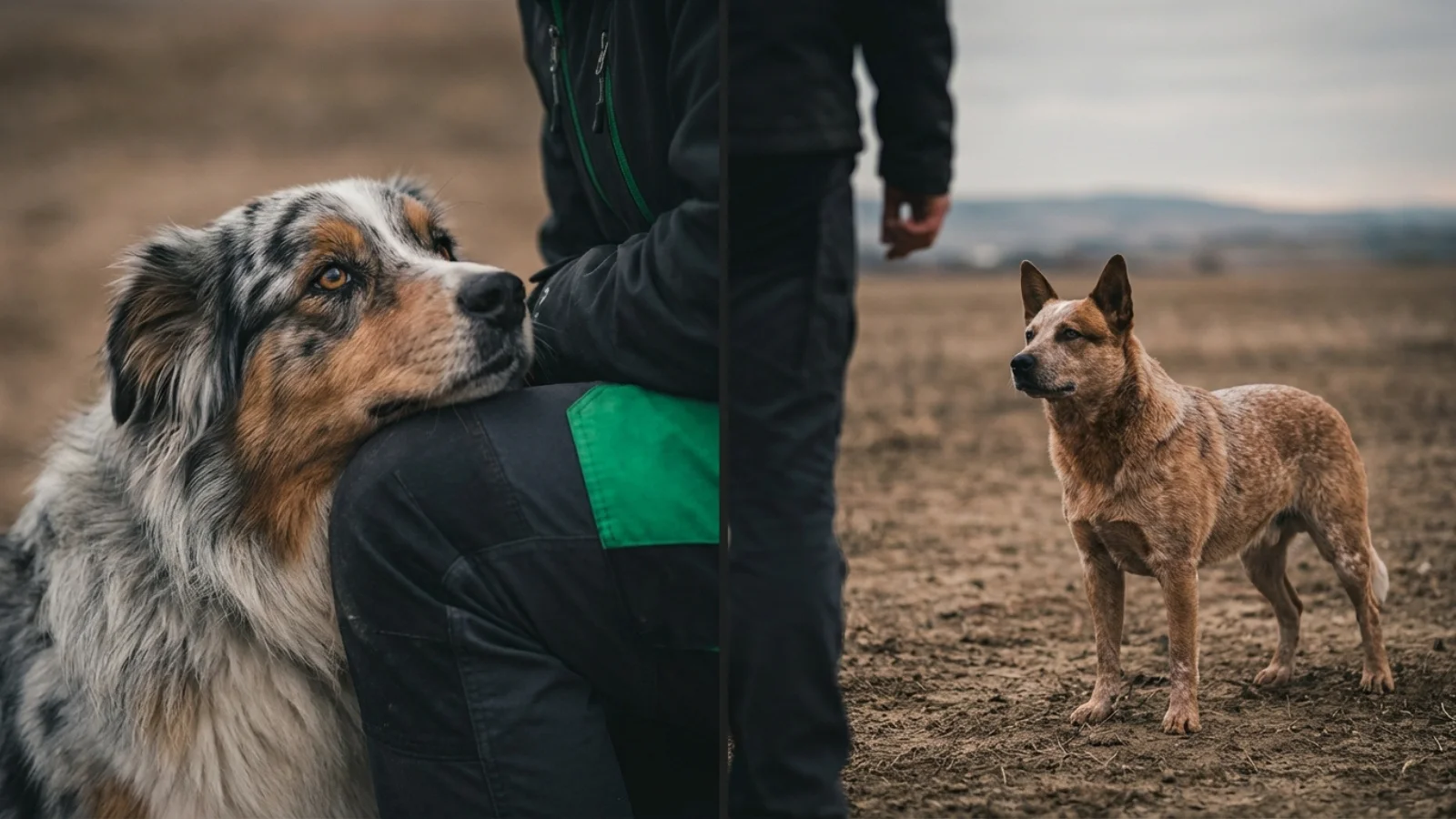
- The Australian Shepherd is often described as a “Velcro dog.” They crave human interaction and are generally more outgoing with strangers once introduced. They are sensitive, highly “tunable” to their owner’s emotions, and thrive on praise.
- The Australian Cattle Dog is more of a “one-person dog.” While they are incredibly devoted to their family, they are naturally more suspicious of outsiders. This makes them excellent natural watchdogs. They are “harder” dogs—less sensitive to a stern voice and more likely to test boundaries if they don’t respect their handler’s leadership.
Energy Levels and Exercise Requirements: More Than Just a Walk
If you are looking for a “couch potato,” neither of these breeds is for you. Both require significant daily exercise, but the type of work they enjoy differs.
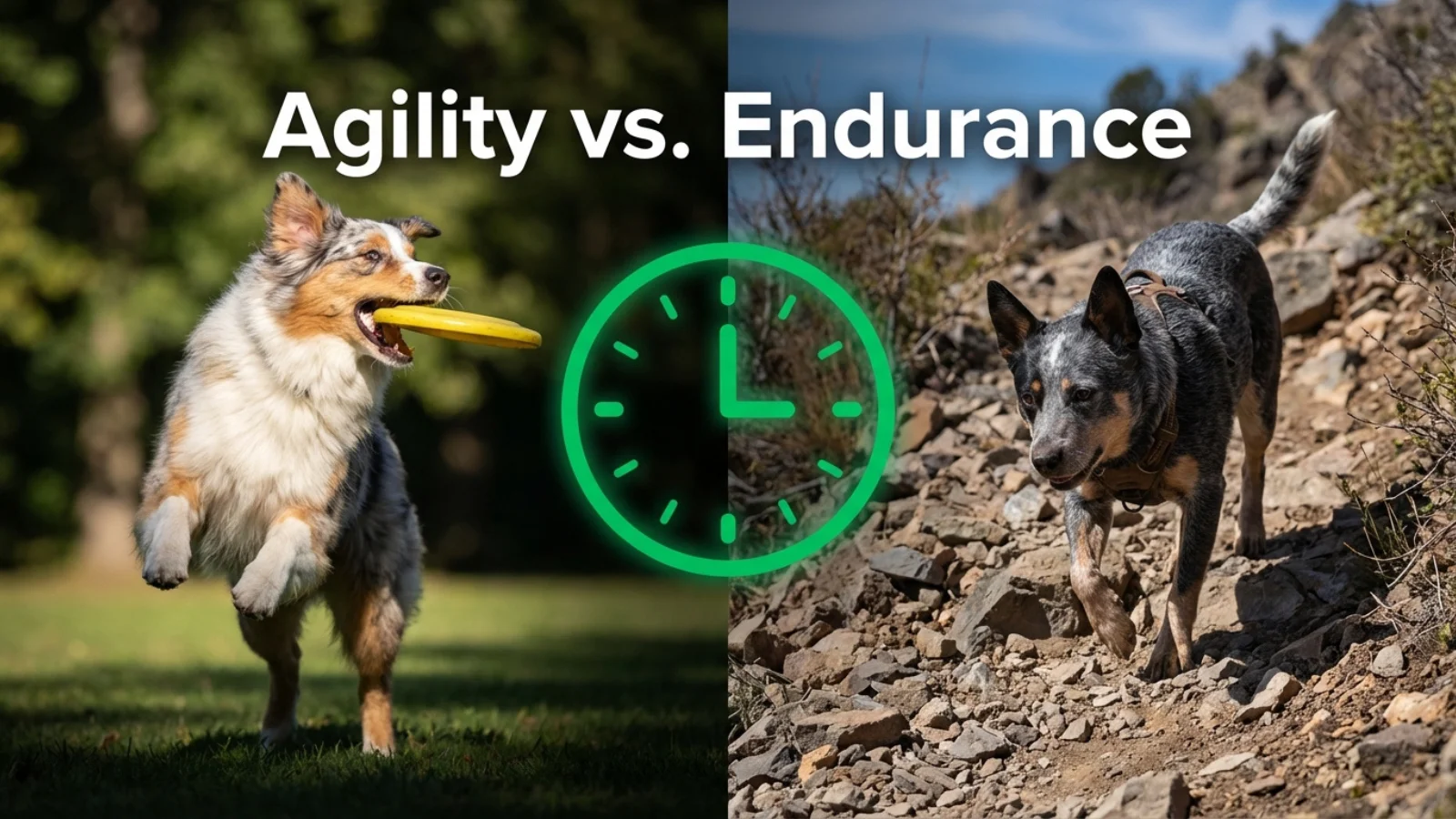
The Australian Shepherd is a high-agility athlete. They excel in frisbee, flyball, and complex trick training. They need a job that involves movement and mental coordination. Without it, they can become neurotic and develop “stereotypical” behaviours like pacing or obsessive barking.
The Cattle Dog has “bottomless” stamina. They were bred to travel 20+ miles a day in 40°C heat. Their drive is more about “grit.” They need high-intensity physical outlets like hiking, “flirt poles,” or herding games. An under-exercised ACD isn’t just bored; they can become destructive and “mouthy,” as their instinct to nip at heels will transfer to your furniture or your guests.
Training and Intelligence: Who is the Smartest?
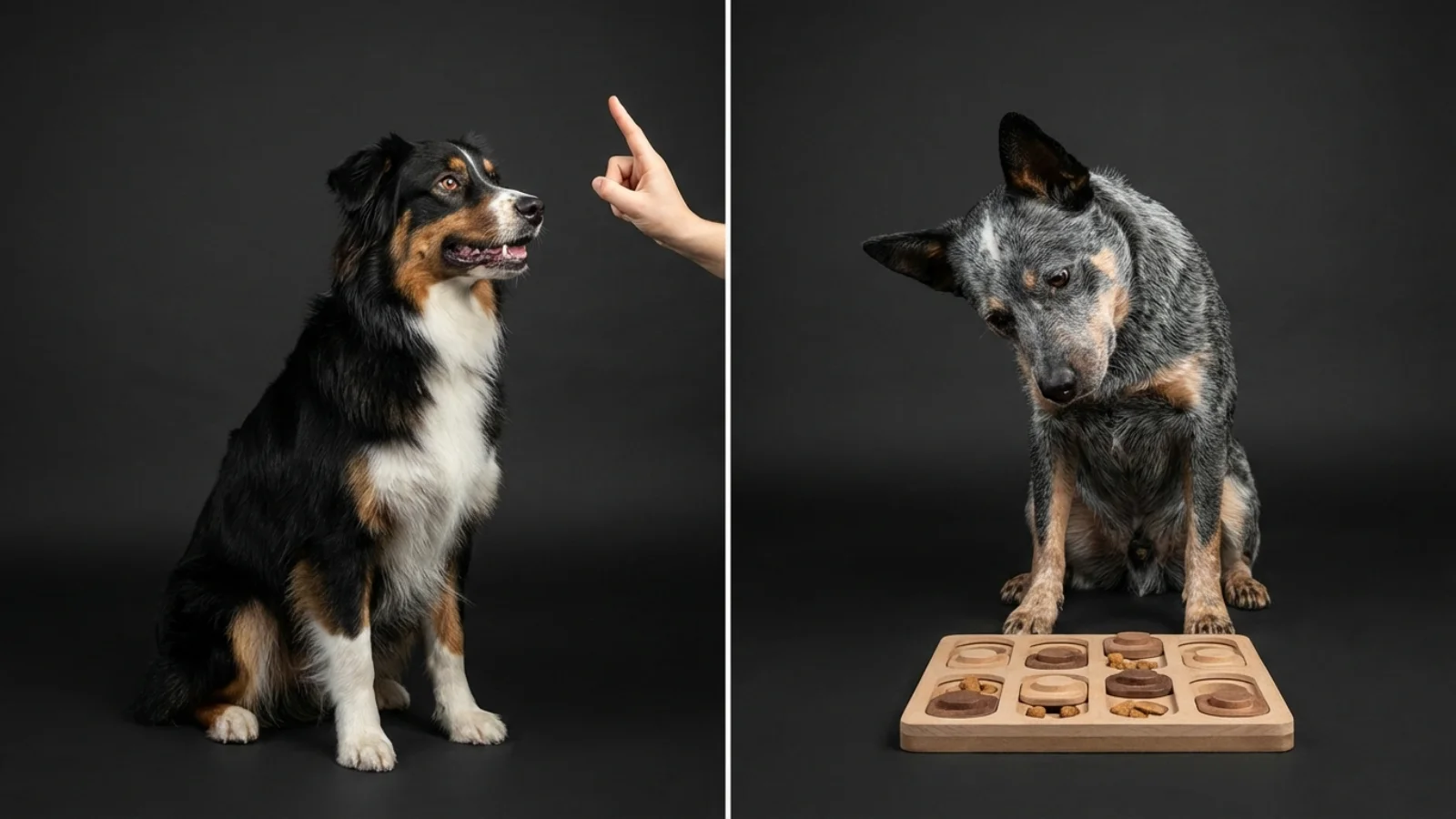
In terms of raw intelligence, both breeds consistently rank in the top tier of canine psychologists’ lists. However, their “trainability” (willingness to please) varies.
The “Soft” Learner vs. The “Independent” Thinker
The Australian Shepherd is generally easier for a first-time owner to train because they are highly motivated by food and praise. They want to do right by you. They learn complex sequences quickly and are less likely to “argue” with a command.
The Australian Cattle Dog is a problem solver. Because they were bred to work cattle miles away from their handler, they are highly independent. An ACD will often look at a command and decide if it’s “worth it” before complying. They require a firm, consistent, and fair hand. If you give an ACD an inch, they will take a mile—and potentially the whole ranch.
Health and Longevity: What to Expect
Both breeds are relatively hardy, but like all purebreds, they have specific genetic predispositions.
- Australian Shepherd Health: Common issues include Hip Dysplasia, Elbow Dysplasia, and various eye disorders (Progressive Retinal Atrophy). Owners must also be aware of the MDR1 gene mutation, which makes them sensitive to certain common veterinary drugs (including some heartworm preventatives).
- Australian Cattle Dog Health: They are prone to Congenital Hereditary Sensorineural Deafness (CHSD); puppies should be BAER tested. They also face risks of Hip Dysplasia and Progressive Retinal Atrophy. However, the ACD is famous for its longevity, with the oldest dog on record (Bluey) living to 29 years old. The ACD is renowned for its longevity and is frequently ranked among dogs with the longest lifespan.
While these health markers are common across the breed, you can cross-reference these requirements with the official breed health and conformation standards provided by the Royal Kennel Club to ensure you are sourcing from a responsible breeder.
Australian Shepherd vs Cattle Dog: At a Glance
| Feature | Australian Shepherd | Australian Cattle Dog |
|---|---|---|
| Origin | United States (despite the name) | Australia |
| Working Style | “Header” – controls livestock from the front | “Heeler” – nips at heels to drive cattle forward |
| Size | 46–58 cm tall, 16–32 kg | 43–51 cm tall, 14–23 kg |
| Coat Type | Medium-length, wavy double coat | Short, dense, weather-resistant double coat |
| Grooming Needs | Moderate to high (2–3 brushes weekly) | Low to moderate (weekly brush) |
| Temperament | Affectionate, “Velcro” dog, people-focused | Loyal, independent, protective |
| Trainability | Highly biddable and eager to please | Intelligent but strong-willed |
| Exercise Needs | High – thrives on agility & dog sports | Very high – built for endurance & hiking |
| Watchdog Instinct | Alert but generally friendly | Naturally suspicious of strangers |
| Lifespan | 12–15 years | 13–16 years (known for exceptional longevity) |
| Best For | Active families who enjoy training & sports | Experienced owners wanting a tough working companion |
Final Verdict: Which Breed Fits Your Lifestyle?
Choosing between a Cattle Dog vs the Australian Shepherd ultimately depends on your experience level as a handler. If you want a sensitive partner for dog sports, go with the Aussie; if you want a rugged, no-nonsense protector, the Cattle Dog is your winner.
Choose the Australian Shepherd if:
You want an affectionate, highly trainable partner for weekend hiking and dog sports. You don’t mind a bit of grooming, and you want a dog that is “soft” and responsive to your every mood.
Choose the Australian Cattle Dog if:
You want an indestructible, fiercely loyal guardian who can handle any terrain. You are an experienced owner who can provide firm leadership, and you prefer a low-maintenance coat and a dog that is independent and brave.
At FlexK9, we believe there is no “best” breed—only the best breed for your specific lifestyle. Both the Australian Shepherd and the Australian Cattle Dog are remarkable animals that require a high level of commitment, but the reward is a bond that is truly unbreakable.
Frequently Asked Questions
Which breed is better for families with children?
Generally, the Australian Shepherd is more tolerant of children due to their softer nature. However, both breeds have a strong “herding” instinct. If not trained, they may try to herd running children by nipping at their heels, which can be scary for toddlers.
Do Australian Shepherds shed more than Cattle Dogs?
Yes. While both breeds shed, the Aussie’s long hair is more noticeable and prone to matting. You will need to brush an Aussie 2-3 times a week, whereas a Cattle Dog usually only needs a weekly brush and a bath when they get particularly dusty.
Can these dogs live in an apartment?
It is not recommended. While it can be done with 2-3 hours of intense outdoor activity daily, these breeds are much happier with a secure yard to patrol. The Cattle Dog, in particular, can be quite vocal, which may lead to noise complaints from neighbours.
Is an Australian Cattle Dog the same as a Blue Heeler?
Yes. “Blue Heeler” and “Red Heeler” are common nicknames for the Australian Cattle Dog, based on the colour of their coats.
