
Are pitbulls aggressive towards other dogs is a question that often arises in discussions about public safety, breed reputation, and dog behaviour, particularly within the UK legal context.
Public debate around Pit Bull–type dogs is often emotionally charged, fuelled by headlines, social media clips, and long-standing misconceptions. In the UK, the discussion becomes even more complex due to legal restrictions under the Dangerous Dogs Act. As a result, many people searching this topic are not looking for reassurance alone — they are looking for clarity, accuracy, and safety-first guidance.
This article examines whether Pit Bull–type dogs are inherently aggressive towards other dogs, separating behavioural science from myth, and placing everything firmly within the UK legal context. It is written to inform owners of exempt dogs, people confusing Pit Bull types with legal breeds, and members of the public trying to understand the reality behind a highly stigmatised dog type.
TABLE OF CONTENTS
⚠️ UK Legal Context: Read This First
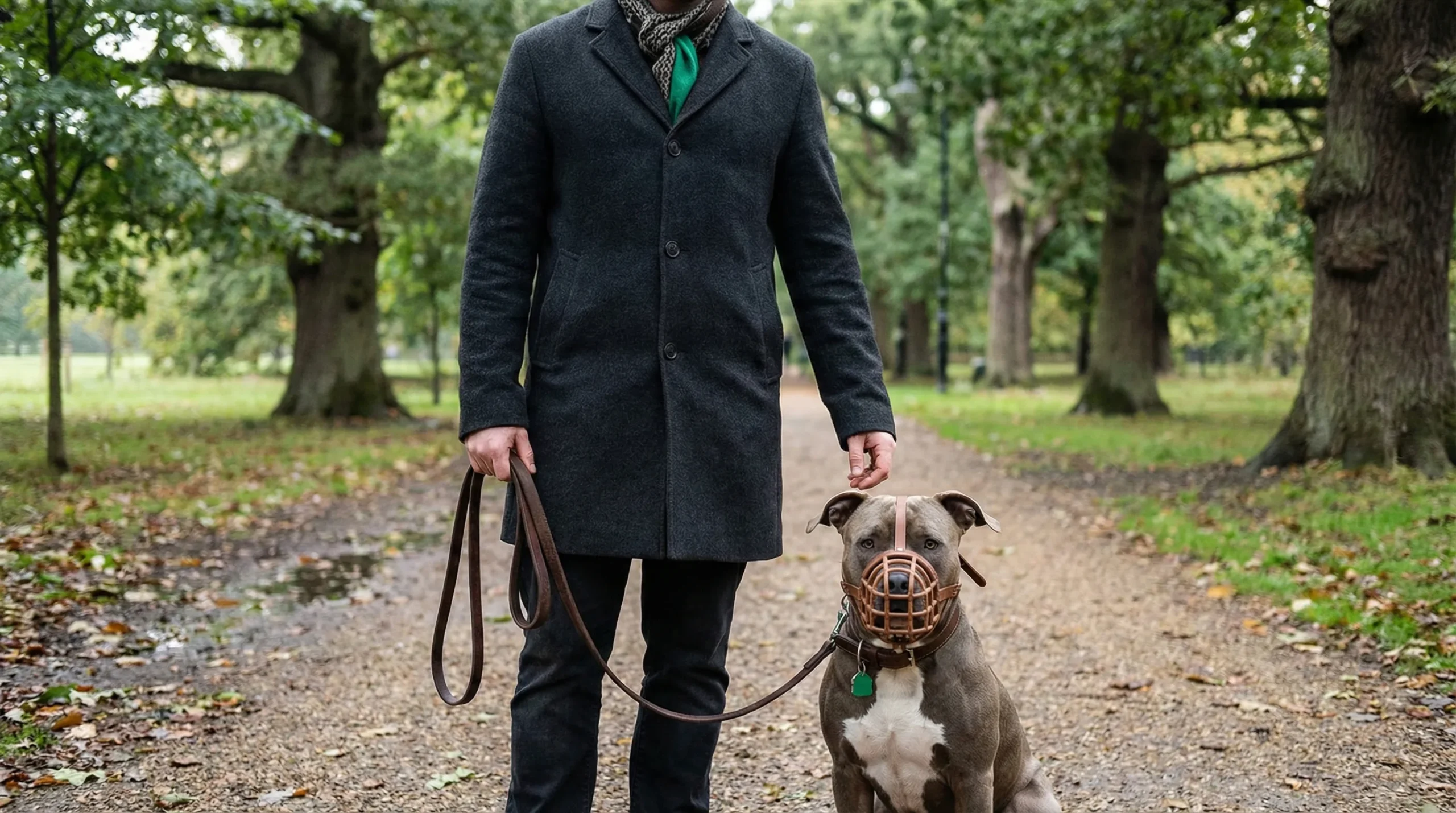
In the UK, the Pit Bull Terrier is a banned type under the Dangerous Dogs Act 1991. Ownership is illegal unless the dog is registered under the Certificate of Exemption scheme. Exempt dogs must be muzzled and kept on a lead in public at all times, insured, and managed responsibly. For clarity on which dog types are prohibited under UK law and how exemptions apply, see our full List of Banned Dog Breeds UK.
This article does not encourage illegal ownership. Any discussion of behaviour, training, or management applies only within the strict legal framework governing exempt dogs or when addressing common confusion between banned Pit Bull types and legal breeds such as the Staffordshire Bull Terrier.
Understanding Pit Bull–Type Dogs Beyond Headlines
Pit Bull–type dogs are frequently portrayed as unpredictable or inherently violent. In reality, “Pit Bull” is not a single recognised breed in the UK, but a type classification based on physical characteristics rather than pedigree.
Dogs labelled as Pit Bulls often include a wide range of mixes, which complicates behaviour analysis and statistics. This lack of precision is one of the key reasons why public understanding of these dogs is often distorted.
Myth American Pit Bull Terriers: Separating Fact From Fear
The myth of American Pit Bull terriers narrative suggests these dogs are naturally aggressive, particularly towards other dogs. This belief is deeply embedded in popular culture, yet it oversimplifies canine behaviour and ignores the broader factors that influence how dogs interact.
Aggression is not a fixed breed trait. It is a behavioural response influenced by genetics, early development, environment, training, stress, and owner management. Treating any dog as dangerous by default removes responsibility from the factors that actually shape behaviour.
Are Pitbulls Naturally Aggressive Towards Other Dogs?
Dog-to-dog aggression exists across many breeds and types. Certain dogs may be more dog-selective, meaning they are comfortable with some dogs but not others. This is not the same as indiscriminate aggression.
Pit Bull–type dogs are often discussed in this context because some historical breeding focused on traits such as persistence and high arousal. However, these traits alone do not equal aggression, and they do not override learning, management, or environment.
Behaviour discussions often blur the line between different breeds and “Pitbull-type” dogs. To understand the physical and legal differences more clearly, see our full Pitbull dog vs Staffy comparison guide. Like any other dog, individual temperament varies widely.
Genetics vs Environment: What Really Shapes Behaviour?
Genetics influence tendencies, not outcomes. A dog may inherit traits such as confidence, energy level, or resilience, but behaviour is shaped continuously through experience.
Poor social experiences, lack of structure, inconsistent handling, or exposure to stress can all contribute to reactivity. Conversely, calm handling, predictable routines, and controlled exposure to stimuli reduce behavioural issues in dogs across all types.
Genetic Predispositions Explained
Some Pit Bull–type dogs may show heightened focus or intensity compared to low-arousal breeds. This does not make them dangerous. It means they require clear boundaries and consistent management, just like many working or guarding breeds.
Environmental Triggers Matter More Than Breed Labels
Negative encounters, overcrowded environments, and irresponsible handling are far more predictive of aggression than breed type. Dogs respond to their surroundings — they are not pre-programmed threats.
Why Some People Are scared of pit bulls
Public fear often stems from visual stereotypes, not lived experience. Muscular builds, strong jaws, and confident posture can appear intimidating, especially when reinforced by media narratives.
Being scared of pit bulls does not mean someone is irrational — it means information has been shaped by fear-based framing rather than balanced education. Understanding this fear is important when discussing public safety and responsible ownership.
Behaviour Towards Other Dogs: What the Evidence Shows
There is no credible evidence that Pit Bull–type dogs are uniquely aggressive towards other dogs. Behavioural studies consistently show overlap between breeds, with management and environment playing dominant roles.
Dog aggression, when it occurs, is usually situational:
• Resource guarding
• Fear responses
• Overstimulation
• Poor impulse control
• Lack of controlled exposure
These factors apply across the canine population.
Dog Selectivity vs Dog Aggression
Dog selectivity means a dog may not enjoy interaction with unfamiliar dogs. This is common and manageable. Aggression implies intent to harm. Conflating the two fuels unnecessary fear.
Managing Dog-to-Dog Behaviour Responsibly in the UK
For exempt Pit Bull–type dogs, legal compliance is non-negotiable. Management focuses on neutral behaviour, not social play.
Neutrality Over Interaction
Neutrality means a dog can remain calm and non-reactive in the presence of other dogs without needing to interact. This is the gold standard for public safety.
Why Neutrality Is Safer Than Forced Socialisation
Forcing interactions can increase stress and risk. Calm exposure at a distance builds confidence without pressure.
Structured Environments Reduce Risk
Predictable routines, controlled walks, and professional guidance create stability for dogs and owners alike.
Common Misunderstandings About Pit Bulls and Aggression
Misunderstandings persist because nuance is often lost in public debate. Statements like “they were bred to fight” are presented without context, leading to deterministic conclusions that ignore modern breeding, ownership, and behaviour science.
Like any other dog, behaviour reflects a combination of factors, not a single historical narrative.
Responsibility, Not Breed, Determines Outcomes
Responsible ownership is the strongest predictor of safe behaviour. This includes understanding legal obligations, recognising stress signals, avoiding risky situations, and seeking professional support early.
The Role of the Owner
Owners shape outcomes through daily decisions — equipment choice, walking environments, exposure levels, and training consistency all matter.
Public Safety and Legal Responsibility
In the UK, public safety takes priority over individual preference. Owners of powerful or restricted dog types have a legal duty to prevent risk through control, supervision, and compliance with current UK laws on banned dogs. This includes adhering to lead and muzzle requirements where applicable, avoiding high-risk environments, and recognising that responsibility extends beyond the dog itself to the wider public.
Are Pit Bulls More Dangerous Than Other Breeds?
Danger is not inherent. Risk arises when power, poor management, and lack of control intersect. Larger, stronger dogs of any type require higher standards of responsibility.
This is why the law focuses on control, not temperament.
What This Means for the UK Public
Understanding the reality behind Pit Bull–type dogs reduces fear and improves safety. Clear legal rules, responsible management, and accurate information protect both people and dogs.
Like any other dog, behaviour is shaped — not guaranteed.
Conclusion: Are Pitbulls Aggressive Towards Other Dogs?
Pit Bull–type dogs are not inherently aggressive towards other dogs. Behaviour varies by individual and is strongly influenced by environment, handling, and management. In the UK, strict legal controls exist to manage risk, and those rules must always come first.
Removing myth, acknowledging history without exaggeration, and focusing on responsibility leads to safer communities and better outcomes for dogs and people alike.
Frequently Asked Questions
Are Pitbulls naturally aggressive towards other dogs?
Pitbull-type dogs can be genetically predisposed to “dog selectivity” or “gameness” (a reluctance to back down from a challenge) due to their historical breeding. However, this is not the same as indiscriminate aggression. Many exempt Pitbulls live peacefully with other dogs in their own household, but they may be reactive to strange dogs. Responsible management is key.
Can I let my exempt Pitbull play with other dogs in the park?
No. Under the Dangerous Dogs Act 1991, it is a criminal offence to have an exempt Pitbull (or XL Bully) in a public place unless it is muzzled and kept on a lead. This means “off-lead playdates” in public parks are illegal. Socialisation for exempt dogs should focus on neutrality—teaching the dog to walk calmly past others without reacting—rather than physical interaction.
Is it illegal to own a Pitbull in the UK?
Yes. The Pit Bull Terrier is one of five banned breeds in the UK. You cannot legally own one unless you have a Certificate of Exemption from the court. If you have this certificate, you must follow strict conditions for the dog’s lifetime, including neutering, microchipping, and having third-party liability insurance.
My dog is friendly; why does it need a muzzle?
The law applies to the breed type, not the individual dog’s personality. Even if your dog has never shown aggression, failing to muzzle a banned breed in public puts you at risk of prosecution, a criminal record, and the dog being seized or destroyed. Muzzles are a safety tool that protects your dog from legal trouble.
What is the difference between an XL Bully and a Pitbull?
While they share common ancestry, the UK government classifies them as distinct types. The Pit Bull Terrier has been banned since 1991. The XL Bully was added to the banned list in 2024. Both types are subject to the exact same restrictions: they must be exempted, muzzled, and kept on a lead in public.
