

FlexK9 Disclaimer: We’re passionate about keeping Bullies fit, not fat — but we are not vets. This American Bully food chart is an informational guide based on typical high-quality UK dog foods. Always use the Body Condition Score (BCS) to adjust your dog’s intake, and consult your vet for specific dietary concerns.
Finding an accurate American Bully food chart is not a ‘one-size-fits-all’ task, especially for UK owners. The term covers a broad spectrum of dogs, from the compact Pocket Bully to the powerful XL, meaning their daily caloric needs vary wildly. Providing the correct nutrition using a tailored feeding guide is the foundation of a healthy, functional dog. This post breaks down exactly how much to feed based on life stage, size, and the unique lifestyle requirements of the breed in the UK today.
TABLE OF CONTENTS
Understanding American Bully Nutritional Requirements
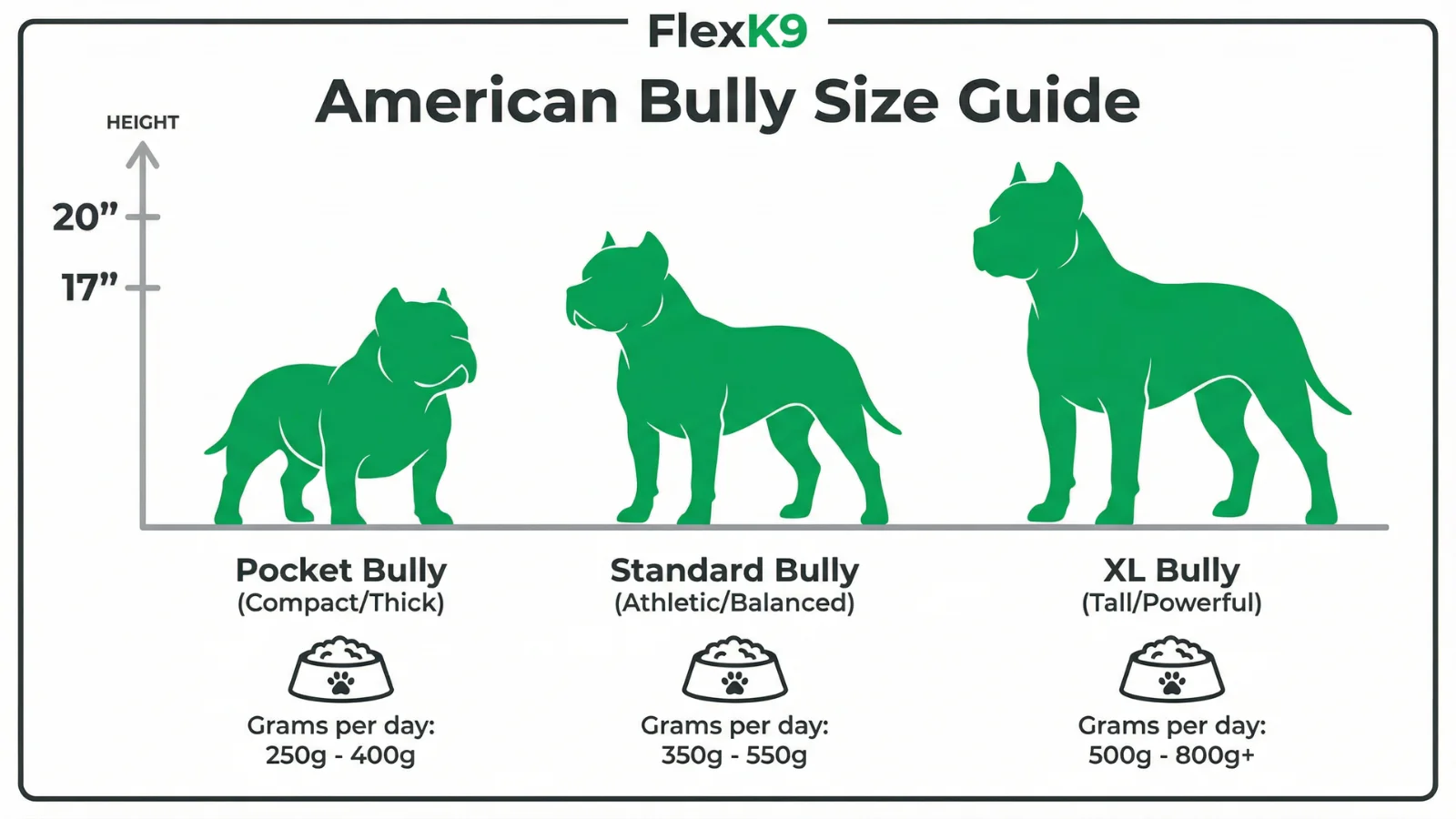
The American Bully is a brachycephalic (flat-faced) breed with a heavy musculoskeletal frame. Unlike leaner breeds, Bullies require a precise balance of high-quality proteins to maintain muscle mass and specific fats for skin health, without the caloric excess that leads to obesity. Overfeeding, especially during the puppy phase, can put undue stress on developing joints, leading to long-term mobility issues.
The Role of Protein and Healthy Fats
Protein is the building block of the American Bully’s signature physique. For an active adult, a diet containing 25% to 30% high-quality animal protein is ideal. However, “bulky” does not mean “fat.” Healthy fats (Omega-3 and Omega-6) are equally vital, as this breed is prone to skin allergies and environmental sensitivities common in the UK climate.
Caloric Intake and the UK “Lead & Muzzle” Impact
Since the 2024 updates to the list of banned dog breeds in the UK regarding XL Bullies, many dogs are spending more time on-lead or wearing muzzles during exercise.
This shift often results in lower daily energy expenditure. Owners must monitor weight closely; a dog that is less active due to public restrictions requires a “weight maintenance” caloric intake rather than a “performance” one to avoid strain on the heart and joints.
The Comprehensive American Bully Food Chart
This chart provides a baseline for daily feeding amounts using high-quality UK kibble (averaging 3,500 – 4,000 kcal/kg). Always adjust based on the specific Kcal content of your chosen brand.
| Bully Type | Weight Range (kg) | Puppy (2-6 months) | Junior (6-12 months) | Adult (1 year+) |
| 15kg – 25kg | 200g – 350g | 350g – 450g | 300g – 400g | |
| Standard | 30kg – 45kg | 400g – 550g | 600g – 750g | 500g – 650g |
| XL Bully | 50kg – 65kg+ | 600g – 800g | 900g – 1.1kg | 800g – 1kg+ |
Feeding the Pocket Bully
Pocket Bullies are the most compact of the varieties. Because of their shorter stature, they carry weight heavily. A Pocket Bully should look athletic, not round. Their metabolism is often higher than the larger varieties, but their smaller frames mean that even an extra 1kg of body fat can significantly impact their breathing and joint health.
Feeding the Standard and Classic Bully
The Standard Bully is the “athlete” of the group. These dogs typically have more stamina and higher exercise requirements. Their food intake should reflect their activity level. If your Standard Bully is a “working” dog or engages in regular weight-pulling or hiking, you may need to increase the amounts shown in the chart by 10-15%.
Feeding the XL Bully (Weight Management)
The XL Bully requires the most careful nutritional management, and choosing the right large breed dog food is essential to support their massive skeletal system.
Because they can grow to over 60kg, their skeletal system is under immense pressure. It is crucial to grow them “slow and lean.” Pushing for maximum size too quickly with high-calorie “bully builders” often results in permanent structural damage.
Monitoring Joint Health through Diet
For XL varieties, look for diets naturally high in Glucosamine and Chondroitin, and consider adding one of the best dog joint supplements to their daily routine to further protect their hips and elbows.
Preventing Bloat (GDV)
Bullies are deep-chested dogs, making them susceptible to Gastric Dilatation-Volvulus (Bloat). To mitigate this, avoid vigorous exercise for one hour before and after feeding, and consider using slow-feeder bowls or interactive dog enrichment toys to force them to eat at a safer, slower pace.
Puppyhood: The Foundation Phase (0-6 Months)
During the first six months, an American Bully puppy undergoes rapid skeletal development. They require specific large breed puppy food formulas with a carefully balanced Calcium-to-Phosphorus ratio to prevent growth abnormalities.
In the UK, many owners transition to adult food too early; ensure your puppy stays on a growth-focused formula until at least 12 months (or 18 months for XLs).
The Junior Transition (6-12 Months)
This is the “filling out” stage. While the height growth slows down, the dog begins to broaden. Many owners mistake this stage for hunger and overfeed, leading to “knuckling over” (weak pasterns). Stick to the chart and prioritise steady growth over rapid weight gain.
Assessing Body Condition Score (BCS)
The chart is a guide, but your dog’s ribs are the truth. We highly recommend using the official Body Condition Score (BCS) chart provided by the WSAVA to objectively assess your Bully’s weight, ensuring you can feel their ribs under a thin layer of muscle without them being visible.
A visible “waist” when viewed from above is a sign of a healthy Bully.
The Dangers of “Bully Builders” and Supplements
Avoid high-calorie supplements or “weight gainers” unless directed by a professional. These products often contain fillers that provide “empty” bulk, leading to fat gain rather than functional muscle, which complicates the health of a breed already prone to heart issues.
Practical Feeding Tips for UK Owners
Hydration and its Impact on Nutrition
Always ensure your Bully has access to fresh water. If feeding dry kibble, the dog will require significantly more hydration to assist with digestion. Many UK owners find that adding a splash of warm water or bone broth to kibble helps with palatability and hydration, especially for muzzled dogs who may drink less during the day.
Raw vs. Kibble: Which is Better?
Both Raw (BARF) and high-quality kibble have merits. Raw feeding allows for total control over ingredients—ideal for Bullies with severe grain allergies. However, kibble is often more convenient and balanced for those who aren’t confident in formulating raw ratios. Whichever you choose, the quality of the protein source is the most important factor, and if you are adding fresh ingredients to their bowl, always cross-reference them against the 22 foods that can kill your dog.
Feeding Schedules and Consistency
Bullies thrive on routine. Split the daily allowance into two meals (morning and evening). For puppies under six months, three to four meals are recommended to maintain steady blood sugar levels and prevent digestive upset.
Adjusting for Seasonal Changes
In the colder UK winter months, a dog kept primarily outdoors or exercised heavily in the cold may need a slight increase in calories to maintain body temperature. Conversely, during summer heatwaves, Bullies can struggle with overheating; reducing food intake slightly and feeding during the cooler parts of the day can help manage their metabolic heat.
Frequently Asked Questions
How much should I feed my American Bully puppy per day?
An American Bully puppy typically requires between 200g and 800g of high-quality kibble daily, depending on their age and expected adult size (Pocket, Standard, or XL). For example, a 3-month-old Standard Bully puppy usually needs around 400g–500g divided into four meals to support rapid skeletal growth and muscle development.
How many times a day should an American Bully eat?
8–12 Weeks: 4 meals per day.
3–6 Months: 3 meals per day.
6–12 Months: 2 to 3 meals per day.
Adult (1 Year+): 2 meals per day. Consistent scheduling helps prevent digestive upset and reduces the risk of Bloat (GDV), which is common in deep-chested breeds like the American Bully.
What is the best protein and fat ratio for an American Bully?
For an adult American Bully, a diet with 25% to 30% protein and 15% to 20% fat is ideal. Puppies and highly active “performance” Bullies benefit from a higher protein content (up to 32%) to support muscle repair and growth. Always ensure the primary protein source is a named animal meat like chicken, beef, or salmon.
Has the UK XL Bully ban affected how much I should feed my dog?
Yes. Due to UK legislation requiring XL Bullies to be muzzled and on-lead in public, many dogs may experience reduced high-intensity exercise. Owners should monitor their dog’s Body Condition Score closely and may need to reduce daily calories by 10–15% to prevent obesity-related joint strain during periods of lower activity.
How can I tell if my American Bully is overweight?
You can tell if your American Bully is overweight by using the “Rib Test.” You should be able to feel your dog’s ribs easily under a thin layer of muscle, but they should not be visible. From above, your Bully should have a noticeable waist. If they appear “barrel-shaped” or have fat deposits at the base of the tail, you should reduce their food intake.
How do I transition my American Bully to a new food?
To avoid stomach upset, transition your American Bully to new food over 7 days:
Days 1-2: 75% old food, 25% new food.
Days 3-4: 50% old food, 50% new food.
Days 5-6: 25% old food, 75% new food.
Day 7: 100% new food. This gradual change is especially important for Bullies prone to skin and food sensitivities.
