
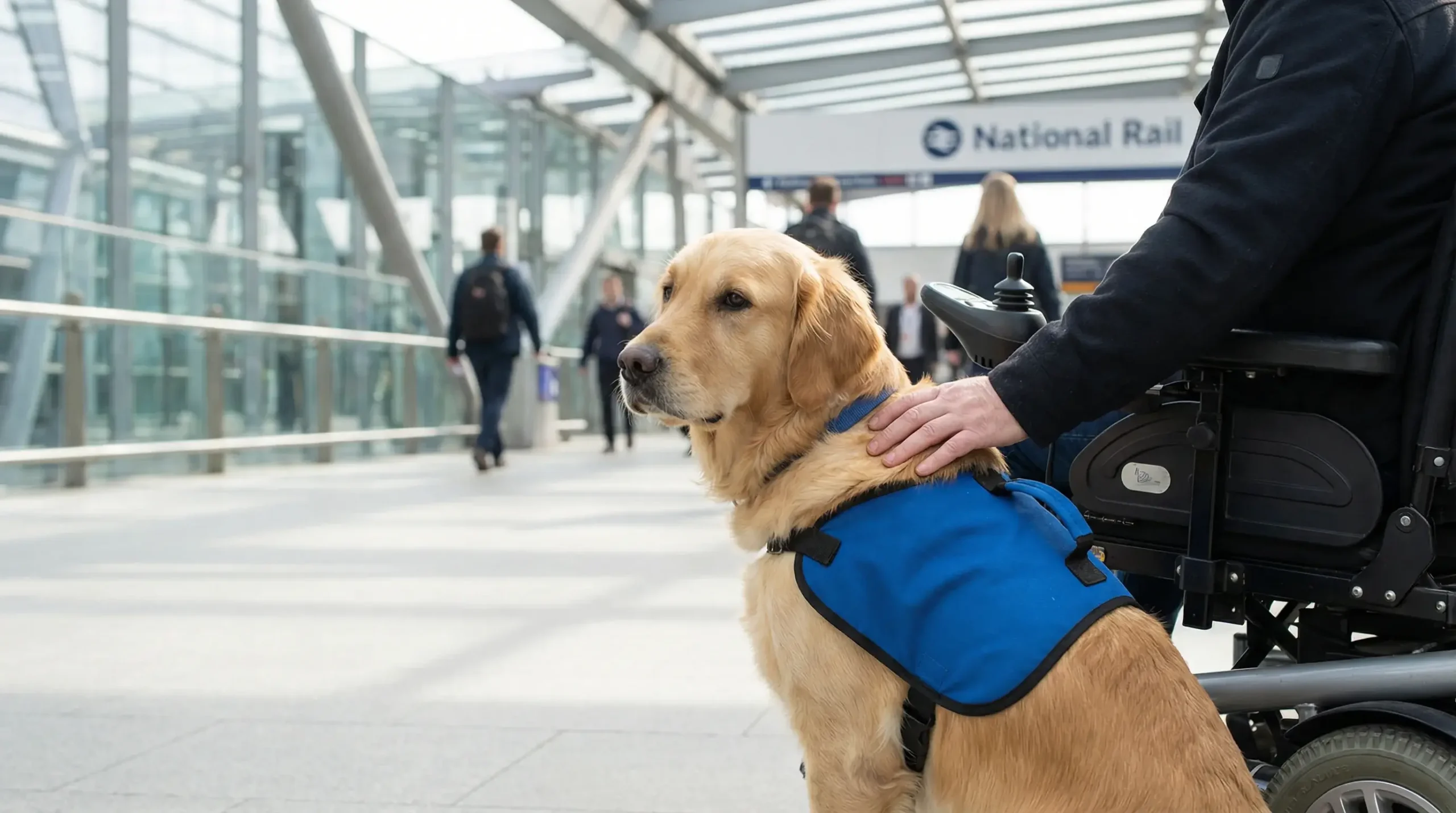
Service dog laws UK define the legal rights, access rules, and protections for people who rely on assistance dogs across England, Wales, Scotland, and Northern Ireland. These laws ensure disabled people can access public places, housing, workplaces, and transport safely with their trained assistance dogs. This updated 2026 guide explains the key legislation, access rights, certification rules, and how breed-related laws affect assistance dogs in the UK.
If you’re comparing different support roles, our guide on the Service Dog vs Emotional Support Dog differences explains how legal protections vary.
TABLE OF CONTENTS
What Counts as an Assistance Dog in the UK
An assistance dog is a dog trained to help a person with a disability carry out day-to-day tasks. In UK law, assistance dogs are treated as mobility aids. They may support people with visual or hearing impairments, mobility issues, autism, epilepsy, diabetes, PTSD, or other long-term disabilities.
Assistance dogs are not considered pets. They are legally permitted in most public places and on most transport services.
Key Service Dog Laws in the UK
Equality Act 2010 (England, Wales, Scotland)
The Equality Act 2010 protects disabled people from discrimination. Service providers, businesses, employers, landlords and transport operators must not disadvantage a disabled person because they use an assistance dog. For more workplace guidance, you can also read our detailed article on dogs at workplaces and what employers must allow under UK rules.
Under the Equality Act, assistance dogs must be permitted in:
- Shops, supermarkets and high-street businesses
- Restaurants, cafés, pubs and hotels
- Public buildings and services
- Workplaces
- Schools and universities
- Most accommodation and housing
- Public transport, taxis and private hire vehicles
It is unlawful to refuse access because of hygiene, allergy concerns, fear of dogs, or a “no pets” policy. Reasonable adjustments must be made to accommodate assistance dogs, unless a genuinely restricted environment (such as a sterile medical area) applies.
You can read official guidance on how businesses must treat assistance dogs under UK law: assistance dogs – Equality and Human Rights Commission guidance.
Northern Ireland – Disability Discrimination Act 1995
Northern Ireland uses the DDA 1995, which provides similar protections. Assistance dog users must be allowed access to services, housing and transport. Refusal based on the dog’s presence is generally unlawful.
Do Assistance Dogs Need ID or Certification?
There is no legal requirement in the UK for an assistance dog to have:
- An ID card
- A certificate
- A registration document
- A branded harness
Businesses may ask if the dog is an assistance dog required because of a disability, but they cannot demand official proof.
Voluntary accreditation through charities such as Guide Dogs, Hearing Dogs or ADUK helps with public acceptance but is not legally required. For everyday care information, our guide on What grooming does a Rottweiler need? covers essential coat-care routines.
Dangerous Dogs Act 1991 and Breed Restrictions
The Dangerous Dogs Act 1991 bans certain breeds of dog in the UK. These currently include:
- Pit Bull Terrier
- Japanese Tosa
- Dogo Argentino
- Fila Brasileiro
- American XL Bully
The law applies to type, not purpose. This means assistance-dog status does not override banned-breed rules. For a clearer explanation of breed restrictions, see our article on Are Rottweilers Banned in the UK?.
If you ever need to take action under the Dangerous Dogs Act, our guide on how to report a dangerous dog explains the correct steps to follow.
Key points for 2026:
- Owning or possessing a banned-type dog without a valid Certificate of Exemption is a criminal offence.
- Conditions attached to an exemption include microchipping, neutering, muzzling in public, keeping the dog on a lead in public, and maintaining appropriate insurance.
- Assistance dogs are not exempt from breed legislation. A banned-type dog remains subject to the Dangerous Dogs Act even if trained as an assistance dog.
- Visitors to the UK cannot bring the banned types into the country, even as assistance dogs.
Because the legislation applies to the dog’s physical type, not its role, owners should take professional legal advice if they believe their dog may fall under a banned category.
Where Assistance Dogs Are Allowed
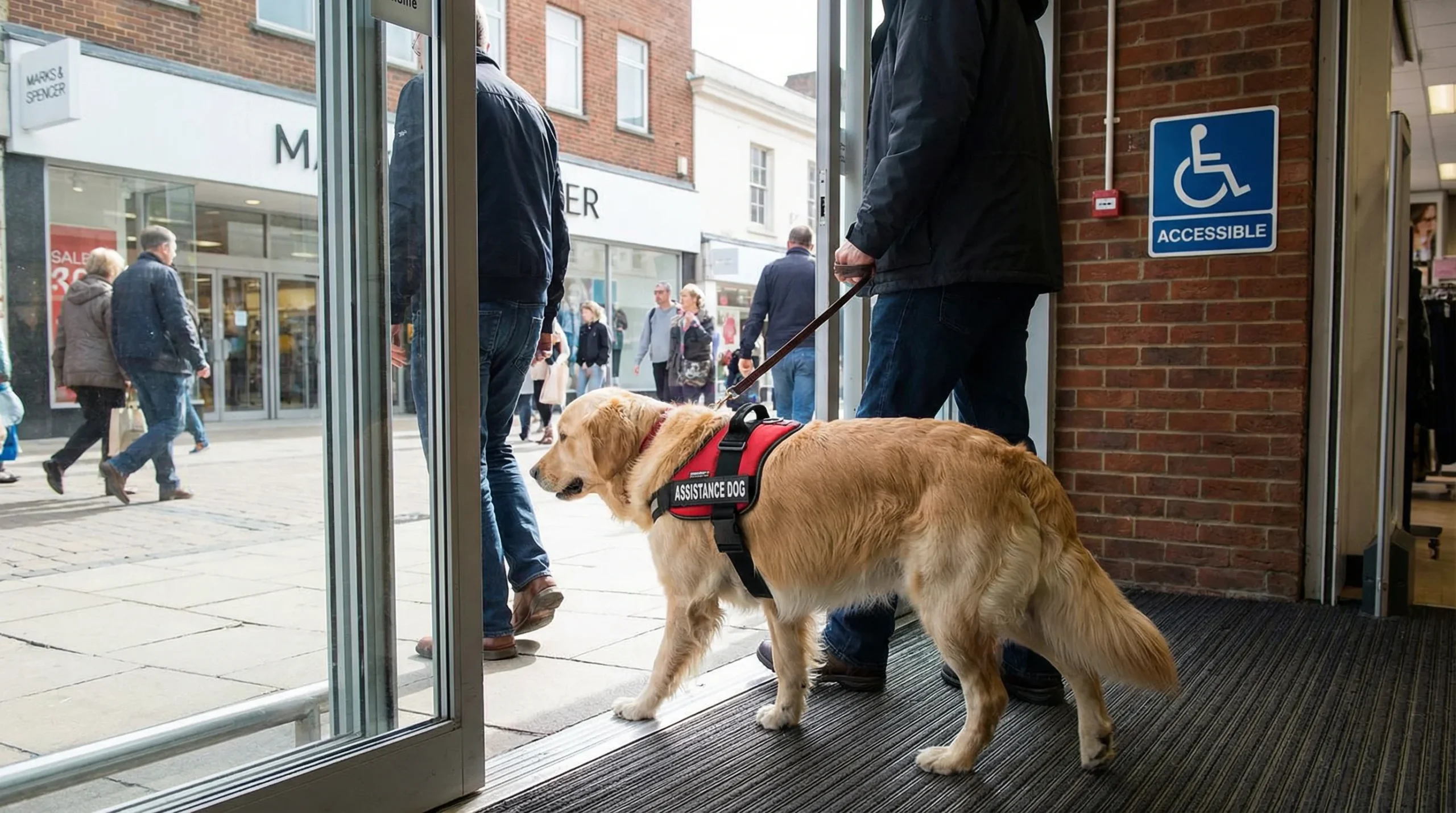
By law, assistance dogs must be allowed in:
- All retail premises
- Hospitality venues
- Entertainment venues
- Hotels, B&Bs and holiday accommodation
- GP surgeries, hospitals (excluding restricted clinical areas), dentists
- Job centres, libraries and public offices
- Public transport, taxis and hire vehicles
Drivers and transport operators cannot charge extra fees or refuse carriage of an assistance dog. For wider public-space responsibilities, you can also read our detailed guide to Dog Leash Laws UK. Handlers remain responsible for the dog’s welfare, including regular exercise, proper care and maintaining safe behaviour in public.
What To Do If You Are Refused Access
If a business or service provider denies entry to an assistance dog:
- Calmly explain the Equality Act 2010 or DDA 1995 obligations.
- Ask to speak to a manager or person in charge.
- Record the incident, including names, times and details.
- Submit a complaint to the business or to the relevant authority (e.g., taxi licensing body).
- Seek legal advice if the discrimination continues.
Unlawful refusals can result in enforcement action or compensation claims. Many assistance dog owners report unlawful refusals each year, making it important to document incidents clearly when discrimination occurs.
Air Travel Rules for Assistance Dogs (2026)
Airlines must carry recognised assistance dogs on UK and international routes, subject to safety conditions. Today, most airlines require:
- Advance notification
- Behavioural assurance (dog must be trained for public access)
- Up-to-date vaccination status
- Ability to fit safely within allocated space
Airlines may refuse assistance dogs that pose a safety risk or display uncontrolled behaviour.
Summary
Service Dog Laws UK offer strong protection for disabled people who rely on assistance dogs. The Equality Act 2010 and equivalent legislation ensure access to public places, housing, transport and workplaces. Assistance dogs do not require legal certification, but they must be allowed in most environments unless a legitimate restricted area applies.
Breed-specific legislation remains separate. Assistance-dog status does not override the Dangerous Dogs Act, and banned types remain regulated regardless of purpose. Any changes to legislation on restricted breeds apply equally to assistance dogs, as the law focuses on dog type rather than its working role.
Disclaimer
This article provides general information only. Laws and regulations may change. For specific situations, consult official government guidance or seek legal advice.
Frequently Asked Questions
Can you legally ask for proof of service dog in the UK?
No. Businesses, staff and service providers cannot legally require proof, ID cards or certification for an assistance dog in the UK.
Under the Equality Act 2010, a disabled person does not need to show documentation. A business may only ask whether the dog is required because of a disability, nothing more.
Are service dogs allowed in the UK?
Yes. Assistance dogs are fully protected under UK equality law and must be allowed in most public places, transport services, hospitality venues and shops.
The only valid exceptions are genuinely restricted medical or safety-critical areas, such as surgical theatres or sterile zones.
Do service dogs have to wear a vest in the UK?
No. There is no legal requirement for an assistance dog to wear a vest, harness, label or identifying gear in the UK.
Vests are optional and used for convenience, not legal compliance.
Is it illegal to refuse entry to an assistance dog?
Yes — refusing entry to an assistance dog is unlawful discrimination under the Equality Act 2010.
Businesses, taxis, restaurants and shops must allow assistance dogs unless a specific medical or safety exemption applies.
Can landlords refuse assistance dogs in the UK?
No. Landlords and letting agents cannot refuse an assistance dog, even if the property has a “no pets” policy.
Under the Equality Act 2010, an assistance dog is not classed as a pet, and landlords must make reasonable adjustments to accommodate disabled tenants who rely on one.
Do assistance dogs need to be certified in the UK?
No. The UK has no legal certification requirement for assistance dogs.
Dogs trained by charities, organisations or by the owner all have the same legal rights. Voluntary accreditation exists, but it is not required for access under the Equality Act.
