
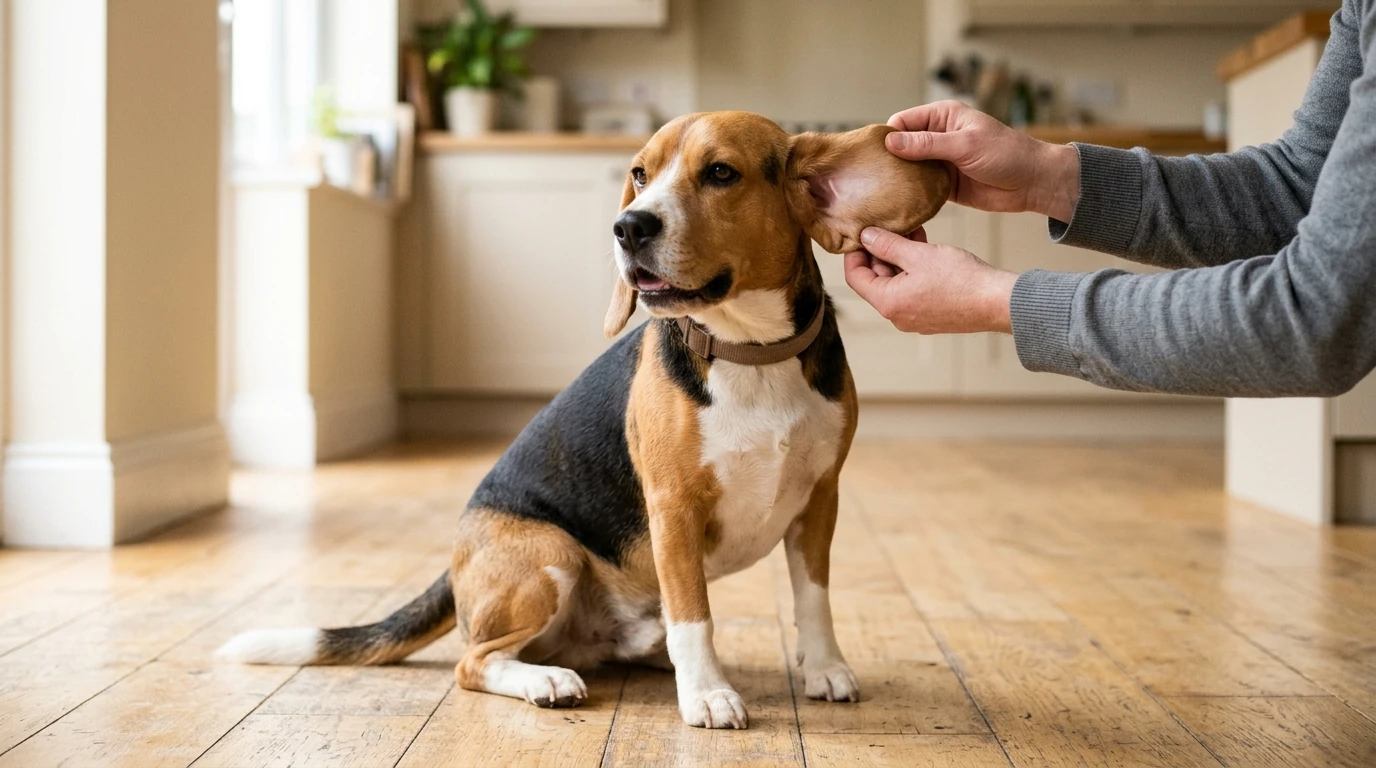
A dog ear infection is a painful overgrowth of bacteria or yeast in the ear canal. It usually has a cause underneath, most often a skin allergy, and that can include a food allergy. See your vet soon if your dog is scratching or shaking their head, and the same day if they have a head tilt or lose their balance.
This guide draws on vet advice from PDSA and Blue Cross, Dogs Trust, and UK vet records studied by the Royal Veterinary College’s VetCompass programme. Our own Cane Corso, Dexter, had an ear allergy linked to his food, and we share what happened. It’s general information, not a replacement for your vet.
| What to know | What UK sources say | Source |
|---|---|---|
| How common | About 1 in 14 dogs had an outer ear problem recorded by their vet in one year | RVC VetCompass (2016 records) |
| Usual cause | An underlying problem, most often a skin allergy; also ear mites, wax, growths or too much cleaning | Blue Cross; PDSA |
| Main signs | Head shaking, scratching, a red or swollen ear, a smelly discharge | PDSA |
| When to see a vet | As soon as you can; the same day for a head tilt or loss of balance | PDSA |
| Testing for a food allergy | A food trial: a vet diet and water only, usually for 6 to 12 weeks | PDSA |
| Blood tests for food allergy | Not accurate | PDSA |
| Home remedies | Nothing in the ear unless your vet advises it; never cotton buds | Blue Cross; PDSA |
TABLE OF CONTENTS
What is an ear infection in dogs?
In its guide to ear infections in dogs, PDSA describes an ear infection as an irritating and painful overgrowth of bacteria or yeasts inside the ear. Most affect only the outer ear canal, but left untreated, an infection can spread deeper into the middle or inner ear.
Ear infections are common, usually affect both ears at once and tend to come back, according to Blue Cross. Your vet may call it otitis, the technical term.
Yeast or bacteria?
Either can cause an ear infection. Your vet may look at a sample of the discharge to find out which is involved, and the treatment depends on the cause, so it isn’t something to guess at home. Whichever it is, the yeast or bacteria are usually taking advantage of another problem, such as an allergy.
Dog ear infection signs
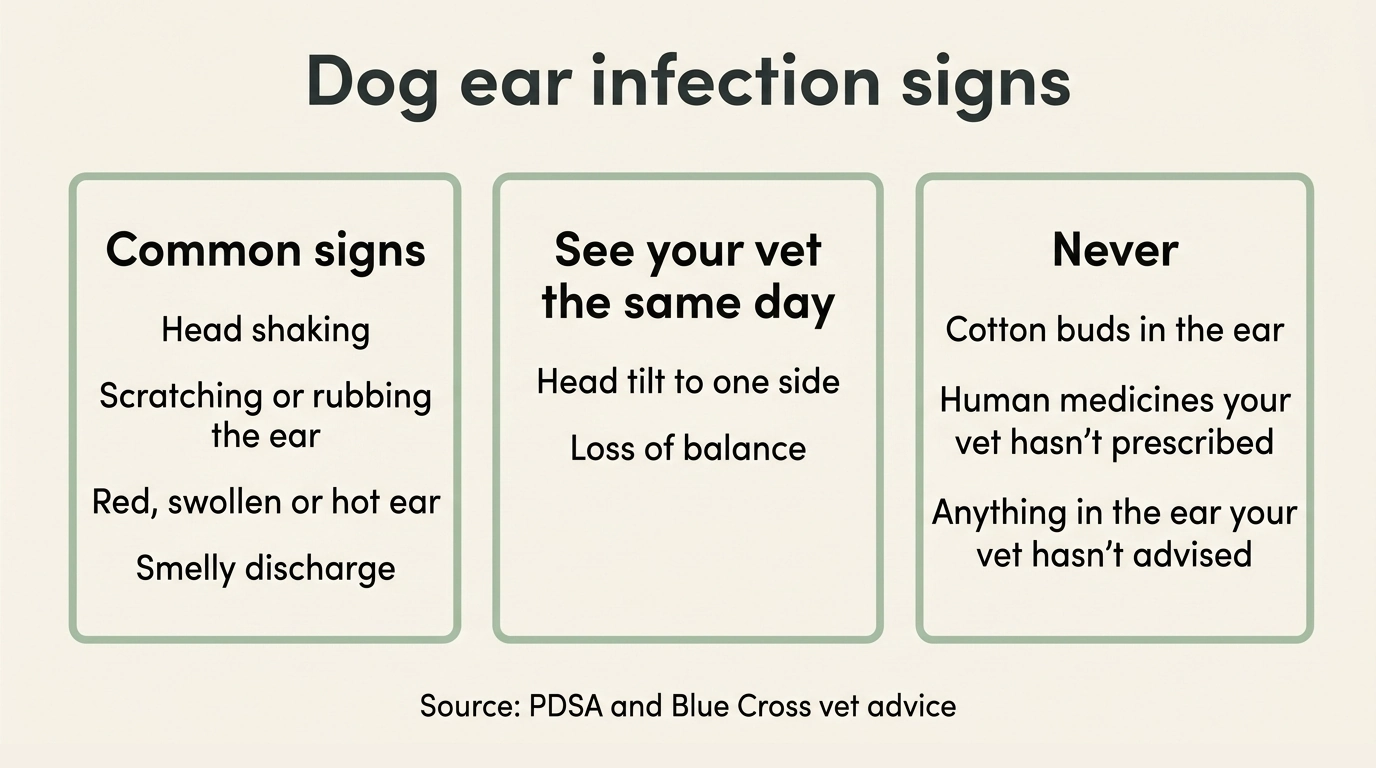
PDSA lists these signs of an ear infection:
- Head shaking
- Rubbing the face or head, often along the ground
- Itchy or painful ears
- Redness, swelling or heat
- A smelly or pus-like discharge
- A swollen ear flap (an aural haematoma)
- Scabs and crusts in the ear and on the side of the face
Blue Cross adds holding the head to one side and itchy skin, since skin problems often go with ear infections. A head tilt, loss of balance, vomiting or partial deafness can mean the infection has reached the middle or inner ear, and PDSA says that needs a same-day appointment.
Itchy ears and head shaking: other causes
Not every itchy ear is an infection. A dog that often scratches their ears or shakes their head may have allergic skin disease, fleas, ear mites, a swollen ear flap, something stuck in the ear, an injury or a lump, PDSA explains. Ear mites need medicine from your vet, because cleaning alone won’t clear them.
A head tremor is different from a head shake. A shake is something your dog does on purpose, usually because of pain or an itch; a tremor is a shake they can’t control. If your dog has a tremor, contact your vet straight away.
When to see your vet
Contact your vet as soon as you can if you think your dog has an ear infection. PDSA calls it a very painful problem that needs prompt treatment, and the sooner it’s treated, the faster your dog is likely to recover. Tell your vet if your dog gets ear infections often or has had more than two or three in their life. Left untreated, an ear infection can permanently damage a dog’s hearing, Blue Cross warns.
When to see your vet: Book a same-day appointment if your dog has a head tilt or loses their balance. PDSA says these can mean the infection has moved deeper into the ear, which is more serious.
If cost is a worry, talk openly with your vet about the price of treatment, as there may be more than one option. PDSA also has a checker on its website to see whether you’re eligible for free or low-cost treatment at its pet hospitals.
What causes a dog ear infection?
Most ear infections start because of something else. PDSA names skin allergies, ear mites, growths, too much ear cleaning and wax, while Blue Cross says skin allergies are the most common cause. Treating that underlying problem matters as much as treating the infection, because otherwise the infection keeps coming back.
Ear shape plays a part too. In UK vet records from 2016, studied by RVC VetCompass, breeds with drooping or folded ears were more likely to have an outer ear problem recorded than breeds with upright ears.
Breeds recorded with it more often than crossbreeds included the Basset Hound, Chinese Shar Pei, Labradoodle, Beagle and Golden Retriever, while the Chihuahua, Border Collie, Yorkshire Terrier and Jack Russell Terrier were recorded with it less often. A higher risk for a breed doesn’t mean your dog will get ear infections; it tells you what to keep an eye on.
Water can add to the problem. Frequent swimming can raise the risk in some dogs, and if your dog tends to get infections after a swim, cleaning and drying the ears afterwards may help (Blue Cross; PDSA). Ear infections are among the conditions UK vets record most often in dogs of every breed, which our guide to dog breed health problems covers.
How vets treat a dog ear infection
Your vet will look into the ear canal, often with an otoscope, and may take a sample of any discharge to see what’s causing the infection, Blue Cross explains. Treatment depends on the cause. According to PDSA, it may include:
- Medicated ear drops, with the whole course finished even if the ears look better after a couple of days
- Cleaning the ears while they heal, in the way your vet shows you
- Pain relief if your dog is very sore
- Tablets for a very severe infection, although drops are usually enough
- Treatment for the underlying cause, such as an allergy
Your vet will usually want to see your dog again to check the infection has fully cleared. An ear that doesn’t improve may need examining under anaesthetic, and a few severe, long-running cases need surgery. Never give your dog a human medicine unless your vet has told you to.
Home remedies and cleaning at home
We found no UK vet charity that recommends a home remedy, such as vinegar or coconut oil, for a dog’s ear infection, so this guide doesn’t suggest one. Blue Cross’s vet team asks owners not to put anything into a dog’s ears unless the vet has advised it, since some products can irritate the ear or aren’t safe if the eardrum is damaged.
Most dogs never need their ears cleaned, PDSA says, so unless there’s a problem it’s best to leave them alone. If the ears look red, sore or smell, see your vet before cleaning them. Use only a dog-safe ear cleaner and never cotton buds, which can push dirt further in or damage the eardrum. Olive oil isn’t harmful, the charity adds, but it’s messy and harder to use than a dog-safe cleaner. The VetCompass researchers also advise a gentle approach and warn against cleaning too much.
From our home: Dexter’s ears went red inside when he was about a year old. We used an ear cleaner from a pet shop for a few months before taking him to the vet, and looking back we’d go sooner. The vet said it was an allergy linked to his food. He spent four to five months on a vet protein diet with nothing else, not even treats. Then chicken came back as his only meat, and we still change his food slowly.
Food allergies and the ears
A food allergy is when a dog’s immune system reacts to one or more ingredients in their food, causing skin problems, tummy problems or both. PDSA lists itchy skin, including itchy ears, and red, sore skin on the ears, feet, face, chin, tummy and groin among the signs, alongside vomiting, diarrhoea and wind. Dogs Trust’s vet team adds red or sore ears with discharge.
Dogs tend to react to proteins they’ve eaten before, most often beef, chicken or lamb, and sometimes wheat. A food allergy can start at any age, even after years on the same food, though it most often begins before a dog is a year old (PDSA). Blue Cross notes it typically involves a food the dog has been eating for some time, not a new one.
Some dogs with a food allergy also react to things around them, such as pollen or house dust mites, and many itchy dogs have more than one allergy. That’s one reason your vet rules causes out step by step rather than guessing. If your dog’s signs are mainly in the tummy, our guide to dog diarrhoea and vomiting covers when to see a vet.
Testing for a food allergy with a vet diet
Your vet will first rule out other causes of itching and tummy trouble, such as fleas and other parasites. If the signs carry on, they may suggest a food trial: a veterinary diet with special ingredients, or one made in a specific way so your dog doesn’t react to it. Your vet chooses the diet.
PDSA’s food trial rules are strict:
- Feed the special diet and water only, usually for 6 to 12 weeks
- No treats, dental sticks, human food or other pets’ food
- Add nothing to the bowl, even if your dog isn’t keen
- Check any supplements with your vet first
- Keep a diary of your dog’s signs
A slip can mean starting again. If your dog improves, it confirms they were reacting to something in their old food. Your vet may then suggest adding ingredients back one at a time to find the safe ones, which helps you choose a food made only from them. Blue Cross’s vets say diet trials are worth it, because the right diet can mean your dog doesn’t need long-term medicines. Our hypoallergenic dog food guide explains what the label means once you know what suits your dog.
Do allergy tests work for dogs?
Not for food allergies. Blood tests for food allergy in dogs aren’t accurate, PDSA says, and the best way to find one is a food trial.
For allergies to things in the environment, such as pollen or dust mites, vets can use blood and skin tests, but the same charity notes these aren’t 100% reliable. Blue Cross’s vet team explains that the tests can help identify triggers once a vet has already diagnosed environmental allergies (atopy), but they don’t diagnose the condition itself.
If a dog has been allergy tested, immunotherapy may be possible: injections that slowly get the body used to what it reacts to, although they don’t work for every dog. Knowing the exact triggers isn’t always necessary anyway, PDSA adds, because most skin allergies are treated in a similar way.
You’ll also see home allergy and intolerance kits that use a hair or saliva sample. We found no UK vet charity that recommends them, so we don’t either. If you think your dog has an allergy, start with your vet.
Living with a dog prone to ear infections
Most dogs with ear disease can be treated or managed well enough to have a normal, good quality of life, Blue Cross says, although dogs with allergies may need ongoing care. For dogs that get ear infections, PDSA suggests:
- Check your dog’s ears regularly and learn their normal smell, so a sour or pungent change stands out
- Clean their ears only as often as your vet advises, and ask your vet to show you how
- Clean and dry the ears after swimming if infections tend to follow
- Ask your vet before having hairy ears plucked
- Keep on top of skin problems, since the inside of the ear is lined with skin
- Keep up regular flea treatment for every dog and cat in the home (Blue Cross)
If a food allergy is confirmed, your vet may recommend staying on the new diet for life, as long as it’s a complete food, PDSA says.
Final thoughts
- If your dog is scratching an ear or shaking their head more than usual, see your vet soon, and the same day for a head tilt or loss of balance.
- If the infections keep coming back, ask your vet about the cause underneath, which is often a skin allergy.
- If a food allergy is suspected, a vet-led food trial is the test, not a blood test or a home kit.
- If you clean your dog’s ears, use a dog-safe cleaner the way your vet shows you, and never cotton buds.
Frequently Asked Questions
Is my dog’s ear infection caused by their food?
It can be. Most ear infections have an underlying cause, and skin allergies, including food allergy, are the most common, according to PDSA and Blue Cross. Ear mites, wax, growths or something stuck in the ear can also be to blame. Your vet will rule other causes out first and may then suggest a food trial to check.
Do dog ear infections go away on their own?
Don’t wait to find out. PDSA says an ear infection is very painful and needs prompt treatment, and left untreated it can spread to the middle or inner ear. Blue Cross warns it can permanently damage your dog’s hearing. Caught early, most ear infections clear up quickly with the treatment your vet gives.
Can a blood test show what my dog is allergic to?
Not for food. PDSA says blood tests for food allergy in dogs aren’t accurate, and a food trial is the best way to find one. Blood and skin tests for allergies to things like pollen or dust mites exist, but they aren’t 100% reliable, and Blue Cross says they don’t diagnose the allergy itself. Ask your vet what’s worth doing.
Can I use olive oil or a home remedy on my dog’s ear infection?
Not for an infection. A sore, red or smelly ear needs your vet first, and Blue Cross’s vet team asks owners not to put anything in the ear unless the vet advises it. Olive oil won’t harm a healthy ear but is messy, PDSA says. We found no UK vet charity that recommends a home remedy for an ear infection.
Can a dog become allergic to a food they’ve eaten for years?
Yes. PDSA says a food allergy can develop at any stage of a dog’s life, even after years on the same food, and Blue Cross notes it usually involves a food the dog has been fed for some time rather than a new one. A change of brand alone may not help, so talk to your vet about a food trial.
Why does my dog keep getting ear infections?
Usually because something underneath hasn’t been treated, most often a skin allergy. PDSA says the infection will keep coming back unless that cause is treated too. Ear shape, swimming and too much cleaning can add to it. Tell your vet if your dog has had more than two or three ear infections, so they can look for the cause.
