
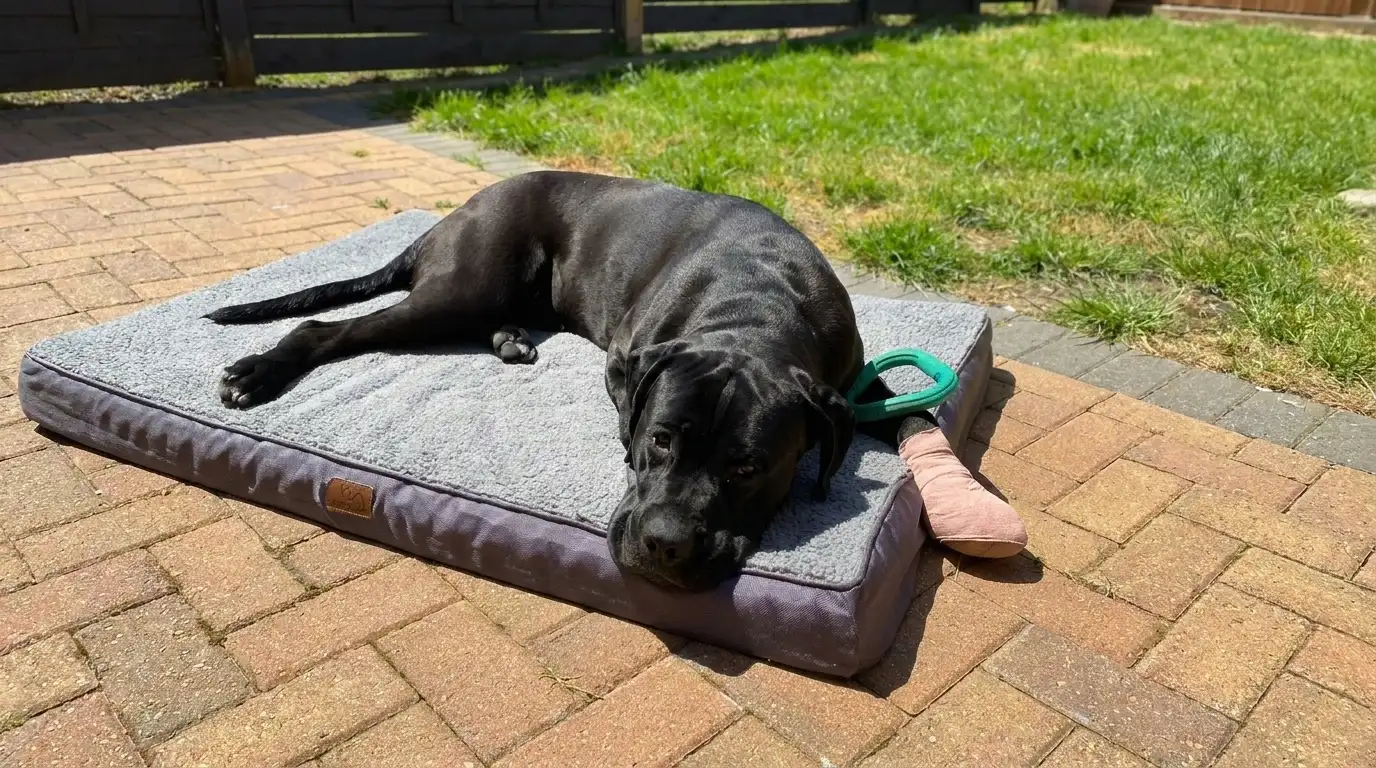
On a May morning in 2023, Dexter came back from two weeks at kennels with a bandaged paw and a story I only got in pieces. He’d caught a nail in the kennel gate, panicked, and pulled free — and in doing so, the entire nail came away from the nail bed. What followed wasn’t a five-minute fix. It was six and a half weeks of vet-supervised dressing changes before the bandage came off for good.
That’s not the story most “dog broken nail” guides tell you. Most treat every broken nail as the same ten-minute crisis: stop the bleeding, dab some antiseptic, job done within a week. For plenty of nail injuries, that’s accurate. But a full avulsion — the nail torn away rather than just cracked — is a genuinely different injury with a genuinely different timeline, and knowing which one you’re dealing with changes what you should actually do next.
This guide covers both: what to do for a minor crack you can manage yourself tonight, and what a serious tear actually looks like to live through, in case that’s the one you’re facing.
TABLE OF CONTENTS
Recognising a Broken Nail
Not every broken nail is the same injury, and the type you’re looking at should drive what you do next.
- Surface crack or split — a vertical line down the nail, may not bleed much, quick usually untouched
- Partial tear — part of the nail is loose or hanging but still attached, often catches on things and reopens
- Full avulsion — the nail has come away from the nail bed entirely, exposing raw tissue underneath
Check under good light. Gently look — don’t press — for whether the pink or red quick is visible or exposed. A crack that stops well short of the quick is a very different injury to one that’s exposed it.
Home Treatment or Vet? The Decision Point
This is the question that actually matters, and it’s worth answering before you do anything else.
Treat it at home if:
- It’s a crack or partial tear, not a full tear-away
- The quick isn’t exposed, or exposure is minimal
- Your dog is weight-bearing and not showing extreme pain
- Bleeding is manageable with pressure
Get to a vet if:
- The nail has come away from the nail bed entirely (a full avulsion, like Dexter’s)
- The quick is significantly exposed
- Your dog won’t put weight on the paw
- Bleeding won’t stop with 10 minutes of firm pressure
- The injury looks like it involves the toe joint, not just the nail
If you’re not sure which category you’re in, treat it as the more serious one and call your vet. A quick phone description is often enough for them to tell you whether it’s a same-day appointment or something you can manage overnight and monitor.
Bleeding Right Now?
If the nail is actively bleeding, your first job is stopping that — not treating the wound underneath it. Those are two different problems, and this article is really about the second one. Apply firm pressure with clean gauze, hold it (resist checking too early), and use a clotting agent if you have one to hand.
For the full play-by-play — how long to hold pressure, what to use if you don’t have styptic powder, and when bleeding itself becomes the reason to call a vet — see our dedicated guide on stopping a dog’s nail from bleeding. Once it’s under control, come back here for what comes next.
What Recovery Actually Looks Like
This is the part most guides skip, and it’s the part I wish someone had told me before Dexter’s kennel injury.
With a full avulsion, the raw nail bed needs professional dressing changes — this isn’t a DIY bandage job. Dexter’s vet changed his dressing every few days early on, then weekly for the final three weeks as the tissue closed over. I was there for every change; it wasn’t something the kennel or I could safely manage alone.
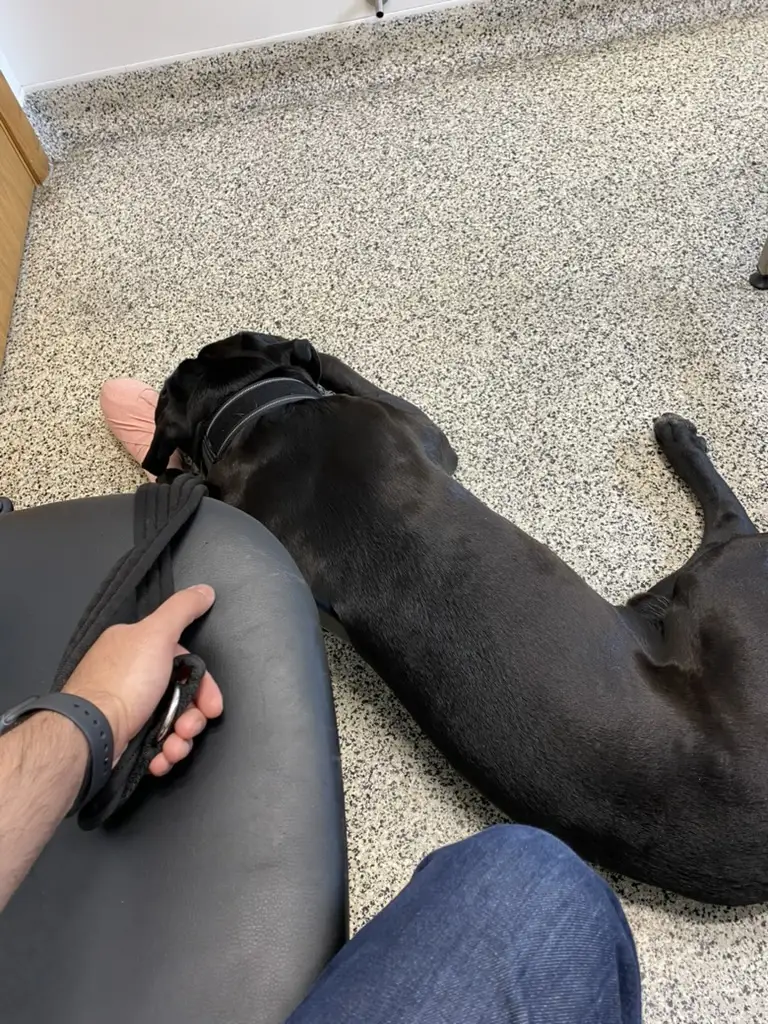
Two things caught me off guard at the time, and I think they’re worth saying plainly:
Bleeding can restart during healing, not just at the moment of injury. In the early days, the wound would ooze again if he put weight on it awkwardly or got excited. That’s not a sign something’s gone wrong — it’s part of an open wound healing — but it does mean you keep it clean and covered for weeks, not just the first hour.
Keeping a big, athletic dog calm during recovery is its own challenge. A 45kg Cane Corso doesn’t downshift easily. Short toilet breaks on lead, no zoomies, no rough play — for weeks, not days. Mental enrichment (chews, scent games, slow-feeders) did more for us than anything else to keep him settled without needing to run it off.
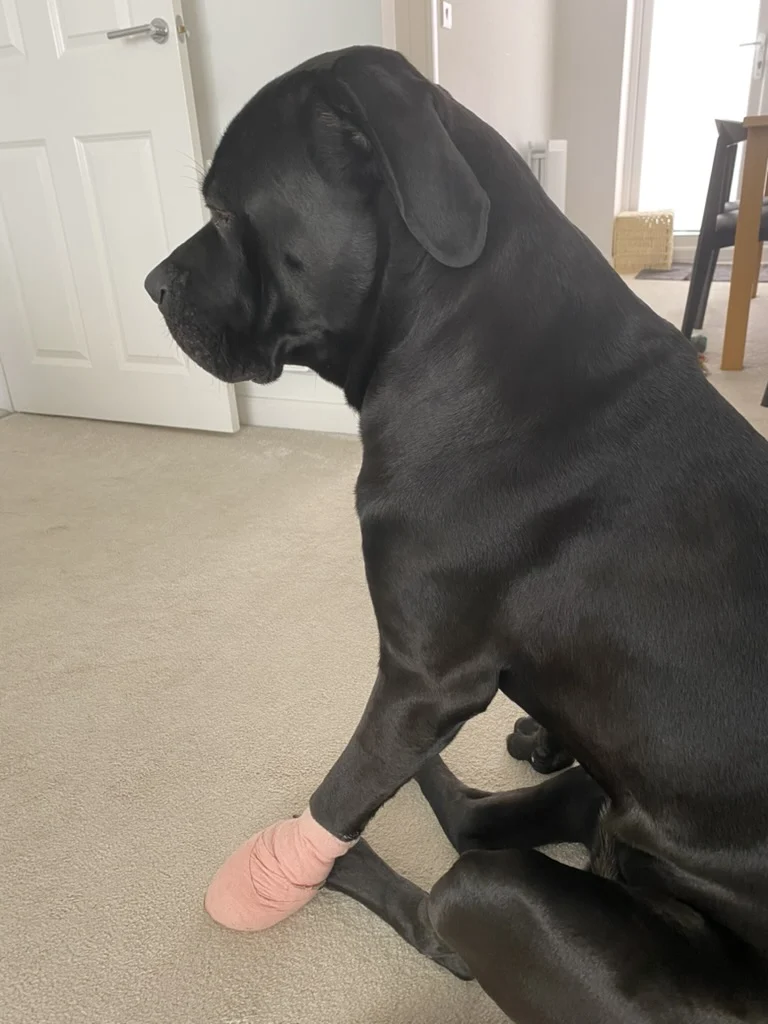
For a minor crack or partial tear where the quick isn’t exposed, home wound care is more straightforward:
- Clean the area — warm water or saline, gently, to remove dirt and debris
- Trim loose fragments only if clearly detached and away from the quick — never cut into pink tissue
- Apply a pet-safe antiseptic — a diluted, vet-approved option, not neat antiseptic
- Bandage loosely if needed — snug enough to stay on, never tight enough to restrict circulation
- Prevent licking — a cone or e-collar if he won’t leave it alone
Important: This is first-aid guidance, not a substitute for veterinary care. If in doubt about the severity of the injury, call your vet before treating it yourself.
Signs of Infection — Get to a Vet
Watch for:
- Swelling or redness around the nail bed
- Yellow or green discharge
- Limping that persists beyond 48 hours
- A foul smell from the wound
- Heat around the paw
- Increased sensitivity or pain on touch
Any of these mean a vet visit, not a wait-and-see approach. Infection in an exposed nail bed can progress quickly, and it’s far easier to treat early than late.
Watch for these signs, and don’t wait to see if they settle — as PDSA notes, the quick contains nerves and blood vessels, which is exactly why an exposed one is vulnerable to infection.
Healing Time — The Honest Range
Most generic advice gives you one number for healing time. In reality, it depends entirely on what kind of break you’re dealing with.
- Minor crack or surface split: typically 7–10 days with basic home care
- Partial tear, quick not exposed: often 1–2 weeks
- Full avulsion (nail torn from the bed): weeks, not days — Dexter’s took six and a half weeks of dressing changes before the bandage came off for good, and full nail regrowth took considerably longer than that
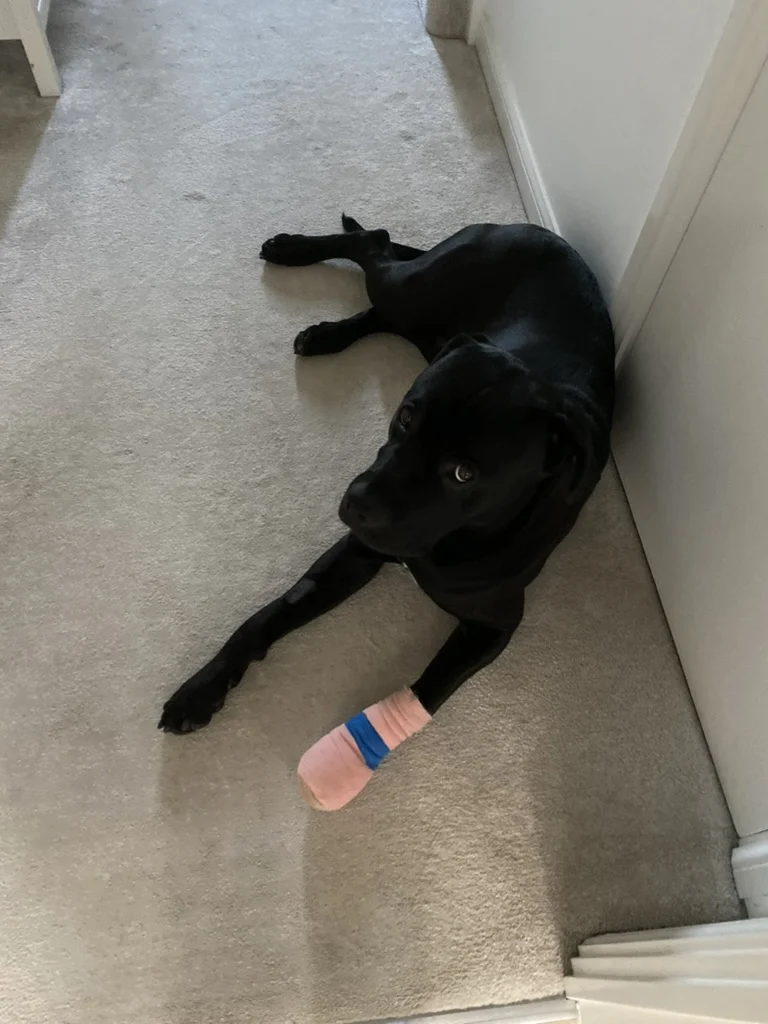
If your dog’s injury is closer to the third category, don’t be alarmed if a “week or so” estimate doesn’t match your experience. That number was never written with a full tear in mind.
Preventing Nail Injuries in Big, Active Dogs
Large, athletic breeds are more likely to catch a nail hard — more weight and speed behind every stride means more force on any nail that snags. A few things that actually help:
- Check kennel and boarding environments before you book. Gate gaps, chain-link, and worn fencing are where nails get caught — ask what the run enclosures are made of, not just how often dogs are let out.
- Keep nails at the right length. Overgrown nails catch on more things; see our guide on how often to clip dog nails for a schedule based on activity level.
- Check paws after high-energy sessions — off-lead runs, agility, anything on rough or uneven ground.
- Watch surfaces during play, particularly concrete, tarmac, and anything with debris or grating.
None of this makes nail injuries impossible to prevent — Dexter’s happened in a supervised kennel, not through any negligence — but it reduces the odds.
Once the bandage came off for good, one of the first things I did was send a photo to the kennel owner who’d looked after him through the whole thing — sunglasses on, paw healed, ready for a summer walk. She’d been part of the care from day one, and it felt like the right way to close things out.

Frequently Asked Questions
How long does a dog’s broken nail take to heal?
It depends on the type of break. A minor crack usually heals in 7–10 days, but a nail that’s fully torn from the nail bed can take several weeks of professional dressing changes before it’s fully closed over, and longer still for the nail to regrow.
Will a torn-off dog nail grow back?
Yes, in most cases the nail bed will regrow the nail over time, though it can take months for a full nail to return, and the new nail may look slightly different in texture or shape at first.
Should I bandage a dog’s broken nail myself?
For a minor crack, a light, loose bandage at home is usually fine. For a full avulsion or anything where the nail bed is exposed, dressing changes are better handled by a vet, especially in the early stages while the wound is still healing.
Is a broken dew claw different from a broken nail on the paw?
Dew claws don’t bear weight the same way, so a break there is sometimes less immediately painful for walking, but they’re prone to snagging again during healing since they sit slightly proud of the leg. The same home-vs-vet decision points apply.
Can a broken nail affect my dog’s gait afterwards?
Usually not once healed, but during recovery it’s common for a dog to favour the paw or walk slightly differently to avoid pressure. If altered gait persists well after the wound has closed, it’s worth a vet check.
How do I know if my dog’s nail injury needs a vet visit?
If the nail has torn away from the bed, the quick is significantly exposed, bleeding won’t stop with firm pressure after 10 minutes, or your dog won’t put weight on the paw, it needs a vet — don’t wait to see if it settles on its own.
