
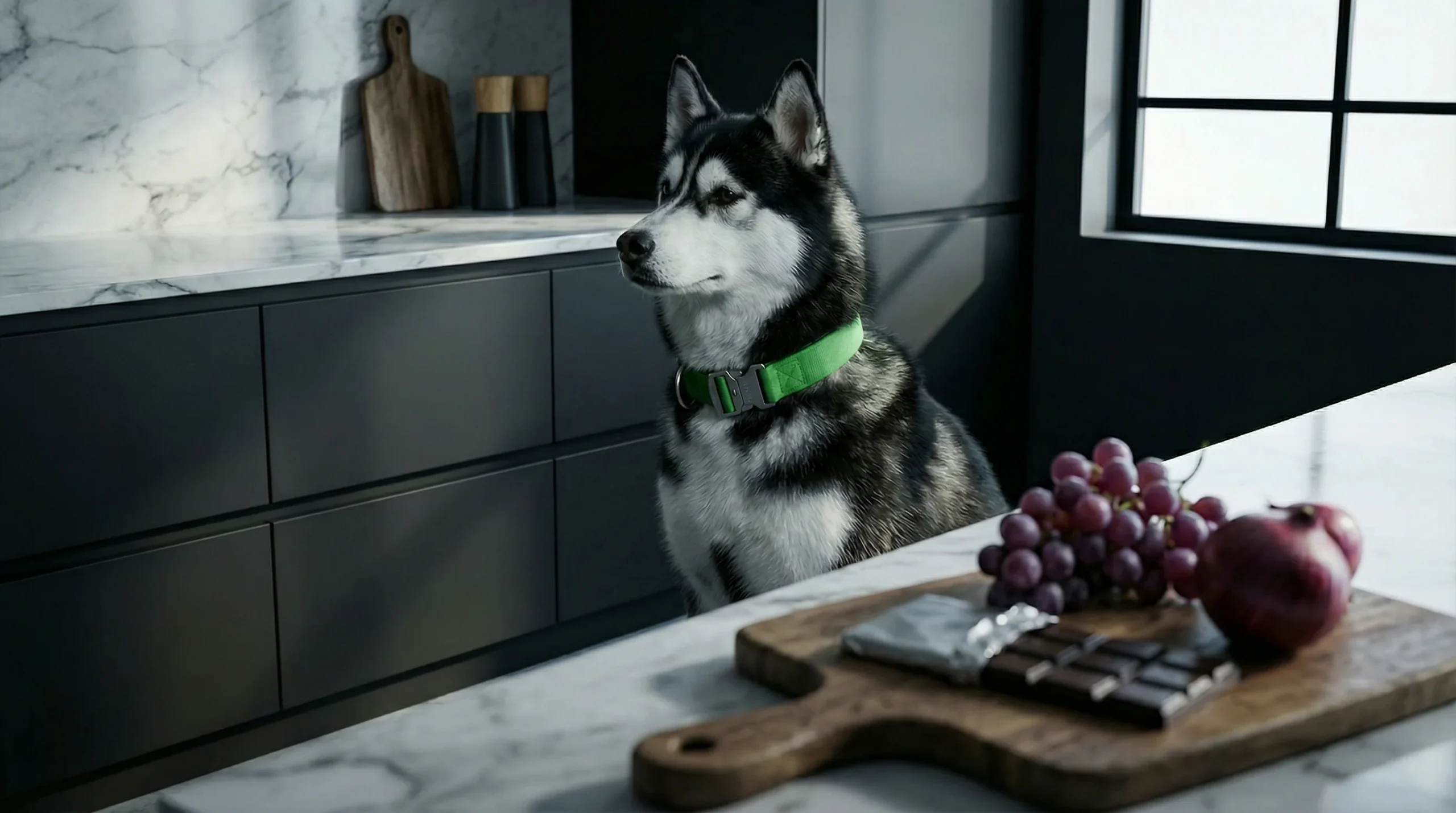
Most of us love sharing food with our dogs — but not everything on our plate is safe for them. Some everyday ingredients are highly toxic to dogs, even in tiny amounts.
This guide explains the 22 foods that can kill your dog, what symptoms to look for, and what to do if your pet eats something dangerous.
Most dog owners mean well when sharing food, but some everyday human foods can be extremely dangerous — even fatal — to dogs. This guide explains 22 foods that can kill your dog, why they are harmful, what symptoms to watch for, and what to do immediately if your dog eats something toxic.
TABLE OF CONTENTS
Quick Reference: Common Toxic Foods for Dogs
| Food | Toxic to Dogs? | Risk Level |
|---|---|---|
| Chocolate | ❌ Yes | High |
| Grapes & Raisins | ❌ Yes | High |
| Xylitol (Birch Sugar) | ❌ Yes | Extreme |
| Onions & Garlic | ❌ Yes | Moderate–High |
| Macadamia Nuts | ❌ Yes | Moderate |
| Alcohol | ❌ Yes | Extreme |
| Caffeine | ❌ Yes | High |
| Cooked Bones | ❌ Yes | Moderate |
| Dairy Products | ⚠️ Sometimes | Low–Moderate |
| Blueberries | ✅ Safe | Low (in moderation) |
| Plain Carob | ✅ Safe | Low (dog-safe only) |
Note: Toxicity risk depends on the amount eaten, your dog’s size, and individual sensitivity. When in doubt, always treat ingestion as an emergency.
While not every exposure results in death, even small amounts can cause severe organ damage, and the risk depends on your dog’s size, health, and sensitivity. Understanding what foods are dangerous for dogs is one of the most important responsibilities of ownership.
Understanding Why Some Foods Are Deadly to Dogs
Dogs metabolise food very differently from humans. Certain compounds that are harmless to us can overwhelm a dog’s liver, kidneys, heart, or nervous system. In some cases, toxicity builds silently over hours or days.
Larger breeds may tolerate slightly higher amounts, but no dog is immune, and small dogs are at much higher risk from accidental exposure — something especially important to consider when feeding or handling family-friendly breeds commonly kept in UK households (see our guide to best family dogs in the UK).
Emergency: What to Do If Your Dog Eats a Toxic Food
Immediate Action Steps
- Remove access to the food immediately
- Do not induce vomiting unless a vet specifically instructs you
- Call your vet or an emergency clinic straight away
- If your vet is closed in the UK, contact Animal PoisonLine UK
- Keep packaging or ingredient labels for reference
If your dog has eaten something on this list, do not wait for symptoms.
Call your vet immediately.
Animal PoisonLine (UK) : 01202 509000
This is the UK’s only 24-hour dedicated triage service for pet owners.
Time matters. Early treatment can mean the difference between recovery and fatal organ failure.
22 Foods That Can Kill Your Dog
1. Grapes and Raisins
Even a single grape can trigger acute kidney failure in some dogs. The exact toxin is unknown, making exposure unpredictable.
2. Chocolate
Contains theobromine and caffeine. Dark and baking chocolate are the most dangerous, affecting the heart and nervous system.
3. Xylitol (Also Labelled as Birch Sugar)
Found in sugar-free gum, sweets, toothpaste, and some peanut butters. Causes a rapid insulin surge and liver failure. Even tiny amounts can be fatal.
4. Onions, Garlic, and Chives
Damage red blood cells, leading to anaemia. Toxicity can build over time with repeated exposure.
5. Alcohol
Even small quantities depress the central nervous system, causing breathing failure, coma, or death.
6. Caffeine (Coffee, Tea, Energy Drinks)
Overstimulates the heart and nervous system, leading to tremors, seizures, and collapse.
7. Macadamia Nuts
Cause weakness, overheating, vomiting, and tremors. Effects can appear within hours.
8. Raw Dough with Yeast
Expands in the stomach and produces alcohol internally — a double danger.
9. Cooked Bones
Splinter easily, causing choking or internal punctures. This is especially dangerous for powerful chewers.
10. Dairy Products
Many dogs are lactose intolerant, leading to diarrhoea and dehydration. Some flavoured dairy products also contain xylitol.
11. Tomatoes (Green Parts)
Unripe fruit, stems, and leaves contain solanine, which affects the nervous system.
12. Wild Mushrooms
Some species cause liver or kidney failure. Identification is unreliable — treat all as dangerous.
13. Cherries
Pits and stems contain cyanide and pose choking hazards.
14. Apricots and Peaches
Pits contain cyanogenic compounds and can cause intestinal blockage.
15. Starfruit
Contains oxalates that can lead to kidney failure.
16. Salt and Salty Snacks
Excess sodium causes tremors, seizures, and severe dehydration.
17. Rhubarb Leaves
High oxalate content damages the kidneys and the nervous system.
18. Baked Goods and Sweets
Often contain chocolate, xylitol, or caffeine — combinations increase risk.
19. Mouldy or Spoiled Food
Certain moulds produce tremorgenic toxins that cause seizures.
20. Raw or Undercooked Meat and Eggs
Risk of Salmonella or E. coli infection, particularly dangerous for puppies and seniors.
21. Ice Cream and Flavoured Water
Many contain artificial sweeteners or caffeine.
22. Fat Trimmings
Can trigger acute pancreatitis, a painful and potentially fatal condition.
Dose Matters — But There Is No Safe Amount
Why Size and Sensitivity Change Risk
Smaller dogs reach toxic thresholds far faster, but large dogs are not protected. Some dogs develop severe reactions from amounts that cause no symptoms in others. This variability is why vets treat any ingestion of toxic foods as an emergency.
This unpredictability is one reason nutrition planning matters, especially for dogs with sensitive digestion or joint issues. See the feeding considerations for large-breed dog food, or for smaller dogs with different metabolic needs, check out our guide to the best small breed puppy food.
What Dogs Can and Cannot Eat
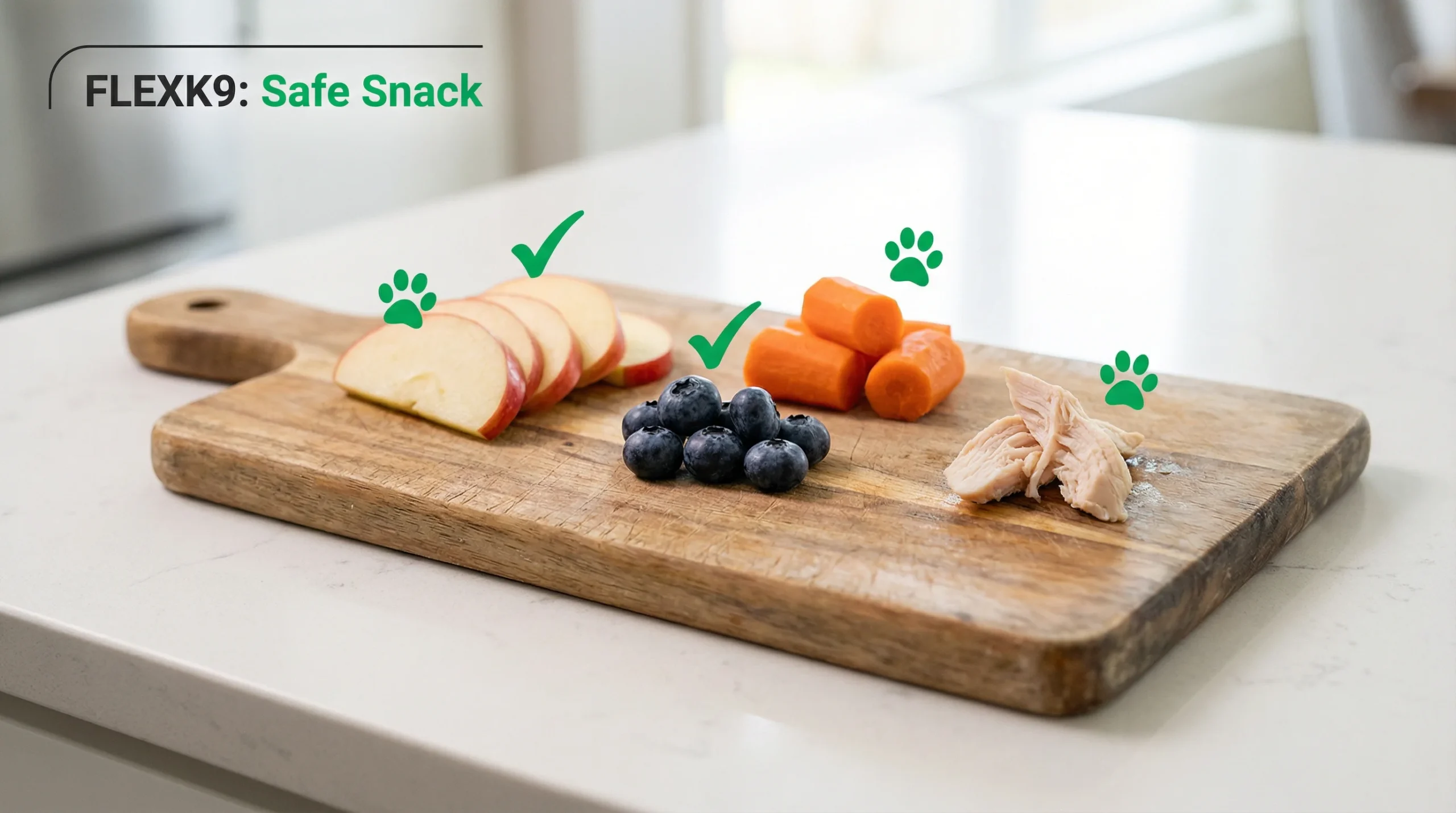
Safer Human Food Alternatives (In Moderation)
Plain, cooked foods such as:
- Chicken or turkey (no seasoning)
- Carrots and green beans
- Apples (no seeds)
- Blueberries
- Plain rice or pumpkin
Introduce new foods slowly and avoid mixing them with risky treats. Digestive upset is often confused with poisoning. Knowing the difference helps prevent panic and delays. Knowing what foods are unsafe is only half the picture. Understanding what dogs should eat safely helps prevent accidental feeding mistakes at home.
Safety Swap: Toxic Foods vs Safer Alternatives
| Toxic Food | Why It’s Dangerous | Safer Alternative (In Moderation) |
|---|---|---|
| Grapes & Raisins | Can cause sudden kidney failure, even in small amounts | Blueberries (washed, plain) |
| Chocolate | Contains theobromine, which affects the heart and nervous system | Carob (dog-safe only, no added sugar) |
| Macadamia Nuts | Cause weakness, tremors, and overheating | Plain cashews (unsalted, very small amounts) |
Signs of Food Poisoning in Dogs
Watch for These Symptoms
- Vomiting or diarrhoea
- Excessive drooling
- Tremors or seizures
- Weakness or collapse
- Difficulty breathing
- Sudden behaviour changes
Symptoms may appear within minutes or be delayed for hours.
Preventing Accidental Poisoning at Home
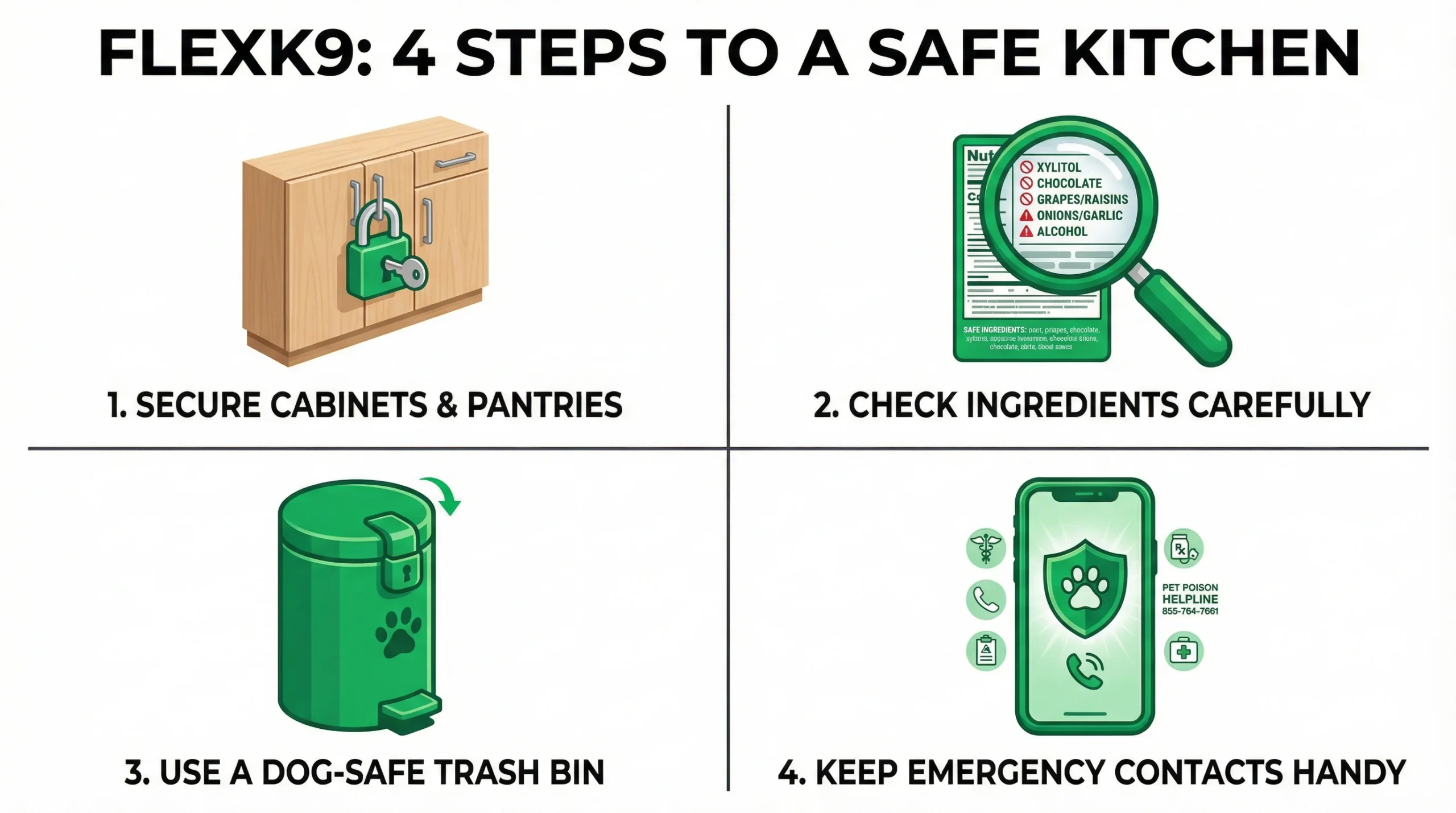
Simple Prevention Steps
- Store food securely and out of reach
- Educate family members and visitors
- Use dog-safe bins with locking lids
- Train a strong “leave it” command
- Be extra cautious during holidays and gatherings
Household routines matter as much as training — particularly in busy homes or when travelling (see safety considerations in dog car travel).
Why Breed, Size, and Lifestyle Matter
Highly intelligent and curious dogs are more likely to scavenge or counter-surf, increasing exposure risk.
Large working breeds may tolerate slightly more volume, but toxicity is not prevented by size alone.
Some dogs are also more vulnerable due to underlying conditions or genetic predispositions, which is why understanding common health problems in dogs can help owners recognise higher-risk situations sooner.
Trusted Sources and Further Reading
For medically reviewed guidance, consult:
- PDSA (UK)
- RSPCA
- Animal PoisonLine UK
- ASPCA Animal Poison Control
Final Takeaway
Knowing the 22 foods that can kill your dog is not about fear — it’s about prevention. Most poisoning cases happen accidentally, at home, with foods owners never realised were dangerous.
When in doubt, assume a food is unsafe and ask your vet. Your dog’s life depends on it.
Frequently Asked Questions
Can one grape or raisin kill a dog?
Yes, it is possible. While some dogs may show no symptoms, others can develop acute kidney failure from eating just one grape or raisin. Because there is no known “safe” dose, any ingestion should be treated as a veterinary emergency.
What are the first signs of dog poisoning from food?
Common early symptoms include vomiting, diarrhoea, lethargy, and loss of appetite. However, some toxins like Xylitol (Birch Sugar) can cause sudden collapse or seizures within an hour, while others like grapes can take days to show kidney damage. Always act before symptoms appear.
Is peanut butter safe for dogs in the UK?
Most peanut butter is safe, but you must check the label for Xylitol, which is sometimes listed as “Birch Sugar.” This artificial sweetener is highly toxic to dogs. Always choose a natural, xylitol-free peanut butter with no added salt or sugar.
What should I do if my dog eats chocolate?
First, identify the type of chocolate (dark is more toxic than milk) and how much they ate. Call your vet immediately or the Animal PoisonLine (01202 509000). Have the packaging ready so the vet can calculate the theobromine dose based on your dog’s weight.
Are cooked bones dangerous for dogs?
Yes, cooked bones are extremely dangerous. Unlike raw bones, cooked bones become brittle and splinter easily, which can cause perforations in the throat, stomach, or intestines, often requiring life-saving surgery.
Why is Xylitol (Birch Sugar) toxic to dogs?
In dogs, Xylitol triggers a massive, rapid release of insulin, causing a life-threatening drop in blood sugar (hypoglycemia). In higher doses, it can also lead to acute liver failure. It is significantly more toxic than chocolate.
Can dogs eat cooked eggs or raw eggs?
Cooked eggs are a great source of protein for dogs. However, raw eggs carry a risk of Salmonella and contain avidin, which can interfere with biotin absorption. For safety and maximum nutrition, stick to plain, boiled, or scrambled eggs.
